Nate Harlan

About
I am a drummer, percussionist, composer, and teacher living in Boston, MA.
Growing up in the culturally rich music scene of Philadelphia, from an early age I was drawn to music of all kinds. I quickly became immersed in the worlds of Afro-Cuban music, Arabic music, jazz, and underground rock. I began both teaching and performing professionally at 13 years old and I went on to study Composition and Music Production at Berklee College of Music in Boston.
During my time at Berklee I spent the summers living and studying with my teacher in Afro-Cuban folkloric music, master drummer Manley 'Piri' Lopez, in the thriving Cuban communities of Miami and Mexico City. I later travelled to Havana, Cuba to meet and learn from Manley's family - Los Chinitos - who are known for their depth of knowledge in Afro-Cuban musical traditions.
I have performed in many different genres on drum set and percussion, across the United States and around the world, appearing on stage with many artists including Manley Lopez, Little Giant, Grooversity, the JNF Collective, Clave & Blues, Ritmo Masacote, the Silver Arrow Band, Bombay Fugitive, Shakoor Hakeem, and as a featured percussionist with the Boston Symphony Orchestra and with the Royal Scottish National Orchestra.
I have been honored to study the language of rhythm with many great drummers and percussionists, including Joe Tayoun, Pablo Batista, Cheshire Augusta, Samuel Ruttenberg, Hafez El Ali Kotain, Leonard 'Doc' Gibbs, Juan Castellanos, Ernesto Diaz, Eguie Castrillo, Jerry Leake, Marcus Santos, Mikael Rinquist, Manley "Piri" Lopez, and Irian Lopez. I am forever grateful to them and to many others as well.
Teaching Style
I love to teach. I taught for the first time at the age of 13, giving a workshop on Arabic percussion to a group of middle schoolers, and from that day I was hooked. I always feel lucky to be a part of my students' journey towards that new confidence and joy that they find in their growth as musicians - to be able to help guide them towards that goal. The dedication, curiosity and enthusiasm of my students are a constant inspiration to me.
I teach students of all ages and experience levels. Many of my students have gone on to join their school band or orchestra, some have started playing informally with groups of friends, and some have started or joined professional bands - playing shows, writing their own music, and recording albums.
I believe that every student is unique and requires a unique approach. I do have certain methods, rhythm games, techniques, exercises, and books that I like to use, but no matter what we are working on I always allow our lessons and study plan to evolve with the needs and strengths of each individual student. I like to start off with a new student by figuring out what their strengths and weaknesses are and what kind of music gets them excited. Then, we come up with a lesson/practice plan that will be unique to them, based on both what I feel they need to work on and on the goals they have for themselves.
Of course, no matter what else we are doing, we always work with music! Whether we play along with recordings of songs, play along with other musicians in person, or write our own music to play with - incorporating real music into lessons is a must. Encouraging students to actively listen and respond musically is a big part of my teaching style.
Curriculum
My method starts with rhythm, felt in the body, without any instruments. It all starts from a grounding in the pulse, which we can feel in our feet by stepping in time. Without the pulse, you have nothing. From there, we can build on top, clapping or using other percussion to create rhythms that are increasingly complex on top of our foot pulse. Sometimes we even speak or sing over this!
In lessons I like to combine a mix of technique work (usually on the practice pad, snare, or single conga if we are playing Afro-Cuban percussion), sometimes some reading (depending on the student and their level), exercises for rhythm and coordination on the drums, and playing along with recorded music. Whatever we are studying in our technique and coordination exercises will always tie in to the music we are learning to play with - my goal for lessons is for each aspect of the lesson to feel connected to the rest. In this way my students grow their understanding of how music, technique, coordination and active listening are all connected.
I also involve a lot of listening (not just playing along) to recorded music in my lessons and assignments, trying to train a student's ears so that they are able to understand exactly how to approach a song, a new kind of music, or the style of a particular drummer or percussionist. We work on figuring out drum parts (and other parts as well!) by ear, and on understanding how the all the musicians in a song are communicating with one another, listening for back-and-forth responses between the instruments, and analyzing song forms so we can easily identify them. With all of this ear training, my students become much stronger not just as drummers and percussionists, but in a bigger way as musicians, more prepared to play musically with others.
Some books I often use are:
Stick Control by George Stone
Podemski's Standard Snare Drum Method by Benjamin Podemski
Progressive Steps to Syncopation for the Modern Drummer by Ted Reed
The Drummer's Cookbook by John Pickering
Portraits in Rhythm by Anthony Cirone
Credentials & Affiliations
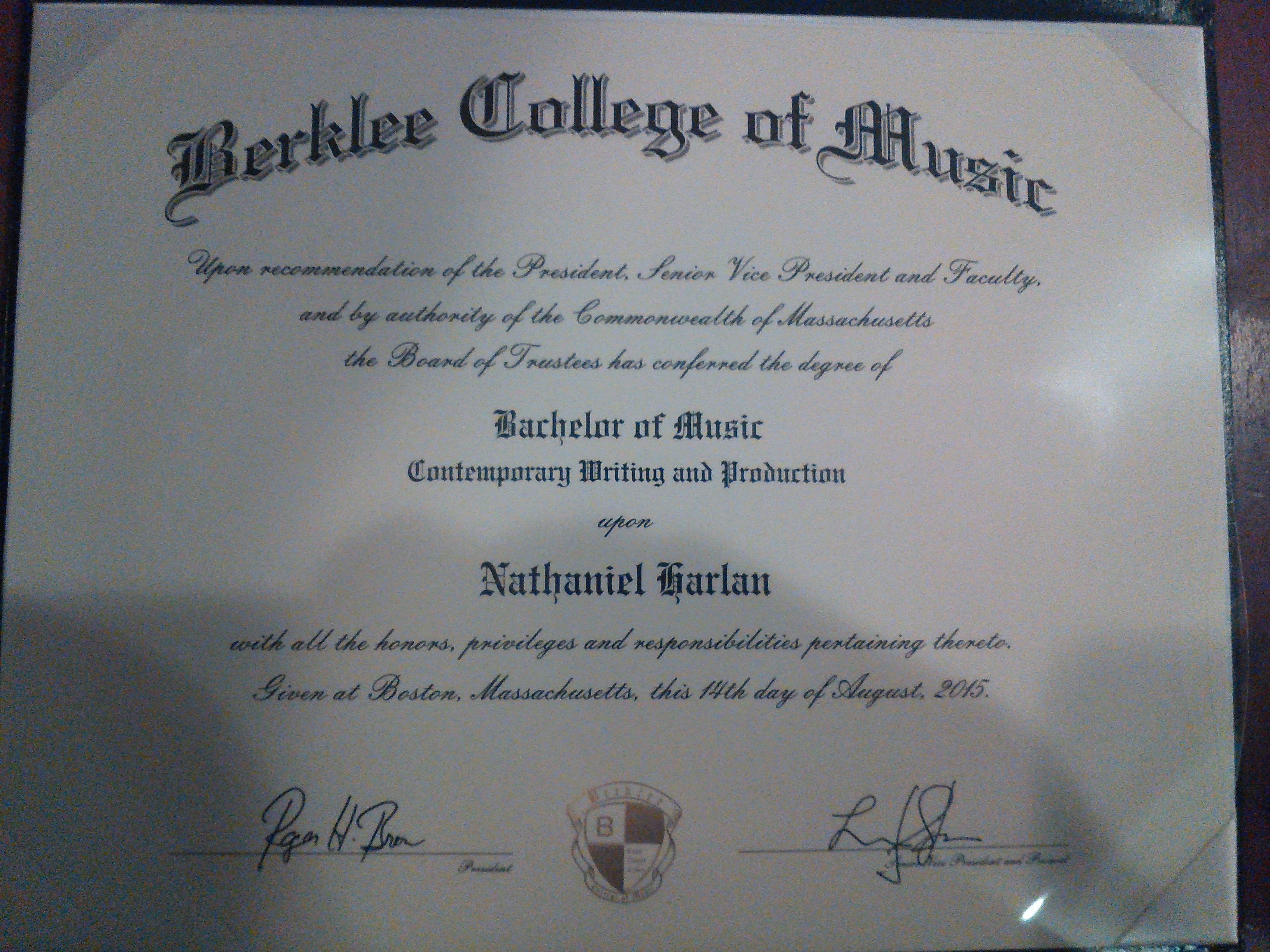
Bachelor of Music from Berklee College of Music