
Richard Chapman
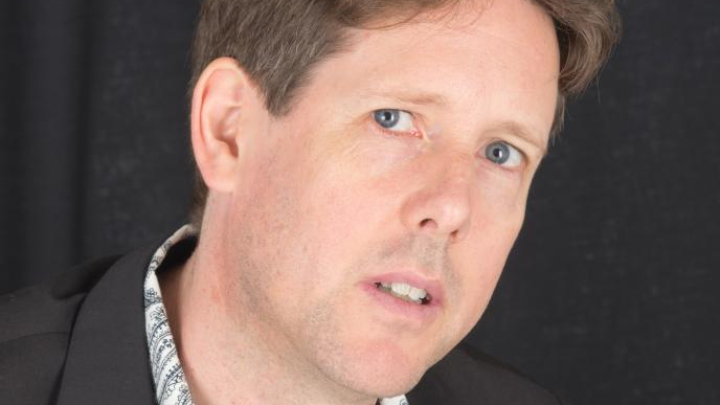
About
As a graduate of Trinity College of Music, London, I have taught extensively across the age ranges, teaching from an elementary level right up to grade 8 (advanced) and beyond. Many of my students have been prepared for concerts and instrumental exams including the Associated Board for the Royal Schools of Music, Trinity College of Music (classical, rock and pop), Guildhall School of Music and Drama, Rock School and Registered Guitar Tutors (RGT). I have also run many guitar ensembles which have often incorporated other instrument combinations such as woodwind, strings and percussion. Besides teaching I have given numerous talks and demonstrations on the guitar in schools and colleges. Over the years I have gained a great deal of teaching experience having taught in many different educational settings and this has given me invaluable insights into the many different approaches and methods that students adopt to their learning.
Professionally I perform as a classical guitarist which includes solo, chamber and concerto playing. I have performed in festivals and concert series throughout the UK. I also compose a lot of student pieces ( varying standards ) as well as more advanced pieces for the guitar.
My professional chamber music playing has covered a lot of different instrumental combinations including :
violin & guitar, flute & guitar, voice & guitar, choir & guitar, piano & guitar, recorder & guitar, guitar duo, guitar & string orchestra, guitar & full orchestra
Teaching Style
I am a very experienced teacher who has good listening skills and an ability to explain things clearly and concisely. I am always sensitive to a student’s musical needs and abilities and believe in being encouraging. My empathy and flexibility in lessons allows my students to develop even when the rigours of learning an instrument can be challenging.
BIOGRAPHY
Richard studied classical guitar at Trinity Laban, London with the renowned guitarist and composer, Gilbert Biberian and later went on to study with the Internationally acclaimed classical guitarist, Carlos Bonell. Richard has also played in masterclasses with the American guitar virtuoso, John Holmquist & English classical guitarist John Mills.
Richard has had a varied playing career as a soloist, chamber musician and accompanist. Some of his solo performances have included Warwick & Leamington Festival, Chester Festival, Leicester University Concert Series, Leeds International Concert Series, Buckingham Summer Festival, Solihull Music Festival, Warwick Arts Society, Cheltenham Town Hall, RSC Swan Theatre in Stratford-Upon-Avon and the Guildford International Festival.
Richard has also played with many established musicians including the Internationally acclaimed accompanist Julius Drake & soprano Catherine Pierard in the Charlecote Park Festival and with pianist Sophia Rahman in the Buxton International Opera festival. Other chamber music collaborations have been with members of the Lucy Gould string trio, Gonville and Caius Choir as well as performing the Concierto de Aranjuez with the Stowe Opera Orchestra. Richard has also shared a concert with Internationally acclaimed classical guitarist Eleftheria Kotzia with his guitar duo Partner, Fiona Harrison in the Wandsworth Music Festival.
Richard has also played live on BBC radio and has commissioned a Song Cycle set to Thomas Hardy poems composed for mezzo-soprano & guitar by the English composer Geoffrey Palmer which was given its’ World Premier at the English Music Festival. Richard also had a solo piece ‘Dreamtime,’ composed & dedicated to him by the English composer, Marcus Heathcock, associate composer for St Petersburg State Symphony Orchestra and has worked on a number of projects with composer Peter Wyer, associate composer for Orchestra of the Swan, including a piece for violin, cello and guitar entitled Songs from the Blazing City.
Curriculum
Lesson overview: All lessons will consistently incorporate certain fundamental aspects of technique and musicianship which are essential to a student’s progress and development. Students all receive the same elementary training at the outset but having reached a basic level of competency they can then begin to explore more specific styles and approaches to their playing.
The key elements to a lesson are posture, placement of hands, sight-reading, counting, aural skills, basic theory, tone production, technical exercises, scales, arpeggios, chords, broken chords and pieces and later on improvisation and some composition if suitable.
Lessons are conducted in a friendly and focused manner so as to encourage the student to engage as fully as possible with the material they are working on.
LESSONS FOR BEGINNERS : tutor books
A number of different tutor books are used including the Guitarist’s Way, Enjoy Playing the Guitar and Guitar Basics (other tutor books can be used on request). For the younger beginner or student that initially finds rudimentary technique difficult the ‘Guitarist’s Way,’ is a more suitable tutor book as it introduces notes in an order that is less demanding for the left hand ( fret board ) and gives the student enough time to start getting to grips with the multi-tasking nature of playing an instrument. This particular tutor book is made up of a limited amount of shorter pieces and exercises which quickly gives students the sense of achievement and direction. Other students who have the facility to engage with a more demanding tutor book such as ‘Enjoy Playing the Guitar,’ will have the opportunity to study more complex approaches to basic techniques as well as studying a substantial amount of ensemble music. For the student that benefits and needs the stimulus of a broader cross section of material, two or perhaps even three tutor books can gradually be introduced, though they might not do every exercise in each book, but select certain material to act as a compliment to their main tutor book. This approach is very effective for certain students as it eradicates the boredom factor and constantly reinforces what they are learning in varying formats.
Specific exercises can also be created and written out for a student who is experiencing a particular difficulty at the initial stages.
INTRODUCTION - Beginners
The teaching methods set out below are used as a starting point for all guitarists irrespective of what musical direction they ultimately want to take. These methods will benefit all students and give them a solid musical foundation whether they wish to study electric, acoustic or classical guitar.
Introduction to sitting position with instrument – edge of chair – guitar usually on left leg (more informal right leg posture can be adopted where appropriate.
Brief explanation/discussion on use of footstool – usually the left foot rests on the foot stool but in some cases the right foot is used. Getting correct height of foot stool and chair is very important to maintaining a good posture.
Hand positioning : Once a general concept of posture is understood the hands can then be positioned correctly on the instrument. There can be some differentiation here between pupils as an individual’s physiology can in some instances change their physical relationship to the instrument.
Introduction to right hand finger alternation of the index and middle fingers (thumb resting on bass string for support and stabilisation ) – keeping posture and placement of hands in mind. The correct and most effective angel of the hands and fingers in relation to the strings is now demonstrated and explored. Free stroke is introduced first as this is the most diverse right hand technique that can incorporate all musical patterns no matter how complex.
Alternative pick method can also be used or a combination of finger picking and pick (plectrum).
Instruction on how to push the right hand fingers through the string in the shape of an arc. The index and middle fingers attack the string, moving in the direction of the elbow. Index ( i ) and middle ( m ) fingers play top three open strings ( E, B & G ), repeating each string four times, keeping a sense of the pulse and beat as much as possible. They student initially attempts to play the open strings while looking at the right hand. This process is then repeated but without any visual cues. Removing any visual aid helps greatly in developing aural and kinaesthetic awareness which are two of the most important factors to competent and fluent sight-reading.
Introduction to notation : The open string notes, stave, time signature, note values, treble clef and other basic musical markings are shown and explained. Practical demonstration is used where necessary.
NB : Pupils are often asked simple questions throughout a lesson to help them verbalize and formulate what they have just learnt. Reinforcement of musical concepts and techniques through practical application and discussion helps the student to evolve an understanding from different view points.
Intermediate and advanced students: Exam material (including pieces and studies) of different competency levels are used with technical exercises incorporating scales, arpeggios, chords, slurs, rasgueado and repeated notes. There is also a vast repertoire of pieces in many genres and standards to chose from. Students can very much be catered for in their musical tastes and aspirations.
Credentials & Affiliations
Dip. TCL - Teaching and performing diploma of Trinity Laban ( formerly Trinity College of Music, London)

