
Roberto Prosseda
About
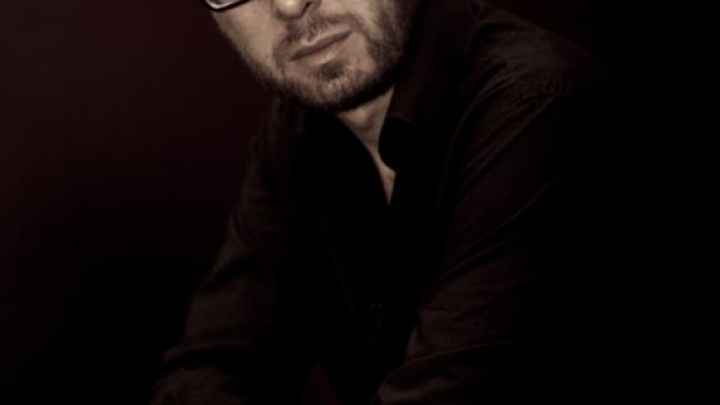
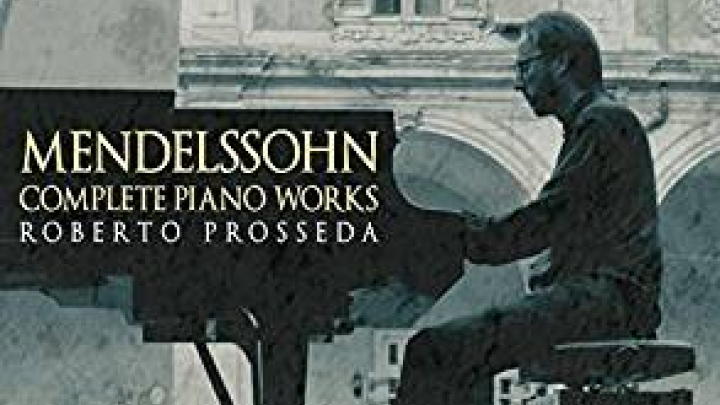
Roberto Prosseda’s sensational discovery of new works by Mendelssohn made the headlines in Europe and led to several Decca releases. His albums have won much acclaim in the press, including the CHOC from Le Monde de la Musique Classique, the Diapason d’Or and Chamber Music CD of the Month in the UK’s Classic FM magazine. In 2014 Prosseda completed his 10-year project of recording Mendelssohn’s complete piano works for Decca in 10 CDs, also released in a Box-set in 2017 ("Mendelssohn Complete Piano Works").
Roberto Prosseda has performed regularly with some of the world’s most important orchestras, such as the London Philharmonic Orchestra, New Japan Philharmonic, Moscow State Philharmonic, Bruxelles Philharmonic, Calgary Philharmonic, Saatskapelle Weimar, Sinfonia Lahti, Berliner Symphoniker, Santa Cecilia, Filarmonica della Scala, Leipzig Gewandhaus. He played under the baton of David Afkham, Marc Albrecht, Christian Arming, Harry Bickett, Oleg Caetani, Riccardo Chailly, Pietari Inkinen, Yannik Nezeit-Seguin, George Pehlivanian, Dennis Russel-Davies, Tugan Sokhiev, Jurai Valcuha, Jan Willem de Vriend. With the Gewandhaus Orchestra, conducted by Riccardo Chailly, he recorded live the 3rd Piano Concerto in E minor by Mendelssohn, released on the Decca International label in September 2009.
Other than Mendelssohn, of whose piano music he is considered to be one of today's leading interpreters, Prosseda’s performances of Mozart, Schubert, Schumann and Chopin have been particularly praised, and these composers have in fact featured in Prosseda’s recent Decca recordings, including the complete Mozart Sonatas (2015-18). An active proponent of Italian music, Prosseda also recorded the complete piano works of Petrassi and Dallapiccola.
In September 2011 Prosseda gave his debut on the pedal piano, performing the Concerto for Pedal Piano by Gounod in the world premiere in modern times. He has given more than 50 concerts with the pedal piano, rediscovering the original compositions by Robert Schumann, Franz Liszt and Charles Valentin Alkan. Several composers, including Ennio Morricone, have already written new pieces for pedal piano for Roberto Prosseda, and a recording of Gounod's four pieces for pedal piano and orchestra with the Orchestra della Svizzera Italiana conducted by Howard Shelley was released on the Hyperion label in 2013.
Roberto Prosseda is also very active in musical divulgation. He wrote the book “Il Pianoforte” for Edizioni Curci (2013) and made three documentaries dedicated to Mendelssohn, Chopin and Liszt (Euroarts).
Teaching Style
My approach to piano teaching tries to be focussed “ inside the music ”. It places the stress on the importance of immersing oneself within the score to discover the emotional meanings left to us by the composer. It is fundamental to be aware about states of mind, expressive attitudes, dramaturgy and rhetoric. In the last 15 years I had the opportunity to teach to some hundreds of students, both in regular courses in Italian State Conservatories and in several master classes in many countries. Each student has a different character: I like to encourage each pupil to become aware of his/her own individuality, rather than expecting them to emulate a utopic external model.
The lesson shouldn't just turn into a series of instructions given indiscriminately by the teacher, but should maintain a constant interaction with the sensitivity of the pupil. For this reason I often ask the pianists questions, prompting them to become aware of their conception of the piece, and helping them to express this in the best way. In addition, I like to make use of metaphors of a photographic and narrative kind: often during the lesson we speak of the “depth of field” between the theme and the accompaniment, of the “focusing” of a given melodic contour, of the temporal and spatial distance of the themes. The piano is, in fact, also a time machine, as it can “set” a theme in the present, the past or the future, also defining the context in which it appears (reality, dream, memory, hope, illusion). I also try to stimulate the timbral imagination of the pupils (and listeners), by encouraging them to evoke the sounds of other instruments or of nature and identifying a precise technical gesture that allows them to obtain the idea of sound they have in mind. Finally, there are references to gestures and body language, which can often help us to communicate things that are even apparently impossible at the keyboard. This is the case, for instance, in the handling of rests: these too can be in crescendo or diminuendo, accelerando or rallentando. The gesture, moreover, allows us to give the listener a foretaste of a given affective state or timbral effect. Such aspects may seem superfluous, and yet they prove extremely important in immersing oneself in the music and communicating it in the best way.
Much importance is also given to the “problem solving” strategies, starting with a “how to practice” method. Most of the students which I met did not have any clear idea about practicing, and I noticed how much they could improve their playing by being more aware of their mental strategies to overcome many technical and musical problems.
I believe that every teacher should respect the right of the pupil, after having acquired the basic skills, to gain different didactic experiences, precisely to find their own personal dimension through exposure to other approaches and points of view. I get seriously worried when I notice a student attempting to emulate or rely excessively on the teacher. The aim of a lesson, moreover, shouldn't be to produce a clone, but, on the contrary, to stimulate the search for artistic results that are authentic and, why not, innovative and not too predictable. Nor do I like the authoritative approach that some teachers of the old school adopted: instead, I try to relate with the students like a sort of older brother, with whom they can discover together aspects of a composition or of making music that are still unexplored. It is stimulating to see how a piano performance can be radically transformed within the space of just a few minutes of lesson, and to discover how at times it is sufficient to become more aware of the state of mind to elicit, in order to reveal artistic potentials that perhaps have still remained dormant. After all, piano lessons also serve this purpose: to help students find, through an external perspective, the great artist that lies within them.
The greatest satisfaction for me, as a teacher, is to see the enthusiasm of a pupil who discovers something alone that not even I had noticed. Musical culture and art are not, in any case, a patrimony to be possessed, but something that already belongs to everyone. I very much like the metaphor used by French writer Daniel Pennac, who considers teachers as “vectors of culture”, as fuses that are lit by the beauty of music and who contaminate the pupils with their enthusiasm.
“In the absence of the idea of possession” – says Pennac – “we are beyond the principle of sharing: all that I learn, all that I discover, if I like it and I find it moving, then I choose to pass it on to you so that it can fascinate and enrich you too.”
Curriculum
Graduated at Conservatorio "Respighi", Latina, Italy, magna cum laude, 1994.
Graduated at Accademia Pianistica di Imola, 1998. Teachers: Lazar Berman, Alexander Lonquich, Boris Petrushansky.
Studied at International Piano Foundation (1999-2000). Teachers: Leon Fleisher, Charles Rosen, Karl Ulrich Schnabel, Andreas Staier, Fou Ts'Ong.
More than 30 CDs recorded for Decca (2005 - 2019), including:
- Mendelssohn Complete Piano Works (10 CDs).
- Mendelssohn Piano Concerto n. 3 (with Gewandhaus Orchester and Riccardo Chailly)
- Mendelssohn Piano Concertos n. 1 - 2 (with Residentie Orkest The Hague and Jan Willem de Vriend)
- Mozart 18 Piano Sonatas (6 Cds)
- Chopin Piano Works
- Liszt: Années de Pèlerinage, Italie
- Schumann: Fantasie op. 17, Kinderszenen. Waldszenen
- Gounod: Piano Works
Credentials & Affiliations
Artistic Coordinator, Cremona Musica International Exhibitions (2014 - present)
Artistic Consultant, Operabarga Festival (2017 - present)
President, Associazione Mendelssohn (2009 - present)
Artistic Director, Donatori di Musica (2008 - present)