
Andrew Finn Magill
About
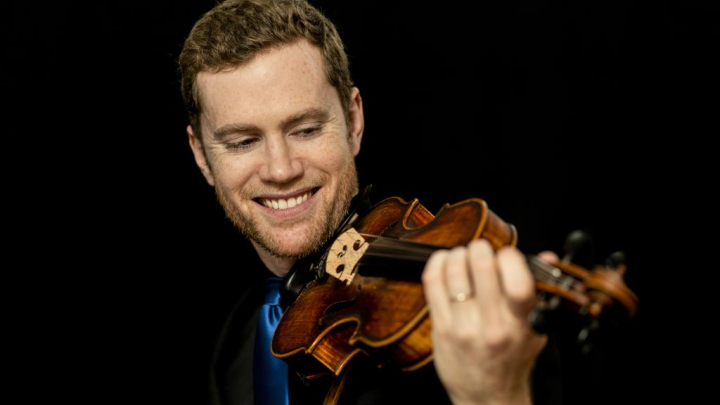
My name is Andrew Finn Magill and I'm a fiddler and educator featured on NPR, a Fulbright Fellow, North Carolina Arts Council Fellow and South Arts Emerging Traditional Artist with twenty+ years of teaching experience. After a successful week-long residency at John C. Campbell teaching Irish and American music, I am excited to unveil this unique online course exploring the relationships between these related fiddle styles.
I grew up studying Irish, Scottish, oldtime and bluegrass with the best fiddlers in the world at the Swannanoa Gathering. I have released thirteen albums, three of which have been released on Grammy-winning Ropeadope Records and I have taught American, Irish, and Scottish music at a dozen+ camps ranging from the Fèis Rois in Scotland to FiddleKids at the Freight & Salvage in Berkeley.
This four-lesson course is an adaptation of my presentation "The connections between the fiddling traditions of Ireland, Scotland, and Appalachia," which I have given at 50+ libraries and colleges across the U.S. I am excited to share various multimedia materials with students through this course in a way that the presentation does not typically allow.
“I’m gonna listen for Finn Magill," - Grammy-winning Americana artist Tim O’Brien
“A leading fiddler in a new generation of musicians.” Martin Hayes (BBC Folk Musician of the year)
Teaching Style
There are four lessons in this course each of which focuses on a fiddle tune that has a melodic "cousin" in one or more related genres of the British Isles and/or the U.S. Before each lesson, I will share various materials and listening materials with a "listening guide" of sorts so you can begin to already be thinking about certain concepts and what distinguishes these fiddle tunes from each other stylistically.
In the lesson itself we will spend a portion at the beginning breaking down the tune and some of the essential components pertinent to the style that tune variant belongs to. Hopefully having listened to the materials sent in advance and having read the listening guides, things will "lock in" more in this opening part of the lesson.
After this portion at the beginning, we will learn the tune itself, paying particular attention to certain components that define that tune version stylistically. In other words, most of the lesson will be aural but hopefully having done the "homework" in advance (materials which of course you will have infinite access to after the course ends), learning the tune by ear will make more sense and be more satisfying then simply learning the tune out of a book or off of tab.
Curriculum
Recommended student texts will be sent out closer to the beginning of the first lesson.
Credentials & Affiliations
I have taught this material both privately and in group lessons since 2003. Over that time period I have taught at the following fiddle camps:
The Swannanoa Gathering Fiddle Week, The Swannanoa Gathering Celtic Week, Montana Fiddle Camp, Rocky Mountain Fiddle Camp, Kaufman Acoustic Kamp, The Freight & Salvage's Fiddlekids Camp, Grand Canyon Celtic Camp, Acadia Trad School, Fèis Rois in Ullapool, Scotland, O'Flaherty Irish Music Retreat, John C. Campbell Folk School, and the Fairbanks Summer Arts Festival
I have also given the presentation The connections between the fiddling traditions of Ireland, Scotland, and Appalachia: An Immigration Story at the following universities, colleges, and libraries:
The University of Kentucky, Mars Hill University, Shepherd University, Blowing Rock Museum of Arts & History, The Schiele Museum of Gastonia, The Mint Museum in Charlotte, Rangeley Public Library, Lithgow Public Library, The Birthplace of Country Music Museum, Bristol Public Library, Burke County Public Library