
João Viegas
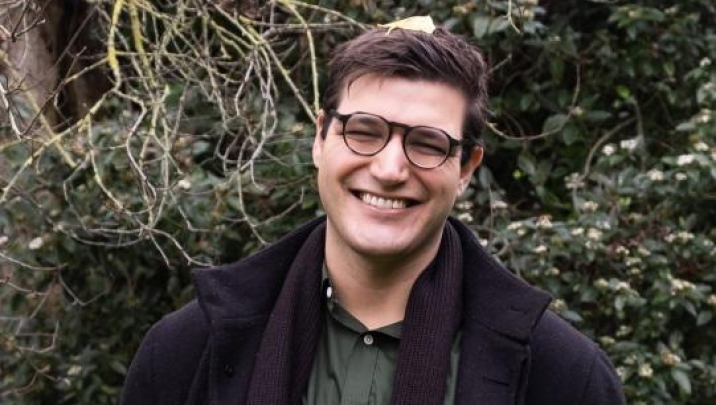
About
I'm a Portuguese composer with a dual background in concert music and film & television scoring. I hold a BMus in Composition from Escola Superior de Música de Lisboa (ESML) and an MMus in Composition for Film and TV (Merit) from the University of West London — a combination that gives me a wide-angle view of what composition can be, from the concert hall to the screen.
I've been teaching since 2019 across a range of settings: I ran the music department at a primary school in Lisbon, taught music theory and composition at the Setúbal Regional Conservatoire, and have been freelancing as a private teacher in both London and Lisbon. One of my proudest moments was helping a composition student prepare for and pass the competitive entrance exams at ESML — the same school where I studied.
I work as an active composer alongside my teaching. I write orchestral and cinematic music, produce in Logic Pro X, and am building a catalogue of production music for sync licensing. I believe that being an active practitioner makes me a better teacher — I'm not teaching from memory, I'm teaching from my current daily practice.
Lessons can be in English, Portuguese, and Spanish.
Teaching Style
My core belief is that the best composers are the ones who listen widely and think deeply. I want to broaden your musical horizons as much as possible — not to turn you into a generalist, but because understanding different traditions, genres, and techniques gives you more tools to express what's uniquely yours.
At the same time, I'm rigorous about fundamentals. Harmony, counterpoint, orchestration, form — these aren't obstacles to creativity, they're the foundation that makes creative freedom possible. Lessons are adapted to where you are in music: if you're a beginner, we'll build that foundation step by step with patience and clarity. If you're intermediate, we'll identify the gaps in your knowledge that are holding you back. If you're advanced, we'll push your thinking and refine your voice as a composer.
I don't follow a single fixed method. I draw from established pedagogical approaches and adapt them to each student's goals, musical tastes, and learning pace. I use real music — scores, recordings, film cues, production sessions — as teaching material whenever possible, because composition is ultimately learned by studying how other composers solved problems.
As for me personally as a teacher, I'm warm but honest. I'll celebrate what's working in your music, and I'll also tell you clearly what needs improvement and why. Ultimately, the goal is to realizr together the full potential of your musical ideas.
Curriculum
Lessons are structured around your specific goals, but here's the general shape of how I work:
For Music Theory and Harmony students, we work through progressively challenging concepts — intervals, scales, triads, four-part writing, modulation, chromatic harmony — using a combination of written exercises, analysis of real repertoire, and ear training. I adapt the pace and repertoire to your interests, whether that's classical, jazz, film music, or popular music harmony.
For Composition students (concert or film/TV), lessons alternate between analysis and creation. We study works together — examining structure, orchestration, and dramatic pacing — and then you compose. I give detailed feedback on your drafts, we discuss revision strategies, and over time you build a portfolio of finished work. For film and TV composition specifically, we also work on practical skills: scoring to picture, understanding temp music, working with directors and the politic, and building a professional demo reel.
For Music Production , we will cover your DAW of choices - lessons cover the full workflow: MIDI programming, virtual instruments and sample libraries, arrangement techniques, mixing fundamentals, and preparing stems for delivery. I work with orchestral and cinematic production primarily, so this is ideal if you're interested in scoring or production music rather than pop or electronic production.
I don't require specific textbooks to start, but depending on your path I may recommend materials from authors like Walter Piston (Harmony, Orchestration), Alan Belkin (applied orchestration and composition), Adler (The Study of Orchestration) or Schoenberg (Structural Functions of Harmony and Fundamnetals of Musical Composition). For film composition students, I draw on frameworks from the UWL curriculum and real-world scoring practices. Notwhitstanding, Hollywood Harmony by Lehman is also a great read.
All you need to begin is curiosity, a way to make or notate music (even a free tool like MuseScore works or a DAW like Reaper), and a willingness to do the work between lessons. The students who grow fastest are the ones who compose regularly, not just during our sessions!