





Find Your Ideal Cello Teacher for Lessons Online
For beginners to advanced, kids & adults, these excellent Cello teachers are vetted by staff experts and reviewed by verified students of online lessons at Lessonface.
View All Teachers Related Topics
Discover experienced, passionate Cello teachers to help you reach your next level.
100+
Vetted Teachers
5.0
Average Rating
1,500+
Student Ratings
~$38
Avg. Lesson Price
View All Teachers

6 Years on Lessonface
Juan Ignacio Ferreras
Cello Teacher of the year @ Lessonface in 2025 I'm an Argentine cellist, improviser, and arranger with over two decades of experience performing and teaching across classical, popular, and contemporary music. I love working with students of all ages and levels —from young beginners to advanced adult players— helping them build solid technique while discovering their own musical…
$35.00 / 30 min

12 Years on Lessonface
Griffin Browne
Griffin Browne currently lives and works in the Flathead Valley as principal cellist in the Glacier Symphony, private cello instructor, and free-lance musician. He also performs in chamber music ensembles, and serves the musical community through bow and minor instrument repairs. Dr.
$35.00 / 30 min

6 Years on Lessonface
Corey Averill
Hello to each of you! My name is Corey, and I have been teaching cello for 33 years. I am a retired music school teacher of 30 years. These past two years have been spent building up my private studio. It has been really rewarding!
$40.00 / 30 min

6 Years on Lessonface
Eli Krsteva (Elli)
Specialist music artist - cellist, graduated from Faculty of music in Belgrade with highest grades, with 13 years of teaching experience and 4 years of teaching online. I am employed in a boarding school for musically gifted children in Serbia, where I teach students from 6 to 18 years of age, but my online students are both children and adults, beginners and intermediate players.
$28.00 / 30 min
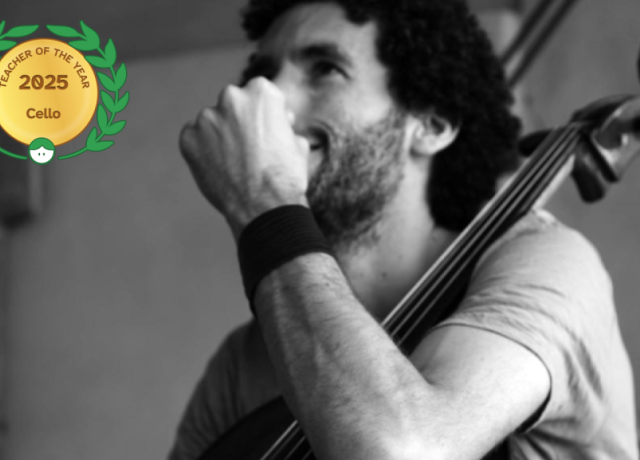
Photo: Juan Ferreras
My 12-year-old son Ben has been taking cello lessons for a month now, and we are incredibly pleased with Juan. Juan makes the lessons fun and engaging, with clear explanations that help Ben progress. What we really appreciate is that Juan sends helpful videos outside of the class, which have greatly supported Ben's learning. We've already seen how much Ben has improved, and the most important thing is that he genuinely enjoys the lessons and looks forward to each session. I highly recommend Juan as a cello teacher to anyone seeking a supportive and inspiring instructor.

Want help finding your ideal cello teacher?
Fill out the quick form and teachers who fit your needs will be in touch.

Photo: Eli Krsteva (Elli)


Great Cello Teachers
Through our longstanding commitment to treat teachers equitably, we work with phenomenal instructors — including members of the MET Orchestra, Juilliard and Berklee alumni, GRAMMY® winners and nominees, and many other professional educators.
View Teachers 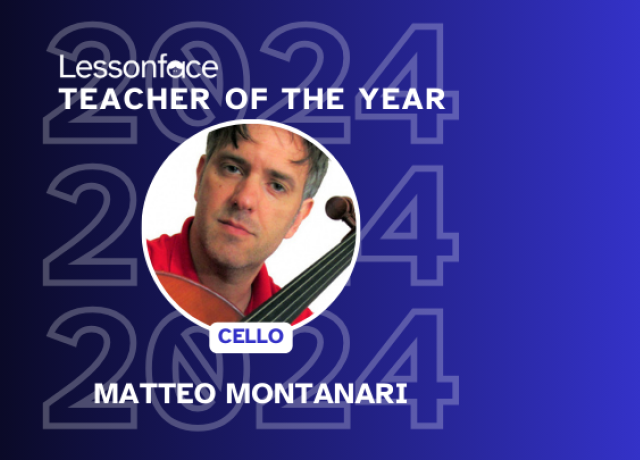
Photo: Matteo Montanari
About Cello Lessons at Lessonface
Find a great teacher, securely book a first lesson or trial, and meet via Zoom. Lessonface handles the lesson links and sends you reminders. Recordings, assignments, and notes are easy to access before, during, and after the lesson.
View Teachers Students have given their Lessonface
lessons over
39,800+ reviews.
I had my first lesson back after taking a few in person lessons with cello. I am so excited to learn with Debra. She is patient and encouraging.
My daughter loves learning from Michelle! She is very knowledgeable and yet very personable.
—Jessi S.
Cello Student of Michelle Teague
Had multiple cello lessons with Juan for my 11 year old son. Juan identified areas that need improving and helped him understand what he was missing. He is a great teacher who is great at explaining what to do and does it in a fun and engaging way. My son and I can already see improvement in his technique after just a few lessons with Juan. Will definitely continue to book lessons with him
I had my first cello lesson and came away feeling very encouraged. Mrs. Woodworth was incredibly patient, supportive, and easy to learn from. When she noticed that the pace felt a little too fast for me, she was very understanding and adjusted her teaching to make sure I felt comfortable and confident. I especially appreciated that she provided several practice options for me to choose from, along with follow-up materials to work on between lessons. She introduced new concepts in a way that was easy to understand and made learning feel approachable rather than overwhelming. Overall, it was a very positive experience, and I'm looking forward to continuing my cello journey with her. I would highly recommend her to anyone looking for a knowledgeable, patient, and encouraging teacher.
Great lesson. Eli is quite a gifted cellist, but more importantly, an accomplished and patient educator, committed to her students' improvement. I look forward to this journey with her.












Latest from the Blog
Tips, stories, and interviews from the Cello community.

Back to School Student Survey: Why Families Choose Lessonface for Online Lessons
Read more
Back-to-School Savings, Guaranteed
Read more
Five Questions With Cellist/Guitarist Ward Williams
Ward Williams is an accomplished cello and guitar teacher. A former member of Jump, Little Children (later known just as Jump), just this week Ward appeared on the Today Show accompanying Sara Bareilles.

Lessonface Guarantee
Reach out to tell us within 48-hours of taking an unsatisfactory lesson, class, or course, and we will offer you a refund. Read more about the guarantee.

Designed for All Ages
Creating a joyful, safe, and convenient educational experience for our students is our goal. Learn more about our kid-friendly features here, or read our privacy policy and safety precautions here.
Have more questions? Check out our FAQ, or reach out.
About Lessonface
At Lessonface, we've held our mission of helping students achieve their goals while treating teachers equitably for over ten years. We're here to help you connect to your ideal teacher and make real progress. Please reach out with any questions or concerns.
 Claire Cunningham
- Founder & CEO
What is Lessonface?
Lessonface is a Public Benefit Corporation operating since 2012 whose purpose is to connect students with great teachers for music, language, and arts lessons. Teachers on Lessonface set their own rates and profiles, and students can select their ideal teachers based on their background, teaching style, rates, and schedule.
How do online Cello lessons work?
Online lessons are effective, affordable, and accessible. Lessonface qualifies teachers in over 300 music, language, and arts subjects, including Cello. Students can browse teachers' profiles, send them messages, and book lessons securely through Lessonface. Lessons happen via Zoom links that are securely generated for each lesson, and can be easily recorded by the teacher. Recordings, notes, and attachments can all be accessed from within the Lessonface dashboard. Lessons can be booked one at a time, in packages, or by subscription to save a spot on the teacher's calendar. Lessonface hosts recitals, open mics, group classes, and self-paced courses too. Registering an account is free so it's easy to get started reaching out to find your ideal instructor. Contact us with any further questions!
What is the best method for learning Cello ?
We're biased, of course, but at Lessonface we believe the best way to learn Cello is through one-on-one lessons. Personalized instruction means your teacher can tailor every lesson to your goals, learning style, and skill level. Online group classes can also be a great way to make learning fun and social. Learning Cello online makes it easy to stay consistent, which is essential to steady progress.
There are plenty of apps and YouTube videos out there to help with learning Cello, but most teachers agree that those resources work best as supplements to, not replacements for, one-on-one instruction. A skilled Cello teacher can identify bad habits before they become ingrained, help you focus on what matters most, and solve problems as soon as they arise, often saving you months of frustration and wasted practice time. The bottom line? A real teacher accelerates your progress and keeps you on the right path from day one.
How do I find the best teacher for me for Cello lessons?
With over 100 qualified Cello teachers who have together earned an average of 5 out of 5 stars over 1509 lesson reviews by verified students, you can be sure to find a great instructor at Lessonface.
Lessonface offers free tools to help you find the ideal tutor for you or your family:
- Use the open filtering system
- Use our matching service to describe your background, scheduling preferences, and any particular goals, and qualified Cello teachers will respond.
You can view teachers' bios, accolades, rates, send them a message and book lessons from their profiles.
Many teachers offer a free trial, and you can book lessons one at a time until you decide you prefer to book a bundle or subscribe, so don't hesitate to try. Teachers may also offer group classes, self-paced courses, and downloadable content, so there are more ways to get started while you're still getting acquainted with the community.
How much do Cello lessons cost?
Cello teachers on Lessonface set their own rates. Rates are displayed on the teachers' profile pages and in the checkout process prior to booking. Teachers may choose to change their rates for new bookings, and students will always be notified prior to making payment. The average paid for a Cello lesson on Lessonface in the past 12 months was $36.34. Some Cello teachers offer a free trial lesson to new students, which are not factored into the average prices.
How does payment work for Cello lessons?
There is no fee until you book your first paid lesson. Many teachers offer free trial lessons. Students can opt to book one a time, or purchase lesson packages or subscriptions for scheduling convenience, and, depending on the teachers, a discount. Payment can be made by credit card or Paypal. Lessons booked with a subscription are pre-paid three days before the end of the month for lessons that are scheduled for the following month. Subscription payments can only be made by credit card (not Paypal). Teachers receive their payment after the lesson has been completed.
Can I learn cello online as a complete beginner?
Yes, and many students do exactly that. Online cello lessons have become a genuinely effective way to learn, even from square one. A good teacher can see your posture, bow hold, and left hand position clearly on camera, and will correct technique issues in real time just as they would in person.
A few simple setup tips can make your online lessons even more effective.Good lighting helps your teacher see your bow arm and finger placement. Propping your device at the right angle — ideally showing your full body from the side or slightly in front — gives them the best view of your setup. Some students use a second device or a mirror to see themselves while they play, which can also be a useful self-correction tool.
The cello has some genuine technical demands — producing a clean tone with the bow takes patience, and posture matters a lot early on. But these are exactly the things an experienced online teacher is trained to spot and address. You don't need to figure any of it out alone.
If you're not sure where to start, a trial lesson is a low-stakes way to experience online cello instruction firsthand and get a feel for whether a particular teacher is a good fit for you.
How do I choose the right size cello for myself or my child?
Cellos come in several sizes, and playing the wrong one can make learning harder and even lead to strain or injury, so it's worth getting this right from the start.
For adults and teenagers, a full-size (4/4) cello is almost always the right choice, though players with very small hands or frames sometimes find a 7/8 cello more comfortable than.
For younger children, smaller sizes (3/4, 1/2, 1/4, and even smaller) are available to match their arm length and hand span.The most reliable way to determine the right size is to measure the child's arm length from the neck to the middle of the palm with the arm extended. Many music stores and rental programs use this measurement to guide their recommendations. A general rule of thumb: when seated with the cello in playing position, the scroll should reach approximately to the player's left ear, and the player should be able to wrap their hand comfortably around the neck without straining. If you're renting (which is a smart move for growing children) most rental programs will swap sizes as your child grows.
When in doubt, your cello teacher is your best resource. They can assess fit in the first lesson and steer you in the right direction before you commit to a purchase or rental.
Is it better to buy or rent a cello when starting out?
For most beginners, renting is the smarter starting point. It keeps your initial investment low while you figure out whether the cello is the right fit for you, and it removes the pressure of committing to an instrument before you know what you're looking for.
For children especially, renting makes a lot of practical sense. Kids grow quickly, and a cello that fits a seven-year-old won't fit a ten-year-old. Most rental programs will swap sizes as your child grows, which saves you from having to buy a new instrument every couple of years.
For adults who are confident they're in it for the long haul, buying can make sense sooner. A decent beginner cello can be had for $300 to $600, and many come as part of an outfit that includes a bow and case. Avoid the cheapest instruments on general retail sites — very inexpensive cellos can be difficult to play and hard to tune, which makes learning unnecessarily frustrating.
Whether you rent or buy, it's worth getting your instrument set up by a luthier or reputable music store before your first lesson. A proper setup makes a real difference in playability and sound.
Your cello teacher can advise you on what to look for and flag any issues with an instrument you're considering. It's a great question to bring to a first or trial lesson.
How long does it take to play a recognizable song on cello?
Sooner than you might think! Most beginners can play simple, recognizable melodies within the first few weeks of lessons. Songs like "Twinkle Twinkle Little Star," "Ode to Joy," and folk tunes are common early wins that show up in most beginner method books for good reason — they're achievable quickly and help build foundational skills at the same time.
That said, the cello does have a learning curve when it comes to tone production. Getting a smooth, resonant sound from the bow takes some practice, so early attempts may sound a bit scratchy before they sound beautiful. This is completely normal and not a sign that you're doing anything wrong — it's just part of the process.
With consistent practice of even 15 to 20 minutes a day, most students are playing simple melodies in their first month and tackling more recognizable repertoire within three to six months. If you have a specific piece in mind — a movie theme, a classical favorite, a song you love — mention it to your teacher early. A good teacher will work your goals into your learning plan and help you get there as efficiently as possible.
The cello is one of the most rewarding instruments to play, and even early-stage playing can sound genuinely beautiful. The journey is worth it.
Can you learn to play cello for non-classical styles like rock, folk, or jazz?
Absolutely. While the cello has a long classical tradition, it's a remarkably versatile instrument that shows up across a huge range of genres. Folk and Celtic music have deep roots with the cello. Jazz cellists like Ron Carter and David Darling have built entire careers outside the classical world. And in rock and pop, the cello has had a presence from the Beatles to Apocalyptica to Yo-Yo Ma's genre-crossing collaborations.
That said, most beginner method books and early instruction are rooted in classical technique — and that's not a bad thing. Classical training builds a strong foundation in tone production, intonation, and bow control that transfers well to any style. Many non-classical cellists got their start in classical study before branching out.
If you have a specific style in mind, mention it to your teacher from the beginning. A good teacher will incorporate your interests into your learning, introducing style-appropriate repertoire and techniques as soon as your foundation allows. Some teachers specialize in non-classical styles entirely, so if folk, jazz, or rock cello is your primary goal, it's worth looking for someone with experience in that area.
The cello's rich, warm tone makes it a natural fit for almost any musical context. Whatever style draws you to the instrument, there's a path to get you there.