







Find Your Ideal Jazz Piano Teacher for Lessons Online
For beginners to advanced, kids & adults, these excellent Jazz Piano teachers are vetted by staff experts and reviewed by verified students of online lessons at Lessonface.
View All Teachers Related Topics
Discover experienced, passionate Jazz Piano teachers to help you reach your next level.
100+
Vetted Teachers
5.0
Average Rating
170+
Student Ratings
~$40
Avg. Lesson Price
View All Teachers

1 Year on Lessonface
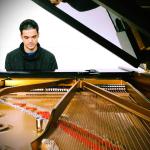
Ezequiel Balseca
I am a professional jazz pianist, composer, and music educator. I love teaching jazz and classical music to students of all ages, and I’m passionate about making musical knowledge accessible to everyone. I hold a Bachelor’s degree in piano from Spain and a Master’s degree in jazz from Germany.
$25.00 / 30 min

9 Years on Lessonface
Beverly Cashin
Hello! I've been playing and teaching for several decades, and I can show you how to have fun with the piano. If you're a beginner, I can take you right from step one and have you playing familiar songs by the 1st or 2nd lesson. If you already have some experience, I can add to it. I've been playing and studying piano since age 7 (long time).
$30.00 / 30 min

10 Years on Lessonface
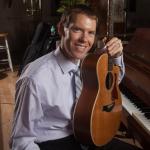
Jim Funnell
Hello and welcome, I’m a pianist, composer, and educator with a lifelong passion for music as a living, breathing language — something to explore, shape, and make your own. Originally trained as a classical pianist in France, I later graduated summa cum laude from Berklee College of Music in Boston, where I had the chance to study with inspiring artists such as Danilo Pérez and…
$42.00 / 30 min

6 Years on Lessonface
Maxine Roberts
Please see my video on the right hand side of my profile and click the side navigation arrows to see my lesson layout. I am a qualified jazz, classical and contemporary piano teacher with over 18 years of teaching experience. At the age of 17, I completed a UNISA grade 8 classical piano qualification (cum laude) and participated in the UNISA Music Scholarship Competition.
$25.00 / 30 min
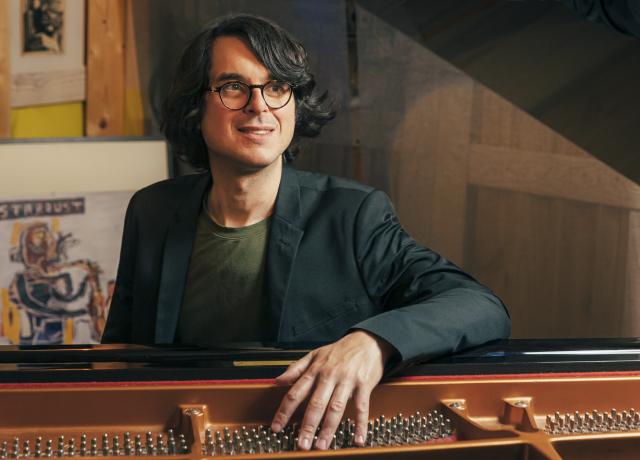
Photo: Jim Funnell
Jim taught my children some blues and basic jazz piano - they thought he was great and really enjoyed the practise he set them. Jim is very positive and encouraging as well as knowledgeable and talented.
Want help finding your ideal jazz piano teacher?
Fill out the quick form and teachers who fit your needs will be in touch.
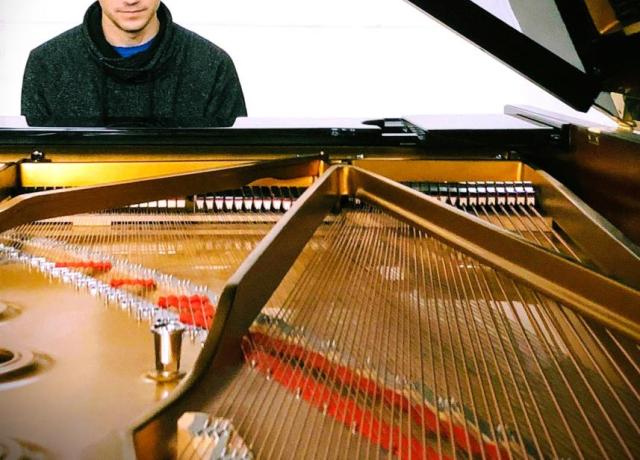
Photo: Colin Shecktor


Great Jazz Piano Teachers
Through our longstanding commitment to treat teachers equitably, we work with phenomenal instructors — including members of the MET Orchestra, Juilliard and Berklee alumni, GRAMMY® winners and nominees, and many other professional educators.
View Teachers 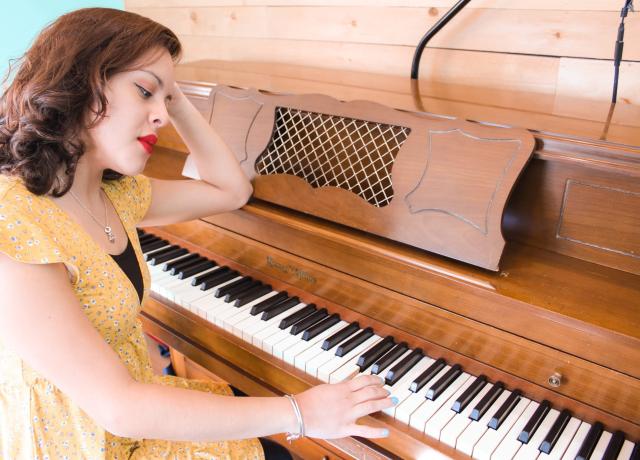
Photo: Rebeca Torres
About Jazz Piano Lessons at Lessonface
Find a great teacher, securely book a first lesson or trial, and meet via Zoom. Lessonface handles the lesson links and sends you reminders. Recordings, assignments, and notes are easy to access before, during, and after the lesson.
View Teachers Downloadable materials include packs, guides, and exercises to help you learn.
9
Downloadables
5.0
Average Rating













Latest from the Blog
Tips, stories, and interviews from the Jazz Piano community.



Lessonface Guarantee
Reach out to tell us within 48-hours of taking an unsatisfactory lesson, class, or course, and we will offer you a refund. Read more about the guarantee.

Designed for All Ages
Creating a joyful, safe, and convenient educational experience for our students is our goal. Learn more about our kid-friendly features here, or read our privacy policy and safety precautions here.
Have more questions? Check out our FAQ, or reach out.
About Lessonface
At Lessonface, we've held our mission of helping students achieve their goals while treating teachers equitably for over ten years. We're here to help you connect to your ideal teacher and make real progress. Please reach out with any questions or concerns.
 Claire Cunningham
- Founder & CEO
What is Lessonface?
Lessonface is a Public Benefit Corporation operating since 2012 whose purpose is to connect students with great teachers for music, language, and arts lessons. Teachers on Lessonface set their own rates and profiles, and students can select their ideal teachers based on their background, teaching style, rates, and schedule.
How do online Jazz Piano lessons work?
Online lessons are effective, affordable, and accessible. Lessonface qualifies teachers in over 300 music, language, and arts subjects, including Jazz Piano. Students can browse teachers' profiles, send them messages, and book lessons securely through Lessonface. Lessons happen via Zoom links that are securely generated for each lesson, and can be easily recorded by the teacher. Recordings, notes, and attachments can all be accessed from within the Lessonface dashboard. Lessons can be booked one at a time, in packages, or by subscription to save a spot on the teacher's calendar. Lessonface hosts recitals, open mics, group classes, and self-paced courses too. Registering an account is free so it's easy to get started reaching out to find your ideal instructor. Contact us with any further questions!
What is the best method for learning Jazz Piano ?
We're biased, of course, but at Lessonface we believe the best way to learn Jazz Piano is through one-on-one lessons. Personalized instruction means your teacher can tailor every lesson to your goals, learning style, and skill level. Online group classes can also be a great way to make learning fun and social. Learning Jazz Piano online makes it easy to stay consistent, which is essential to steady progress.
There are plenty of apps and YouTube videos out there to help with learning Jazz Piano, but most teachers agree that those resources work best as supplements to, not replacements for, one-on-one instruction. A skilled Jazz Piano teacher can identify bad habits before they become ingrained, help you focus on what matters most, and solve problems as soon as they arise, often saving you months of frustration and wasted practice time. The bottom line? A real teacher accelerates your progress and keeps you on the right path from day one.
How do I find the best teacher for me for Jazz Piano lessons?
With over 100 qualified Jazz Piano teachers who have together earned an average of 4.98 out of 5 stars over 177 lesson reviews by verified students, you can be sure to find a great instructor at Lessonface.
Lessonface offers free tools to help you find the ideal tutor for you or your family:
- Use the open filtering system
- Use our matching service to describe your background, scheduling preferences, and any particular goals, and qualified Jazz Piano teachers will respond.
You can view teachers' bios, accolades, rates, send them a message and book lessons from their profiles.
Many teachers offer a free trial, and you can book lessons one at a time until you decide you prefer to book a bundle or subscribe, so don't hesitate to try. Teachers may also offer group classes, self-paced courses, and downloadable content, so there are more ways to get started while you're still getting acquainted with the community.
How much do Jazz Piano lessons cost?
Jazz Piano teachers on Lessonface set their own rates. Rates are displayed on the teachers' profile pages and in the checkout process prior to booking. Teachers may choose to change their rates for new bookings, and students will always be notified prior to making payment. The average paid for a Jazz Piano lesson on Lessonface in the past 12 months was $37.13. Some Jazz Piano teachers offer a free trial lesson to new students, which are not factored into the average prices.
How does payment work for Jazz Piano lessons?
There is no fee until you book your first paid lesson. Many teachers offer free trial lessons. Students can opt to book one a time, or purchase lesson packages or subscriptions for scheduling convenience, and, depending on the teachers, a discount. Payment can be made by credit card or Paypal. Lessons booked with a subscription are pre-paid three days before the end of the month for lessons that are scheduled for the following month. Subscription payments can only be made by credit card (not Paypal). Teachers receive their payment after the lesson has been completed.
Do I need to know how to play piano before I start learning jazz piano?
No prior piano experience is required to start learning jazz piano. Plenty of people begin their entire piano journey with jazz as their goal, and a good jazz piano teacher can absolutely start you from scratch.
That said, it's worth knowing what "starting from scratch" means in practice. In your early lessons, you'll be building foundational skills alongside jazz-specific ones — learning how the keyboard is laid out, developing basic finger independence, and getting comfortable with simple chord shapes, all while your teacher introduces you to the sounds and concepts that make jazz distinctive. It takes a little longer to get to the fun parts this way, but having a clear musical goal from day one actually accelerates progress and keeps you motivated.
If you do have some piano background — even just a year or two of classical lessons as a child — you'll find that foundation genuinely useful. Basic finger independence, familiarity with the keyboard, and any music reading ability you have will all give you a head start.
The most important thing isn't where you're starting from — it's finding a teacher who is comfortable working with beginners and can introduce jazz concepts in a way that feels accessible and exciting from the very first lesson. Some jazz piano teachers specialize in adult beginners specifically, and working with the right teacher makes an enormous difference.
Do I need to learn to read music to play jazz piano? What about music theory?
You don't need to read sheet music to play jazz piano, and many great jazz pianists have had limited or no sheet music reading ability. Jazz is fundamentally an aural tradition — it's learned largely by listening, imitating, and internalizing. Lead sheets, which show just the melody and chord symbols, are the most common written format in jazz, and learning to read those is much simpler than reading full classical notation. A good jazz teacher will help you develop the level of reading that serves your goals.
Music theory is a different story. Theory is genuinely central to jazz in a way that it isn't for many other styles. Understanding chord construction, chord progressions, and scales gives you the vocabulary to improvise, communicate with other musicians, and make sense of what you're hearing. You don't need to master theory before you start — in fact, the best approach is learning theory in direct connection with music you're actually playing. But expect theory to be a consistent thread running through your jazz piano education.
The good news is that jazz theory, while deep, is also logical and rewarding to learn. Most students find that the more theory they absorb, the more the music opens up and makes sense — and the more fun it becomes to play.
What's the difference between learning classical piano and jazz piano? If I already play classical, is it easy to transition to jazz?
Classical and jazz piano share the same instrument and some foundational techniques, but they are in many ways distinct disciplines that require different skills and different ways of thinking about music.
Classical piano training emphasizes reading notation accurately, reproducing a composer's written intentions with precision, and developing technical facility through structured exercises and repertoire. Jazz piano, by contrast, emphasizes improvisation, chord-based thinking, and developing your own voice within a tradition. Where classical training asks you to faithfully interpret someone else's music, jazz training asks you to create in real time.
If you already play classical piano, you bring real advantages to jazz. Finger independence, technical facility, music reading ability, and an understanding of harmony will all serve you well. Many jazz concepts will feel familiar in theory, even if applying them in a jazz context takes adjustment.
The transition does require rewiring some habits, though. Classical pianists often find that the hardest part of learning jazz isn't the theory or the technique — it's loosening up. Swing rhythm, blues feeling, and improvisational thinking don't come naturally to players trained to follow written notes precisely. Expect an adjustment period, and expect it to be genuinely fun once things start to click.
A teacher who understands both traditions and has experience working with classical crossover students will make the transition much smoother.
What are the different styles of jazz piano?
Jazz piano has a rich and varied history, and the different styles that have emerged over the past century are distinct enough that some players specialize in just one or two their entire careers.
Stride piano is one of the earliest jazz piano styles, developed in the 1920s. It features a distinctive left hand pattern that alternates between a low bass note and a mid-range chord, creating a bouncy, propulsive feel. Fats Waller and James P. Johnson are the names most associated with the style.
Bebop piano emerged in the 1940s and brought a new level of harmonic and rhythmic complexity to jazz. The left hand became more sparse and unpredictable, while the right hand played rapid, intricate melodic lines. Bud Powell is considered the defining bebop pianist.
Cool jazz and modal jazz, associated with players like Bill Evans and Herbie Hancock, brought a more spacious, impressionistic approach. Chords became more colorful and complex, and the music often breathed more openly than bebop.
Hard bop brought blues and gospel influences back into jazz piano, with players like Horace Silver and Bobby Timmons developing a grittier, more soulful approach.
Later developments include jazz fusion, which incorporated electric piano and synthesizers, and contemporary jazz piano, which draws freely from all of these traditions and beyond.
Most jazz piano teachers will introduce students to several of these styles, helping them develop a broad foundation before finding their own voice.
How do I develop a jazz feel and get good at swing rhythm?
Swing rhythm is one of those things that's easier to absorb than to explain. At its core, swing involves a particular way of treating rhythm — notes that are nominally equal in length are played unevenly, with a lilt and bounce that gives jazz its characteristic forward momentum. But describing it in words only gets you so far. The most important thing you can do to develop a jazz feel is listen — a lot, and actively.
Listening is not a passive activity in jazz education. When you listen with intention — paying attention to how a pianist comps behind a soloist, how they use space, how their left hand interacts with their right — you are absorbing a musical language that no amount of theoretical explanation can fully convey. This is how jazz has always been transmitted, and it remains the most direct path to sounding like the real thing.
Some essential jazz pianists to spend time with: Oscar Peterson for dazzling technique and swing feel, Bill Evans for harmonic beauty and sensitivity, Thelonious Monk for rhythmic individuality and wit, Herbie Hancock for the bridge between tradition and innovation, and McCoy Tyner for raw power and modal intensity. Bud Powell is essential for bebop, and Fats Waller for early stride and swing.
In lessons, a good teacher will help you internalize swing through rhythm exercises, call-and-response, and playing along with recordings — turning what you hear into something you can reproduce and eventually make your own.