

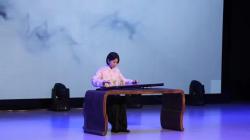



Find Your Ideal Guqin Teacher for Lessons Online

Discover experienced, passionate Guqin teachers to help you reach your next level.

Audrey Sun
Leng Qiu Yuan
Want help finding your ideal guqin teacher?

Great Guqin Teachers
About Guqin Lessons at Lessonface













Lessonface Guarantee

Designed for All Ages
Creating a joyful, safe, and convenient educational experience for our students is our goal. Learn more about our kid-friendly features here, or read our privacy policy and safety precautions here.
Have more questions? Check out our FAQ, or reach out.
About Lessonface
At Lessonface, we've held our mission of helping students achieve their goals while treating teachers equitably for over ten years. We're here to help you connect to your ideal teacher and make real progress. Please reach out with any questions or concerns.
 Claire Cunningham
- Founder & CEO
What is Lessonface?
How do online Guqin lessons work?
What is the best method for learning Guqin ?
We're biased, of course, but at Lessonface we believe the best way to learn Guqin is through one-on-one lessons. Personalized instruction means your teacher can tailor every lesson to your goals, learning style, and skill level. Online group classes can also be a great way to make learning fun and social. Learning Guqin online makes it easy to stay consistent, which is essential to steady progress.
There are plenty of apps and YouTube videos out there to help with learning Guqin, but most teachers agree that those resources work best as supplements to, not replacements for, one-on-one instruction. A skilled Guqin teacher can identify bad habits before they become ingrained, help you focus on what matters most, and solve problems as soon as they arise, often saving you months of frustration and wasted practice time. The bottom line? A real teacher accelerates your progress and keeps you on the right path from day one.
How do I find the best teacher for me for Guqin lessons?
With over 100 qualified Guqin teachers who have together earned an average of 5 out of 5 stars over 19 lesson reviews by verified students, you can be sure to find a great instructor at Lessonface.
Lessonface offers free tools to help you find the ideal tutor for you or your family:
- Use the open filtering system
- Use our matching service to describe your background, scheduling preferences, and any particular goals, and qualified Guqin teachers will respond.
You can view teachers' bios, accolades, rates, send them a message and book lessons from their profiles.
Many teachers offer a free trial, and you can book lessons one at a time until you decide you prefer to book a bundle or subscribe, so don't hesitate to try. Teachers may also offer group classes, self-paced courses, and downloadable content, so there are more ways to get started while you're still getting acquainted with the community.
How much do Guqin lessons cost?
How does payment work for Guqin lessons?
What is the guqin?
The guqin (pronounced gwoo-CHIN) is a plucked string instrument from China with a history stretching back over three thousand years, making it one of the oldest continuously played instruments in the world. It is sometimes called the qin (chin) for short, and was historically referred to as the "father of Chinese music" or the "instrument of the sages." In older romanization systems you may also see it spelled "ch'in."
The guqin is a long, flat instrument with seven strings stretched over an unfretted wooden body. It is played on a table or flat surface, with the player seated. The strings are plucked, pressed, and slid along the soundboard to produce an extraordinary range of tonal colors — open string tones, stopped notes, and a remarkable variety of harmonics that give the instrument much of its distinctive voice. Those harmonics, produced by lightly touching the strings at specific points, are central to the guqin's sound in a way that has no real parallel in Western string instruments.
What makes the guqin truly singular is the depth of meaning attached to it in Chinese culture. For millennia it was considered the instrument of scholars, philosophers, and cultivated gentlemen — an instrument not primarily for performance or entertainment, but for personal cultivation, meditation, and self-expression. Confucius is said to have played it. The instrument appears throughout Chinese poetry, painting, and literature as a symbol of refinement, solitude, and philosophical depth.
In 2003, UNESCO inscribed guqin music on its list of Intangible Cultural Heritage of Humanity — recognition of both the instrument's antiquity and the fragility of its living tradition.
What should I look for when buying a guqin?
Buying a guqin is a more complex decision than buying most instruments, and it's one where the guidance of a knowledgeable teacher is genuinely invaluable — especially if you're new to the instrument and don't yet have the ear or experience to evaluate one yourself.
The most important factor is sound quality. A good guqin should have a resonant, even tone across all seven strings, with harmonics that ring clearly and sustain well. The three tonal qualities central to guqin playing — open string tones, stopped notes, and harmonics — should all be present and balanced. This is something that's very difficult to assess from a photograph or a description, which is why playing an instrument before buying, or having a teacher evaluate it, is so important.
Construction quality matters enormously. Guqins are traditionally made from aged paulownia wood for the soundboard, with catalpa wood for the back. Well-seasoned, properly dried wood produces a better instrument. Cheap instruments often use inferior materials or shortcuts in construction that affect both sound and playability.
The strings are worth attention too. Traditionally guqins used silk strings, which produce a softer, more delicate tone. Most players today use nylon-wrapped metal strings, which are more durable and project more volume. Both are legitimate choices and a matter of personal preference and musical context.
New players should be cautious about very inexpensive instruments, which can be poorly constructed and difficult to play. At the same time, a very expensive instrument isn't necessary at the beginning. A teacher can help you find something appropriate for your level and budget.
How do I care for and maintain a guqin?
The guqin is a wooden instrument, and like all wooden instruments it needs protection from the two things most likely to damage it: extreme temperatures and changes in humidity.
Keep your guqin away from direct sunlight, heating vents, air conditioning units, and anywhere else that exposes it to sudden temperature changes or very dry conditions. Low humidity is particularly damaging — it can cause the wood to crack or warp over time. If you live in a dry climate or heat your home in winter, a room humidifier or a case humidifier can help protect the instrument. Most wooden instrument specialists recommend keeping humidity between 45 and 55 percent, and this is a reasonable target for guqin storage as well.
When not in use, keep your guqin in a case or wrapped in a silk cloth — the traditional method. This protects both the finish and the strings from dust and environmental fluctuations.
The strings should be wiped down after playing to remove oils from your fingers, which degrade the strings over time. If you use silk strings, be aware that they are more delicate than nylon-wrapped metal strings and will need more frequent replacement.
The surface of the guqin — traditionally finished with a mixture of lacquer and deer horn powder — should be cleaned gently. Avoid harsh chemical cleaners. A soft, dry cloth is usually sufficient for routine cleaning.
Over time, the strings may need adjustment or replacement, and the instrument may need occasional professional attention. Building a relationship with a knowledgeable teacher or a specialist in Chinese instruments is the best way to stay on top of its needs.
What are the most important techniques in guqin playing?
Guqin technique is unlike anything in Western string playing, and understanding its basic elements helps explain why the instrument sounds the way it does — and why it rewards patient, dedicated study.
The guqin produces three distinct categories of sound, and learning to navigate and blend them is fundamental to the instrument. Open string tones — called san yin — are produced by plucking the string without stopping it, producing a full, resonant sound. Stopped notes — called an yin — are produced by pressing the string against the soundboard with the left hand while plucking with the right, creating a warmer, more muted tone. Harmonics — called fan yin — are produced by lightly touching the string at specific points without fully pressing it down, creating a delicate, bell-like tone that is one of the most distinctive sounds the instrument produces. Moving fluidly between these three tonal qualities — and using them expressively and intentionally — is at the heart of guqin artistry.
The right hand is responsible for plucking, and there are numerous specific techniques for how strings are plucked — inward and outward strokes with different fingers, each with its own character and name in the notation system.
The left hand does much more than simply stop the strings. Slides — moving the finger along the string while it vibrates — are central to guqin expression, producing the continuous pitch changes and ornaments that give the music its flowing, vocal quality. Vibrato techniques add further nuance and emotional depth.
Guqin technique is highly codified and traditionally transmitted directly from teacher to student — another reason finding a knowledgeable teacher is so important.
How is guqin notation different from Western music notation?
Guqin notation is one of the most fascinating and distinctive systems in all of music, and understanding it helps explain why the instrument has such a unique relationship between the written score and the performed music.
Western staff notation tells you which pitches to play, how long to hold them, and how loud to play them. It is prescriptive and relatively precise. Guqin notation works quite differently. The traditional system, called jianzi pu — literally "reduced notation" — developed in the late Tang dynasty and is still in use today. Rather than indicating specific pitches directly, it uses composite characters that encode the technique used to produce each sound: which string to pluck, which finger of which hand to use, where to place the left hand on the string, and what kind of motion to make. In other words, it describes how to play rather than simply what to play.
This means that reading guqin notation requires not just musical literacy but a thorough knowledge of the instrument's techniques. A student can't simply sit down and sight-read a guqin score the way a pianist might read a piece of sheet music — the notation assumes embodied knowledge of the instrument.
Another significant difference is that jianzi pu does not specify rhythm or duration in the way Western notation does. The timing and pacing of a piece is transmitted through oral tradition and direct instruction from teacher to student, which is one reason the teacher-student relationship is so central to guqin learning.
A more recent numbered notation system exists and is sometimes used for beginners, but jianzi pu remains the traditional and primary system.