






Find Flute Lessons with Excellent Teachers
Grow your skills with the guidance of a great Flute teacher. Explore live online Flute lessons, group classes, and self-paced courses — all led by qualified teachers and reviewed by your fellow students.
View Teachers Related Topics
Discover experienced, passionate Flute teachers to help you reach your next level.
100+
Vetted Teachers
5.0
Average Rating
1,600+
Student Ratings
~$39
Avg. Lesson Price
View All Teachers

2 yrYears
Teaching on Lessonface
Tammi B
My name is Tammi, 36. I have performed and taught internationally and have an honors degree in music and drama performance. I have been playing flute and piano since grade 3 and am a self taught guitarist over the last 15 years.
$15.00 / 30 min

6 yrYears
Teaching on Lessonface
Luke Fleisher
Taking new lessons for 2026! New availability beginning late-January 2026! I am a veteran teacher of 18 years in public school. I teach all ages and ability levels! I specialize in clarinet, bass clarinet flute, and saxophone. I also have extensive experience teaching trumpet, trombone, and baritone.
$29.50 / 30 min


2 yrYears
Teaching on Lessonface
Andrew Larsen
I grew up in Portland, Oregon, where I played and composed music throughout my formative years. Upon completing high school I moved to Utah to study at Brigham Young University under Dr. Ray Smith, where I earned a BM in Saxophone Performance in 2018.
$30.00 / 30 min
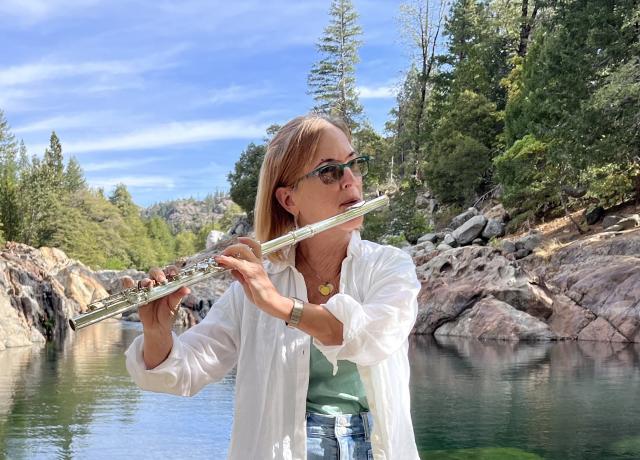
Photo: Kate Hicks
Boy, how do I describe how much fun these lessons really are? Kate is making it fun but at the same time getting me to work on the parts that are important.

Want help finding your ideal flute teacher?
Fill out the quick form and teachers who fit your needs will be in touch.

Photo: Nikita Naymushin



Great Flute Teachers
Through our longstanding commitment to treat teachers equitably, we work with phenomenal instructors — including members of the MET Orchestra, Juilliard and Berklee alumni, GRAMMY® winners and nominees, and many other professional educators.
View Teachers 
Photo: Sean Arawjo
About Flute Lessons at Lessonface
Find a great teacher, securely book a first lesson or trial, and meet via Zoom. Lessonface handles the lesson links and sends you reminders. Recordings, assignments, and notes are easy to access before, during, and after the lesson.
View Teachers Learn at your own pace with self-paced courses.
4
Self-Paced Courses

Students have given their Lessonface
lessons over
36,100+ reviews.
daniel is an outstanding flute teacher. my 10 year old son had improved quickly thanks to his patience, clear guidance, and warm teaching style.
I have been studying with my flute teacher for over two years, and I can confidently say she is an exceptional instructor. Her passion for music and the flute is truly inspiring, and it translates into every lesson. She is patient, encouraging, and always willing to go the extra mile to help her students improve. Her deep knowledge of music theory and flute techniques has greatly enhanced my skills, and her supportive guidance has made learning enjoyable and fulfilling. I highly recommend her to anyone looking to develop their flute playing in a positive and nurturing environment.
—Angela P.
Flute Student of Erika Andres
Kate is an excellent and friendly teacher! She quickly established a rapport with my young daughter, who with just a few months of lessons, has gone from zero (no musical training) to having the confidence and ability to perform a short piece in front of her classmates. Kate is able to notice and correct mistakes while maintaining a fun and positive atmosphere - not always an easy balance to strike! I would happily recommend her to anyone.
Excellent class. So pleased I found Agnes as a teacher for flute. She's very patient and excellent at explaining things.
Tammi Burger is an excellent teacher!!!!I have her as a flute teacher, she is so kind and understanding! She has gotten me from not even being able to make a sound out of my flute, and now I can play multiple songs!! I would highly recommend her to anyone who is looking for a fun, and understanding teacher. Thank you Tammi Burger!!!












Latest from the Blog
Tips, stories, and interviews from the Flute community.


Lessonface Guarantee
Reach out to tell us within 48-hours of taking an unsatisfactory lesson, class, or course, and we will offer you a refund. Read more about the guarantee.

Designed for All Ages
Creating a joyful, safe, and convenient educational experience for our students is our goal. Learn more about our kid-friendly features here, or read our privacy policy and safety precautions here.
Have more questions? Check out our FAQ, or reach out.
About Lessonface
At Lessonface, we've held our mission of helping students achieve their goals while treating teachers equitably for over ten years. We're here to help you connect to your ideal teacher and make real progress. Please reach out with any questions or concerns.
 Claire Cunningham
- Founder & CEO
What is the best method for learning Flute ?
We're biased, of course, but at Lessonface we believe the best way to learn Flute is through one-on-one lessons. Personalized instruction means your teacher can tailor every lesson to your goals, learning style, and skill level. Online group classes can also be a great way to make learning fun and social. Learning Flute online makes it easy to stay consistent, which is essential to steady progress.
There are plenty of apps and YouTube videos out there to help with learning Flute, but most teachers agree that those resources work best as supplements to, not replacements for, one-on-one instruction. A skilled Flute teacher can identify bad habits before they become ingrained, help you focus on what matters most, and solve problems as soon as they arise, often saving you months of frustration and wasted practice time. The bottom line? A real teacher accelerates your progress and keeps you on the right path from day one.
How do online Flute lessons work?
Online lessons are effective, affordable, and accessible. Lessonface qualifies teachers in over 300 music, language, and arts subjects, including Flute. Students can browse teachers' profiles, send them messages, and book lessons securely through Lessonface. Lessons happen via Zoom links that are securely generated for each lesson, and can be easily recorded by the teacher. Recordings, notes, and attachments can all be accessed from within the Lessonface dashboard. Lessons can be booked one at a time, in packages, or by subscription to save a spot on the teacher's calendar. Lessonface hosts recitals, open mics, group classes, and self-paced courses too. Registering an account is free so it's easy to get started reaching out to find your ideal instructor. Contact us with any further questions!
How do I find the best teacher for me for Flute lessons?
With over 100 qualified Flute teachers who have together earned an average of 4.99 out of 5 stars over 1679 lesson reviews by verified students, you can be sure to find a great instructor at Lessonface.
Lessonface offers free tools to help you find the ideal tutor for you or your family:
- Use the open filtering system
- Use our matching service to describe your background, scheduling preferences, and any particular goals, and qualified Flute teachers will respond.
You can view teachers' bios, accolades, rates, send them a message and book lessons from their profiles.
Many teachers offer a free trial, and you can book lessons one at a time until you decide you prefer to book a bundle or subscribe, so don't hesitate to try. Teachers may also offer group classes, self-paced courses, and downloadable content, so there are more ways to get started while you're still getting acquainted with the community.
How much do Flute lessons cost?
Flute teachers on Lessonface set their own rates. Rates are displayed on the teachers' profile pages and in the checkout process prior to booking. Teachers may choose to change their rates for new bookings, and students will always be notified prior to making payment. The average paid for a Flute lesson on Lessonface in the past 12 months was $36.40.
The average paid for a Flute lesson 5 years ago was $32.67. Some Flute teachers offer a free trial lesson to new students, which are not factored into the average prices.
How does payment work for Flute lessons?
There is no fee until you book your first paid lesson. Many teachers offer free trial lessons. Students can opt to book one a time, or purchase lesson packages or subscriptions for scheduling convenience, and, depending on the teachers, a discount. Payment can be made by credit card or Paypal. Lessons booked with a subscription are pre-paid three days before the end of the month for lessons that are scheduled for the following month. Subscription payments can only be made by credit card (not Paypal). Teachers receive their payment after the lesson has been completed.
How hard is it to learn to play the flute?
The flute is a rewarding instrument that most beginners can start playing successfully with proper guidance. While it has some initial challenges, these are completely normal and overcome quickly with good instruction. Here's what to expect:
Getting your first sound:
- The initial hurdle: The hardest part for most flute beginners is producing a clear, consistent tone in the first few lessons. The flute requires a specific embouchure (mouth position) and precise air direction across the mouthpiece.
- Quick progress: With a teacher's guidance, most students get their first sounds within their first or second lesson, and tone quality improves rapidly from there.
Physical considerations:
- Holding position: The flute is held horizontally to the right side, which feels unusual at first. Your arms can get fatigued in early lessons.
- Building stamina: Beginners often feel tired in their arms and lips after 15-20 minutes of practice, which is completely normal. Your muscles will adapt within a few weeks of consistent practice.
- Posture matters: Proper posture and hand position prevent strain and make playing easier. Your teacher will help you establish good habits from day one.
What makes flute beginner-friendly:
- Clear technique: Once you understand the embouchure and fingerings, the flute is quite logical. Finger patterns are straightforward compared to some woodwinds.
- Quick musical results: After mastering tone production, many beginners can play simple melodies within a month.
- Portable and practical: The flute is lightweight, relatively quiet, and easy to transport—perfect for fitting practice into your daily routine.
Working with an experienced instructor makes a huge difference in overcoming these initial challenges.
What kind of flute should a beginner buy?
For most beginners, a standard student-model concert flute (also called C flute) is the right choice. Here's what you need to know about selecting your first flute.
What to look for in a beginner flute:
- Closed-hole keys: Beginner flutes have solid key pads rather than holes in the keys. This makes fingering easier while you're learning proper hand position and technique.
- Offset G key: The G key is slightly offset to make it more comfortable to reach. This is standard on student models and helps with hand positioning.
- Plateau keys: The keys sit flat rather than being inline, which is more ergonomic for beginners.
- Silver-plated or nickel-plated body: Most student flutes have a nickel or silver-plated brass body, which is durable and produces good tone quality.
Special considerations for young children:
- Curved head joint: If your child is small or young (typically under age 8-9), a curved head joint attachment can make the flute easier to hold and reach. Some student models include this option.
- Lightweight models: Some manufacturers make specially designed lightweight student flutes for smaller players.
Avoid:
- Wooden flutes: While beautiful, wooden flutes (Irish flute, etc.) are different instruments with different techniques. Start with a standard concert flute.
- Plastic flutes: Generally poor quality with intonation issues. The exception is some quality plastic models designed specifically for very young beginners.
- Used flutes from unknown sources: Unless inspected by a repair technician, used flutes may have mechanical issues that make them unplayable.
Your teacher can provide specific brand recommendations based on your budget and goals.
What styles of music can I play on the flute?
The flute is incredibly versatile and appears in nearly every musical genre. Whether you want to play in groups or as a soloist, here are the styles you can explore:
Classical music:
- Orchestral playing: The flute is a cornerstone of the symphony orchestra, playing everything from delicate solos to powerful melodic lines.
- Chamber music: Flute is featured in small ensembles like wind quintets, flute choirs, and mixed chamber groups, offering intimate collaborative experiences.
- Solo repertoire: The flute has an enormous solo repertoire spanning centuries, from Bach sonatas to modern concertos.
Band and ensemble settings:
- Concert band: Flutes anchor the woodwind section in concert and wind bands, playing a mix of original band literature and arrangements.
- Marching band: Some flutists participate in marching bands, though piccolo is more common for outdoor projection.
- Jazz ensembles: While less common than saxophone, flute has a distinctive voice in jazz, from big bands to small combos.
Popular and contemporary styles:
- Jazz: The flute brings a breathy, expressive quality to improvisation in bebop, fusion, and Latin jazz.
- Folk and Celtic: Irish flute and wooden flutes are central to Celtic music, playing reels, jigs, and traditional melodies with ornamentation.
- Latin music: Flute features prominently in salsa, bossa nova, and other Latin styles, often playing rhythmic, syncopated melodies.
- Rock and pop: From Jethro Tull to modern indie bands, flute adds unique color to rock arrangements and singer-songwriter productions.
Your Lessonface flute teacher can help you explore the styles that interest you most and develop the specific techniques each genre requires.
Do I need to learn to read music to play the flute?
Yes, reading music is essentially required for flute. Unlike some instruments where you can thrive playing by ear or using tablature, the flute relies heavily on standard musical notation.
Why music reading is essential for flute:
- How flute music is written: Flute repertoire—classical, band, orchestra, jazz, and most contemporary music—is written in standard notation. There's no alternative system like guitar tabs or chord charts.
- Ensemble playing: If you want to play in bands, orchestras, or chamber groups (which most flutists do), you'll need to read music to follow along with your part and stay coordinated with other musicians.
- Method books and lessons: Nearly all flute instruction materials use standard notation. Your teacher will use written music to teach technique, scales, exercises, and repertoire.
- Complex melodies: The flute often plays intricate melodic lines with specific rhythms, dynamics, and articulations that are difficult to learn purely by ear and need notation to capture accurately.
The good news:
- It's easier than you think: Reading music seems intimidating at first, but it's a skill that develops naturally alongside your lessons. Most students become comfortable reading simple melodies within a few months.
- Your teacher guides you: Your teacher will introduce music reading gradually, starting with basic rhythms and notes, then building complexity as your skills develop.
- Universal skill: Once you learn to read music for flute, you can apply that knowledge to other instruments and musical situations throughout your life.
If you're worried about music reading, don't let it stop you from starting lessons. Your teacher will make it approachable and integrate it naturally into your learning.
Is flute a good instrument for kids?
Yes, flute is an excellent instrument for kids! And no, your child doesn't need to learn recorder first—they can start directly on flute with the right teacher and setup.
Why flute works well for children:
- School band programs: Flute is one of the most popular instruments in school bands and orchestras, giving kids plenty of opportunities to play with peers and perform in groups.
- Lightweight and portable: Kids can easily carry their flute to school, lessons, and rehearsals without being overwhelmed by size or weight.
- Clear progress path: Flute has a well-established teaching method with age-appropriate repertoire, making it easy for kids to see their progress and stay motivated.
- Develops discipline: Learning flute teaches breath control, finger coordination, and reading music—all valuable skills that support overall development.
Age and readiness:
- Typical starting age: Most kids begin flute around age 8-10, though some start as young as 6-7 with the right physical development and focus.
- Physical considerations: Kids need enough finger length to comfortably reach all the keys and enough lung capacity for sustained notes. Your teacher can assess readiness during a trial lesson.
- Curved head joint option: For smaller children, a curved head joint attachment brings the keys closer to the body, making the flute easier to hold and play.
Should my child learn recorder before flute?
While some school music programs start with recorder, it's not a requirement for learning flute. Kids can begin flute lessons directly with no prior experience.
Different techniques: Recorder and flute use different embouchures and breathing techniques, so recorder experience doesn't necessarily make flute easier.
If they've played recorder: It's not a disadvantage either! Recorder does teach basic music reading and finger coordination, which can transfer to flute.
The most important factor is finding a patient, experienced teacher who specializes in teaching children. Filter by age group to find instructors who offer lessons for kids.