



Find Trumpet Lessons with Excellent Teachers
Grow your skills with the guidance of a great Trumpet teacher. Explore live online Trumpet lessons, group classes, and self-paced courses — all led by qualified teachers and reviewed by your fellow students.
View Teachers Related Topics
Discover experienced, passionate Trumpet teachers to help you reach your next level.
100+
Vetted Teachers
5.0
Average Rating
760+
Student Ratings
~$36
Avg. Lesson Price
View All Teachers

6 yrYears
Teaching on Lessonface
Sheryl Linch-Parker
Dr. Sheryl Linch-Parker, has actively pursued a career in the field of trumpet performance and music education since she started playing the trumpet.
$20.00 / 30 min

6 yrYears
Teaching on Lessonface
Luke Fleisher
Taking new lessons for 2026! New availability beginning late-January 2026! I am a veteran teacher of 18 years in public school. I teach all ages and ability levels! I specialize in clarinet, bass clarinet flute, and saxophone. I also have extensive experience teaching trumpet, trombone, and baritone.
$29.50 / 30 min

6 yrYears
Teaching on Lessonface
Matt Hill
Learning trumpet should feel good — not stressful, not confusing, and definitely not a fight to get your child to practice. After a few lessons, many parents notice the same thing: their kids start feeling confident, excited, and proud of what they’re playing. That’s really the goal — when playing feels good, everything gets easier.
$30.00 / 30 min

2 yrYears
Teaching on Lessonface
Dexter Earl Ashley
[5.0 rating over 2 reviews from another lesson platform] Dexter is a trumpet player of over 30 years, and has been tutoring trumpet students for approximately 3 years. He developed his skills playing the trumpet beginning in elementary school band and received private instruction during all of high school, and also in college.
$18.00 / 30 min
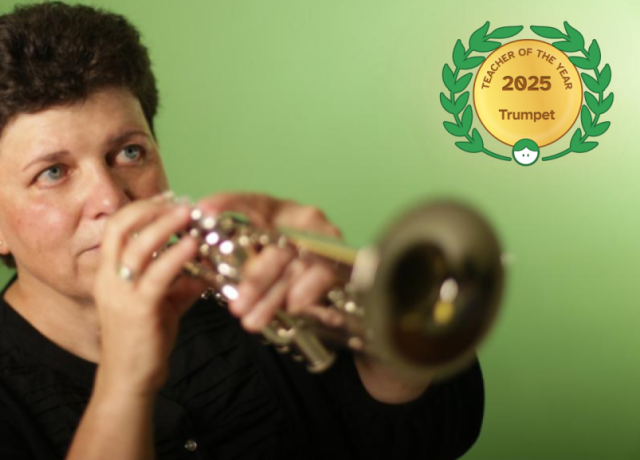
Photo: Sheryl Linch-Parker
Sheryl always provides excellent instruction on technique. I hope to take lessons from her for a long time.

Want help finding your ideal trumpet teacher?
Fill out the quick form and teachers who fit your needs will be in touch.
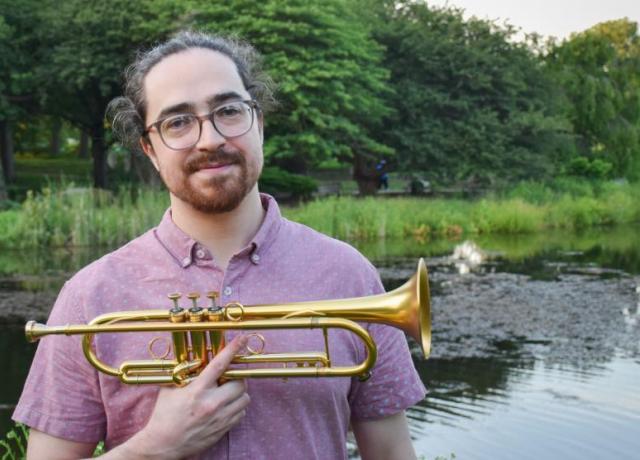
Photo: Eric Devey

Great Trumpet Teachers
Through our longstanding commitment to treat teachers equitably, we work with phenomenal instructors — including members of the MET Orchestra, Juilliard and Berklee alumni, GRAMMY® winners and nominees, and many other professional educators.
View Teachers 
Photo: Lucas Stickley-Miner
About Trumpet Lessons at Lessonface
Find a great teacher, securely book a first lesson or trial, and meet via Zoom. Lessonface handles the lesson links and sends you reminders. Recordings, assignments, and notes are easy to access before, during, and after the lesson.
View Teachers Students have given their Lessonface
lessons over
36,100+ reviews.
Sheryl always provides excellent instruction on technique. I hope to take lessons from her for a long time.
I love working with Sheryl! I would highly recommend her to anyone interested in learning to play. I was anxious and unsure if I could start playing an instrument as an adult after never having played an instrument before, but Sheryl provided a safe and encouraging place to be vulnerable and try!
From the first few minutes, Matt actually listened! Not just to my playing, but to where I’m at and where I want to go. He locked in immediately and helped me with the foundation I need to move forward. No fluff, no ego, just skill, patience, and practical knowledge. If you’re new, rusty, or coming back, this is your guy. One lesson in, and I already feel like I’ve got a clear path instead of random guesses. (Self-teaching videos... hahaha) Matt is fantastic, plain and simple. If you play, use him. If you’re a parent, this is the teacher who’ll make your student love learning, not just parrot notes. Matt makes music make sense.
I would highly recommend Mrs. Sheryl Linch-Parker!! She is truly a wonderful teacher! We love her!! My son has been taking lessons from her for almost 2 years now. She makes it fun and is very easy to get along with. She explains everything very clearly, and has so much knowledge about the trumpet.












Latest from the Blog
Tips, stories, and interviews from the Trumpet community.

Lessonface Guarantee
Reach out to tell us within 48-hours of taking an unsatisfactory lesson, class, or course, and we will offer you a refund. Read more about the guarantee.

Designed for All Ages
Creating a joyful, safe, and convenient educational experience for our students is our goal. Learn more about our kid-friendly features here, or read our privacy policy and safety precautions here.
Have more questions? Check out our FAQ, or reach out.
About Lessonface
At Lessonface, we've held our mission of helping students achieve their goals while treating teachers equitably for over ten years. We're here to help you connect to your ideal teacher and make real progress. Please reach out with any questions or concerns.
 Claire Cunningham
- Founder & CEO
What is the best method for learning Trumpet ?
We're biased, of course, but at Lessonface we believe the best way to learn Trumpet is through one-on-one lessons. Personalized instruction means your teacher can tailor every lesson to your goals, learning style, and skill level. Online group classes can also be a great way to make learning fun and social. Learning Trumpet online makes it easy to stay consistent, which is essential to steady progress.
There are plenty of apps and YouTube videos out there to help with learning Trumpet, but most teachers agree that those resources work best as supplements to, not replacements for, one-on-one instruction. A skilled Trumpet teacher can identify bad habits before they become ingrained, help you focus on what matters most, and solve problems as soon as they arise, often saving you months of frustration and wasted practice time. The bottom line? A real teacher accelerates your progress and keeps you on the right path from day one.
How do online Trumpet lessons work?
Online lessons are effective, affordable, and accessible. Lessonface qualifies teachers in over 300 music, language, and arts subjects, including Trumpet. Students can browse teachers' profiles, send them messages, and book lessons securely through Lessonface. Lessons happen via Zoom links that are securely generated for each lesson, and can be easily recorded by the teacher. Recordings, notes, and attachments can all be accessed from within the Lessonface dashboard. Lessons can be booked one at a time, in packages, or by subscription to save a spot on the teacher's calendar. Lessonface hosts recitals, open mics, group classes, and self-paced courses too. Registering an account is free so it's easy to get started reaching out to find your ideal instructor. Contact us with any further questions!
How do I find the best teacher for me for Trumpet lessons?
With over 100 qualified Trumpet teachers who have together earned an average of 5 out of 5 stars over 767 lesson reviews by verified students, you can be sure to find a great instructor at Lessonface.
Lessonface offers free tools to help you find the ideal tutor for you or your family:
- Use the open filtering system
- Use our matching service to describe your background, scheduling preferences, and any particular goals, and qualified Trumpet teachers will respond.
You can view teachers' bios, accolades, rates, send them a message and book lessons from their profiles.
Many teachers offer a free trial, and you can book lessons one at a time until you decide you prefer to book a bundle or subscribe, so don't hesitate to try. Teachers may also offer group classes, self-paced courses, and downloadable content, so there are more ways to get started while you're still getting acquainted with the community.
How much do Trumpet lessons cost?
Trumpet teachers on Lessonface set their own rates. Rates are displayed on the teachers' profile pages and in the checkout process prior to booking. Teachers may choose to change their rates for new bookings, and students will always be notified prior to making payment. The average paid for a Trumpet lesson on Lessonface in the past 12 months was $37.02.
The average paid for a Trumpet lesson 5 years ago was $24.96. Some Trumpet teachers offer a free trial lesson to new students, which are not factored into the average prices.
How does payment work for Trumpet lessons?
There is no fee until you book your first paid lesson. Many teachers offer free trial lessons. Students can opt to book one a time, or purchase lesson packages or subscriptions for scheduling convenience, and, depending on the teachers, a discount. Payment can be made by credit card or Paypal. Lessons booked with a subscription are pre-paid three days before the end of the month for lessons that are scheduled for the following month. Subscription payments can only be made by credit card (not Paypal). Teachers receive their payment after the lesson has been completed.
Is trumpet a good instrument for kids, and what age should they start?
Trumpet is a fantastic instrument for kids, and one that tends to attract children who are drawn to bold, exciting sounds and the idea of playing in a band or ensemble. It's also genuinely manageable for young players — the instrument is relatively compact, not too heavy, and doesn't require the hand size or finger stretch that some instruments demand.
The most commonly recommended starting age for trumpet is around 7 to 9. The main physical requirement isn't size or strength — it's the ability to form a consistent embouchure and develop basic breath control. Most children are developmentally ready for this somewhere in that age range, though every child is different. A child who is eager and motivated at 7 is often a better candidate than a reluctant 9-year-old.
One thing that sets trumpet apart from instruments like piano or ukulele is that early progress involves a lot of embouchure development before the fun really kicks in. A good teacher who specializes in young students will know how to keep this phase short and engaging, introducing simple songs and games early to maintain motivation.
The payoff is real: kids who stick with trumpet through the early months often find themselves playing in school bands, jazz ensembles, and community groups — a social dimension that keeps many young players hooked for life.
What trumpet should a beginner buy, and what accessories are needed to get started?
For a beginner, a student-model Bb (B-flat) trumpet is the right starting point. The Bb trumpet is the standard instrument — the one used in school bands, jazz ensembles, and most other contexts a beginner is likely to encounter. Unless a teacher recommends otherwise, this is the one to get.
Quality matters more with trumpet than with some other instruments. A poorly made trumpet can be stubbornly out of tune, have sticky valves, and generally make learning harder than it needs to be. Reputable student-model brands include Yamaha, Bach, and Jupiter, with reliable options available in the $300-$600 range. As with clarinet, it's worth avoiding the cheapest instruments on Amazon or eBay. Renting from a music store is a sensible option, especially for younger students who are still finding their footing.
The accessories list for trumpet is refreshingly short:
- A mouthpiece: Most trumpets come with one, but your teacher may recommend an upgrade early on
- Valve oil: Essential for keeping the valves moving smoothly — you'll use this regularly
- A cleaning kit: Includes a snake brush and mouthpiece brush for periodic deep cleaning
- A soft cloth for wiping down the instrument after playing
- A music stand
Keep your valve oil handy at every practice session. Dry valves are one of the most common and easily avoided beginner frustrations.
What styles of music can I play on trumpet?
The trumpet is one of the most stylistically wide-ranging instruments in existence, with a commanding presence in more genres than almost any other instrument.
Jazz is probably the first style most people associate with trumpet, and for good reason. From Louis Armstrong and Miles Davis to Clifford Brown and Chet Baker, the trumpet has been at the center of jazz since its earliest days. It remains essential across traditional jazz, bebop, cool jazz, and fusion.
In classical music, the trumpet plays a vital role in the orchestra and has a rich solo repertoire stretching from the Baroque period to the present. Haydn's Trumpet Concerto is one of the most beloved works in the brass canon, and the instrument features prominently in everything from symphonies to opera.
Brass band and marching band traditions have long relied on the trumpet as a lead voice, and the instrument is equally at home in funk, soul, and R&B — think of the horn sections that defined artists like James Brown and Earth, Wind & Fire. Salsa and Latin jazz give the trumpet some of its most exciting and demanding roles.
More recently, the trumpet has found its way into indie rock, hip hop productions, and experimental music, proving that its expressive range is still being explored.
If you love music, there's a version of trumpet playing for you.
How do you play all the notes on the trumpet with only three buttons?
Three valves might not seem like enough to produce the dozens of notes a trumpet player needs, but the system is more clever than it first appears.
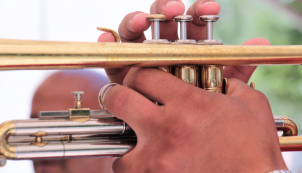
Each of the three valves, when pressed, redirects air through an additional length of tubing, lowering the pitch by a specific interval. The first valve lowers the pitch by a whole step, the second by a half step, and the third by one and a half steps. By pressing different combinations of valves — including all three together — you can produce seven distinct valve combinations, each corresponding to a different pitch.
But valves alone don't tell the whole story. The trumpet's full range comes from the interaction between valve combinations and the player's embouchure and air speed. By tightening or loosening the lips and increasing or decreasing air pressure, players can produce multiple different notes from the same valve combination. These are called harmonics or the overtone series, and learning to navigate them is a central part of trumpet technique.
The result is an instrument capable of a surprisingly wide range — typically around three octaves for an accomplished player — from a mechanism that fits in the palm of your hand. It's an elegant piece of acoustic engineering that has stayed essentially unchanged for nearly two centuries.
Is trumpet hard on your lips or lungs?
The honest answer is that it depends on how you play, and a good teacher makes all the difference.
Playing trumpet does place real demands on your embouchure — the muscles around your lips and mouth that control your tone, range, and endurance. In the early stages, your embouchure muscles simply aren't conditioned yet, and it's normal to feel fatigue after even a short practice session. This is similar to any other kind of physical training: the muscles strengthen gradually with consistent practice, and what feels tiring at first becomes effortless over time.
The good news is that with proper technique, trumpet playing should never feel painful. Lip soreness from overuse is common in beginners who practice too long in one sitting, but sharp pain or numbness is a signal that something is off — usually excess mouthpiece pressure, which is one of the most common beginner habits and one of the most important things a teacher will help you correct early on.
As for the lungs, trumpet requires solid breath support, but it's less about raw lung capacity and more about learning to use your air efficiently and consistently. Most beginners are surprised to find that breathing technique is as much about control as it is about volume.
In summary, the trumpet is physically demanding in specific ways, but those demands are very manageable with good instruction and a sensible practice routine.