
Passing the Teacher Torch: A Q&A with Zach Marley + Eddie Gonzalez

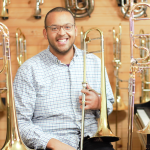
We're thrilled to share a new installment of our Passing the Teacher Torch Q&A series, proudly sponsored by KHS America! This time, Lessonface instructor Zach Marley reflects on the meaningful influence teachers have on their students and invites his former student Eddie Gonzalez to share his perspective.
|
|
Interviewer: Zach Marley
Interviewee: Eddie Gonzalez
Q: Eddie, thanks for taking the time to talk today. Let’s start by looking back a bit. Do you remember when we first started working together?
Eddie:
Yeah, definitely. I believe it was sometime in 2017. If I remember right, it was the spring semester—definitely not 2018. I think we started with secondary lessons and then transitioned to primary, or maybe it was the other way around.
Zach:
That sounds right. I remember you were my primary student for one semester and then secondary after that, before you went on to study with Dr. Baker.
Q: It's been a while! Let's fast-forward a bit—what are some of the big goals you're currently pursuing now that you're further into your doctorate and doing more professionally?
Eddie:
The main goal is to win an orchestral position or a job in a military band. That’s been the dream since 2016. I’m also very passionate about teaching—especially at the collegiate level—so ideally, I’d like to do both: perform and teach full-time.
Q: That’s a solid goal. And you've had some great accomplishments recently, right? I heard you're on some sublists?
Eddie:
Yes! I recently got added to the sublist for the Houston Symphony, and even more recently, the New World Symphony. I applied, submitted materials, and got in. I’m also waiting to hear back from a few other places, so we’ll see where things go from here.
Q: That’s fantastic. And you’ll be a graduate teaching fellow this fall, right?
Eddie:
Yep, starting in the fall. It’s all flying by, but I’m really excited for that next chapter.
Q: Thinking back on our time working together—either in lessons or as part of the studio—do any specific moments or performances come to mind?
Eddie:
Honestly, I remember your performances during departmentals really clearly. They were super impressive and honestly a bit intimidating! I remember thinking, “Man, I’ve got a lot of work to do.” You always had this incredible control over the instrument—whether it was high, low, loud, or soft—nothing ever sounded hard for you. That level of mastery was something I really admired.
Q: Earlier you mentioned admiring how my performances always “sounded easy.” Can you talk more about how that idea influenced your teaching?
Eddie:
Yeah, absolutely. That was a big takeaway from watching you perform. Even though we may not have discussed it directly in lessons, I remember those departmental performances vividly. Everything you played, no matter how high or loud or technical, sounded effortless. That stuck with me, and it’s something I now try to instill in my students—making the hard things sound easy. It’s about creating the illusion that the instrument isn’t fighting you.
Q: That makes sense, especially on tuba, where it’s often more about presence and clarity than flashiness. I've always tried to play in a way that feels limitless—even if I have limits, I don’t want the audience to hear them.
Eddie:
Exactly. And I remember one departmental, I had already graduated but came back to audition for my master’s. I watched you play something that sat high in the register for a long time, and it hit me again—this is the standard. That kind of control and consistency reminded me what North Texas demanded. It's why I came back for a second degree, and it’s why being around great players matters so much.
Q: There’s something powerful about being in a studio where you’re not always the best—it pushes you to grow. I remember even as a doctoral student thinking, “I better be able to play this better than my sophomore student!”
Eddie:
Totally. That resonates now that I’m in a similar position. I remember feeling like I was just trying to keep up as an undergrad. Now, being a doctoral student myself, I realize I need to be the kind of example that students like me once looked up to. It’s pressure, for sure—but the good kind.
Q: That brings up the generational aspect of this series. We've all crossed paths at UNT, including Ryan Robinson, who was your teacher and mine. And we all studied with Don Little, who himself studied at Northwestern like so many others in our lineage.
Eddie:
It really is fascinating how it all connects. You, me, Ryan—we all went to the same schools, studied with many of the same teachers. There’s this strong thread running through generations. We’re all passing down what was given to us, but each of us puts our own spin on it. Even though so much comes from Arnold Jacobs, the way we each communicate that foundation is unique.
Q: Do you find that you teach differently now than how you were taught?
Eddie:
For sure. Take Professor Little—he was all about singing and really feeling the phrasing vocally. I use that concept with some students, but not all. Some just aren't ready yet physically or musically to benefit from that. I wait until they’re stronger technically before I dive into that kind of mental-auditory connection.
For more advanced students, I pull directly from what helped me in undergrad. But I also try new things, even things outside the Jacobs lineage. I watch other masterclasses, explore different pedagogical approaches. It’s about finding what works, not just sticking to one method.
Q: Sometimes the things that didn’t work for us personally might be perfect for a student years down the line.
Eddie:
Exactly. That’s why I keep everything in my back pocket. Even if something didn’t resonate with me when I was 20, it might be exactly what a student of mine needs today—or even something I finally understand now. It's all about flexibility.
Q: What about technology? Are there tools you use now that weren’t really part of your lessons before?
Eddie:
Absolutely. I use the TonalEnergy app all the time. The metronome features, tone analysis, seeing how notes sustain or decay—it’s a game-changer. A lot of students don’t believe their notes are tapering until they see the visual proof. It’s helped me reinforce concepts they don’t always hear clearly.
Q: Right—especially for younger players who haven’t developed their auditory skills yet.
Eddie:
Exactly. A high school student may know they “like” a sound but can’t yet identify why. Tools like TonalEnergy help bridge that gap. They get to see the quality of sound, which reinforces what they’re hearing—or not hearing.
Q: It’s interesting that, even in music—an auditory art form—we often get there visually or kinesthetically. There’s no single route to understanding.
Eddie:
Yeah, and every student learns differently. Some need to feel it, others need to see it. And having multiple ways to explain or demonstrate a concept has been huge for me as a teacher. I can say, “Here’s how Professor Little would put it. Here’s Dr. Robinson’s way. Here’s what worked for me. Let’s find what clicks for you.”
Q: And sharing with peers too, right?
Eddie:
Yes! In my master’s at Oklahoma State, all the grad students would compare notes after lessons. Dr. Robinson taught each of us differently, and hearing what worked for someone else often gave me a new angle. We still send recordings to each other, asking for feedback. We were all taught with the same goals, just different approaches. It makes us better listeners and better teachers.
Q: You mentioned clarity and resonance as essential elements of sound. Could you expand on that?
Eddie:
Absolutely. I always tell my students that clarity and a resonant sound are non-negotiables. They’re foundational. When people ask about my teaching philosophy, I always start with sound—it’s the most important aspect of my own playing, so it naturally becomes the core of what I teach. Everything else builds from that.
Q: How does technology fit into your approach?
Eddie:
Technology is a huge asset in helping students develop their ears. I use it to help them hear themselves more clearly—whether it's tuners, waveform analysis, or apps with smiley faces when they’re in tune. Once they start seeing and hearing what’s happening in their playing, they don’t need me to tell them as much. They start asking better questions, and they’re better equipped to evaluate their own sound.
Q: How did waveform analysis come into play?
Eddie:
I got into it more seriously when I started doing remote recording sessions. I could look at the waveform and immediately know if a take was bad. Now, I can visually identify which excerpt I'm looking at just based on the articulation patterns. It's made me more precise, and I try to share some of that with students—though I don’t expect them to go quite as deep unless they want to.
Q: Do you think that level of analysis is necessary for students?
Eddie:
Not for everyone, but it’s great if they do go there. You start to notice the inconsistencies in your playing and fix them. I find that fun—it's like a constant project. That kind of obsessive attention to detail is what it takes to really stay in this profession. Gone are the days when someone wins a major job at 17. You have to be relentless and almost “manic” about getting better.
Q: Do you think that mindset is common among students today?
Eddie:
Not as much. There’s such a focus on instant results now that many students don’t want to put in the slow, focused work. But that’s exactly what it takes—slow, perfect practice. I point to examples like Mason, who practiced meticulously. He wouldn’t even move on from his warm-up until it was perfect.
Q: That level of seriousness might seem extreme to some.
Eddie:
It is, but that’s what success often requires. I used to live with jazz guitar majors who thought I was insane for practicing the same excerpt over and over. But for us, it’s not just repetition—it’s precision. I need those notes to speak the same way every time in an audition. That’s the standard.
Q: You’re preparing for an audition now, right?
Eddie:
Yes, I’m doing daily mock auditions and analyzing every take. Some days it feels like I’m not improving, but I remind myself that as my ears improve, I just notice more flaws. That’s growth too. Articulation, in particular, was something I didn’t fully understand until later, even though I thought I was fine. Now I get what my teachers meant.
Q: What advice do you give your students, especially younger ones?
Eddie:
My goal isn’t to turn every student into a music major. I want to show them what it takes to be excellent at something—that discipline can apply to anything in life. Even if they don’t pursue music, learning how to show up, prepare, and work through things they don’t want to do will serve them well.
Q: That mindset seems to transfer well to other professions too.
Eddie:
Exactly. My partner was a music major but now works in accounting, and her attention to detail absolutely carries over. I see it in friends too—former musicians who thrive outside of music because they understand discipline. That work ethic isn’t common everywhere, and sometimes it’s jarring to see how little some people care about doing things well.
Q: What do you think older generations of teachers could learn from younger ones—and vice versa?
Eddie:
Older teachers can learn from the pace and flexibility of the modern era. Things move fast, and students have different pressures and opportunities than 30 years ago. On the flip side, younger teachers shouldn’t try to reinvent the wheel. There’s wisdom in what’s been taught for generations. You can make it your own, but it’s still the same core content.
Q: How has your own perspective shifted now that you’re teaching more seriously?
Eddie:
When I came back to UNT for my DMA, it felt like I finally belonged. As an undergrad, I was in the upper ensembles, but I always felt like I was on the edge. That feeling pushed me to practice. Now, I realize I have a role to play in setting the example for others—especially for students who might be where I was. I'm more motivated than ever, especially now that I have a family. There’s more riding on my success.
Q: That’s a full-circle moment.
Eddie:
Definitely. It’s been great to come back and feel like I’ve grown into this role. I’m excited to keep developing as a teacher and player. I hope to be that example for someone else who doesn’t quite believe in themselves yet.
To learn more about Zach, visit his Lessonface profile.
Also, we would like to thank KHS America for sponsoring our Passing the Teacher Torch series.

Start Lessons
Search for your perfect music, language, or arts teacher and start working towards your learning goals.

Start with a Free Trial
Teachers on Lessonface set their own rates and discounts. Participating teachers offer free trials.
Great Teachers, Great Lessons, Guaranteed
Learn more about the greatest universe for online music and arts lessons.

Lessonface Recitals, Open Mics, Masterclasses, and Jams
Welcome students of all ages and skill levels!