




Find Bass Guitar Lessons with Excellent Teachers
Grow your skills with the guidance of a great Bass Guitar teacher. Explore live online Bass Guitar lessons, group classes, and self-paced courses — all led by qualified teachers and reviewed by your fellow students.
View Teachers Related Topics
Discover experienced, passionate Bass Guitar teachers to help you reach your next level.
100+
Vetted Teachers
5.0
Average Rating
1,100+
Student Ratings
~$35
Avg. Lesson Price
View All Teachers

6 yrYears
Teaching on Lessonface
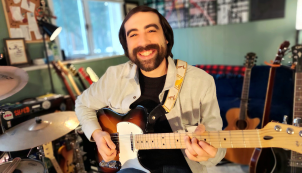
Kayla Zuskin
Kayla Zuskin is a guitarist, songwriter and producer located in Asheville, NC. She plays guitar in local bands, records and produces out of the Cat's Claw Studio and plays her original music under the moniker Lavender Blue.
$35.00 / 30 min

6 yrYears
Teaching on Lessonface
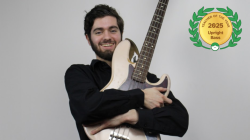
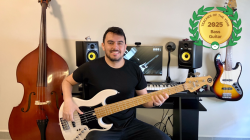
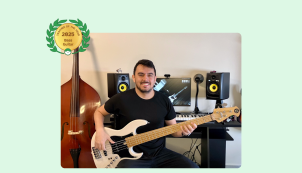
Gustavo Martinez
Bass player with more than 10 years of experience as a performer. I always like to share with my students everything I've learned in my life as a musician, and like to approach every lesson in the best possible way. Lessonface teacher since April 2020.
$39.99 / 30 min
6 yrYears
Teaching on Lessonface
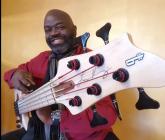
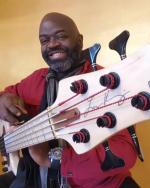
Bear Williams
Bear Williams LOVES to teach and give back to the future generation of young up-and-coming bass players. After graduating High School, the Chicago Native cut his teeth in the late 70's and 80's playing bass on songs by Gene Chandler, Jerry Butler, and others at Brunswick, and Chi-Sound Records.
$38.00 / 30 min

8 yrYears
Teaching on Lessonface
Rob Johnson
Robert Johnson -Born in Toronto, Robert moved to the west coast in 1995. He quickly established himself on the music scene as a much sought after Electric and Upright bass player. Over Robert's 30 year musical career, he has performed and taught and has shared the stage with an impressive list of artists.
$28.00 / 30 min

Photo: Billy Amezquita
Billy runs an orginized lesson place so there’s no Misunderstanding as to what’s expected at the next lesson. Enthusiastic
Want help finding your ideal bass guitar teacher?
Fill out the quick form and teachers who fit your needs will be in touch.
Photo: Billy Amezquita


Great Bass Guitar Teachers
Through our longstanding commitment to treat teachers equitably, we work with phenomenal instructors — including members of the MET Orchestra, Juilliard and Berklee alumni, GRAMMY® winners and nominees, and many other professional educators.
View Teachers 
Photo: Amanda B Johnson
About Bass Guitar Lessons at Lessonface
Find a great teacher, securely book a first lesson or trial, and meet via Zoom. Lessonface handles the lesson links and sends you reminders. Recordings, assignments, and notes are easy to access before, during, and after the lesson.
View Teachers Learn at your own pace with self-paced courses.
3
Self-Paced Courses
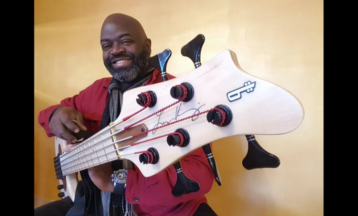
RHYTHM, King of the Omniverse: how to use it, speak it, arrange it and produce it
 Byron Fry
 12 chapters
$49.00
Downloadable materials include packs, guides, and exercises to help you learn.
6
Downloadables
Students have given their Lessonface
lessons over
36,100+ reviews.
Rob was great to work with understanding where I was coming from in terms of wanting to understand music theory. We went over the C major scale, but then went over intervals and how that applies to bass. He was approachable, easy to talk to, and had prepared some exercise for warm up and fretboard recall. I plan on working with Rob again after I do some home work.
I enjoy Asher, and you will too. Great insight, Expert knowledge, and fun learning experience. I highly recommend him for Bass lessons.
Ms Krenkel is a very fun and witty teacher had a great time during our lesson looking forward to keep learning from her great experience playing bass
Billy runs an orginized lesson place so there’s no Misunderstanding as to what’s expected at the next lesson. Enthusiastic












Latest from the Blog
Tips, stories, and interviews from the Bass Guitar community.


Lessonface Guarantee
Reach out to tell us within 48-hours of taking an unsatisfactory lesson, class, or course, and we will offer you a refund. Read more about the guarantee.

Designed for All Ages
Creating a joyful, safe, and convenient educational experience for our students is our goal. Learn more about our kid-friendly features here, or read our privacy policy and safety precautions here.
Have more questions? Check out our FAQ, or reach out.
About Lessonface
At Lessonface, we've held our mission of helping students achieve their goals while treating teachers equitably for over ten years. We're here to help you connect to your ideal teacher and make real progress. Please reach out with any questions or concerns.
 Claire Cunningham
- Founder & CEO
What is the best method for learning Bass Guitar ?
We're biased, of course, but at Lessonface we believe the best way to learn Bass Guitar is through one-on-one lessons. Personalized instruction means your teacher can tailor every lesson to your goals, learning style, and skill level. Online group classes can also be a great way to make learning fun and social. Learning Bass Guitar online makes it easy to stay consistent, which is essential to steady progress.
There are plenty of apps and YouTube videos out there to help with learning Bass Guitar, but most teachers agree that those resources work best as supplements to, not replacements for, one-on-one instruction. A skilled Bass Guitar teacher can identify bad habits before they become ingrained, help you focus on what matters most, and solve problems as soon as they arise, often saving you months of frustration and wasted practice time. The bottom line? A real teacher accelerates your progress and keeps you on the right path from day one.
How do online Bass Guitar lessons work?
Online lessons are effective, affordable, and accessible. Lessonface qualifies teachers in over 300 music, language, and arts subjects, including Bass Guitar. Students can browse teachers' profiles, send them messages, and book lessons securely through Lessonface. Lessons happen via Zoom links that are securely generated for each lesson, and can be easily recorded by the teacher. Recordings, notes, and attachments can all be accessed from within the Lessonface dashboard. Lessons can be booked one at a time, in packages, or by subscription to save a spot on the teacher's calendar. Lessonface hosts recitals, open mics, group classes, and self-paced courses too. Registering an account is free so it's easy to get started reaching out to find your ideal instructor. Contact us with any further questions!
How do I find the best teacher for me for Bass Guitar lessons?
With over 100 qualified Bass Guitar teachers who have together earned an average of 4.99 out of 5 stars over 1180 lesson reviews by verified students, you can be sure to find a great instructor at Lessonface.
Lessonface offers free tools to help you find the ideal tutor for you or your family:
- Use the open filtering system
- Use our matching service to describe your background, scheduling preferences, and any particular goals, and qualified Bass Guitar teachers will respond.
You can view teachers' bios, accolades, rates, send them a message and book lessons from their profiles.
Many teachers offer a free trial, and you can book lessons one at a time until you decide you prefer to book a bundle or subscribe, so don't hesitate to try. Teachers may also offer group classes, self-paced courses, and downloadable content, so there are more ways to get started while you're still getting acquainted with the community.
How much do Bass Guitar lessons cost?
Bass Guitar teachers on Lessonface set their own rates. Rates are displayed on the teachers' profile pages and in the checkout process prior to booking. Teachers may choose to change their rates for new bookings, and students will always be notified prior to making payment. The average paid for a Bass Guitar lesson on Lessonface in the past 12 months was $34.30.
The average paid for a Bass Guitar lesson 5 years ago was $27.02. Some Bass Guitar teachers offer a free trial lesson to new students, which are not factored into the average prices.
How does payment work for Bass Guitar lessons?
There is no fee until you book your first paid lesson. Many teachers offer free trial lessons. Students can opt to book one a time, or purchase lesson packages or subscriptions for scheduling convenience, and, depending on the teachers, a discount. Payment can be made by credit card or Paypal. Lessons booked with a subscription are pre-paid three days before the end of the month for lessons that are scheduled for the following month. Subscription payments can only be made by credit card (not Paypal). Teachers receive their payment after the lesson has been completed.
Should I learn bass guitar or regular guitar?
Both bass guitar and regular guitar are rewarding instruments, but they serve different musical roles. Bass guitar usually has four strings tuned one octave lower than the guitar's lowest four strings (E-A-D-G). Bass provides the rhythmic and harmonic foundation in most music, locking in with the drums to create the groove. Regular guitar (six-string acoustic or electric) typically handles melodies, chords, and solos.
If you're drawn to holding down the pocket, creating grooves, and being the backbone of a song, bass is your instrument. If you prefer playing chords, melodies, or taking the spotlight with solos, regular guitar could be a better fit.
Many musicians eventually learn both, and technical skills from one instrument transfer well to the other. The best choice is whichever one excites you more when you listen to music. You can use our Get Matched tool to connect with a teacher who can discuss your interests and help you decide which instrument aligns with your musical goals.
Can I enjoy playing bass guitar on my own, or do I need to be in a band?
You can absolutely enjoy playing bass guitar on your own! While bass shines in a band setting, there are plenty of ways to have fun practicing and performing solo. Many bassists spend hours playing along with their favorite recordings, which helps develop your ear, timing, and repertoire while feeling like you're part of the music. You can also explore solo bass techniques—artists like Victor Wooten and Jaco Pastorius have shown how bass can be a captivating solo instrument through techniques like chording, tapping, and melodic playing.
Practice itself can be deeply satisfying when you're working on grooves, learning new songs, or experimenting with different styles like funk, jazz, or rock. Online backing tracks and play-along apps give you the experience of playing with other musicians even when you're practicing alone. And as you progress, you might discover that writing your own bass lines or arrangements becomes a creative outlet in itself.
That said, many bassists do eventually want to play with others—it's where the instrument's role as the rhythmic and harmonic foundation really comes alive. But there's no rush, and you don't need a band to start learning or to enjoy your instrument. Your bass guitar teacher can help you develop skills for both solo practice and eventual ensemble playing, whatever your goals may be.
What's the difference between a 4-string and 5-string bass?
The main difference is that a 5-string bass has an additional low B string below the standard four strings (E-A-D-G), giving you access to lower notes. This extra range is useful for certain musical styles—metal, progressive rock, jazz fusion, and some modern worship music often make use of those deeper notes. A 5-string bass can also reduce the need to shift positions up and down the neck as frequently, since you have more notes available in a single position.
However, most bassists start with a 4-string bass, and it remains the standard for the majority of music genres. The 4-string is lighter, has a narrower neck that some players find more comfortable, and covers the range needed for rock, pop, funk, blues, country, and most other styles. Many legendary bass lines that have shaped popular music were played on 4-string basses.
If you're just starting out, a 4-string bass is typically the better choice. It's easier to manage, and you can always transition to a 5-string later if your musical direction calls for it. Your teacher can advise you on which option suits your goals and the music you want to play. Either way, the fundamental techniques and musical concepts remain the same across both instruments.
Should I learn to read music or tabs for bass guitar?
Both standard music notation and tablature (tabs) are valuable tools for bassists, and many players use both depending on the situation. Tablature is often easier for beginners to pick up quickly—it shows you exactly where to place your fingers on the fretboard, making it simple to learn songs without needing to read traditional notation. Most online bass resources, including popular songs and tutorials, use tabs, so you'll have plenty of material to work with.
However, learning to read standard music notation opens up more musical opportunities in the long run. It helps you understand rhythm more precisely, communicate with musicians who play other instruments, and access a wider range of music including jazz charts, orchestral parts, and professional sheet music. Reading notation also deepens your understanding of music theory, which can make you a more versatile and confident bassist.
Many bassists start with tabs to get playing quickly, then gradually develop their music reading skills over time. Your teacher can introduce both systems and help you build the skills that matter most for your goals. Whether you want to jam with friends using tabs or read charts in a jazz ensemble, your teacher can create a learning path that works for you.
What's the best way to develop my sense of rhythm and timing for bass guitar?
Rhythm and timing are absolutely essential for bass guitar players—you're the bridge between the drums and the melodic instruments, so solid timing is your foundation. The single most effective tool for developing rhythm is practicing with a metronome. Start slowly and focus on locking in with each click, then gradually increase the tempo as you get comfortable. Many bassists also practice with the metronome on beats 2 and 4 (the backbeat) rather than every beat, which challenges your internal sense of timing.
Playing along with recordings is another excellent way to develop your groove. Choose songs you love and play the bass lines along with the original tracks. This trains your ear to follow other musicians and helps you understand how bass interacts with drums and other instruments in real time. Pay special attention to where the bass notes land in relation to the kick drum—that locked-in connection is what makes rhythm sections groove.
Listening actively is just as important as playing. Spend time really focusing on bass lines in different genres—notice how funk bassists create pocket differently than rock or jazz players. Count rhythms out loud while listening to help internalize different feels. If possible, playing with a drummer or using drum backing tracks gives you invaluable experience locking in with another person's rhythm. Your bass guitar teacher can provide exercises tailored to your skill level and recommend specific songs and techniques to strengthen your rhythmic foundation.
Should I use a pick or my fingers to play bass guitar?
Both picks and fingers are valid approaches to bass guitar, and many bassists eventually learn both. The choice often depends on the style of music you're playing and the sound you want to achieve. Playing with your fingers (using your index and middle fingers in a technique called "fingerstyle" or "pizzicato") is the more traditional approach and gives you a warmer, rounder tone with excellent control over dynamics. It's the standard technique for funk, jazz, R&B, and many rock styles. Most bass teachers recommend beginners start with fingerstyle to develop proper right-hand technique and finger strength.
Using a pick produces a brighter, more aggressive attack that helps the bass cut through dense mixes. It's popular in punk, metal, and some rock styles where you need a sharper, more percussive sound. Picks also make it easier to play very fast, intricate lines. Some famous bassists like Paul McCartney, Chris Squire, and Carol Kaye have built their signature sounds around pick playing.
The best approach is to develop fingerstyle technique first, then experiment with picks once you're comfortable. This gives you the most versatility—you'll be able to adapt your technique to whatever the music demands. Your bass guitar teacher can guide you through both techniques and help you understand when each one works best. Many professional bassists switch between pick and fingers depending on the song, the venue, or the desired tone, so learning both expands your musical possibilities.