












Find Classical Guitar Lessons with Excellent Teachers
Grow your skills with the guidance of a great Classical Guitar teacher. Explore live online Classical Guitar lessons, group classes, and self-paced courses — all led by qualified teachers and reviewed by your fellow students.
View Teachers Related Topics
Discover experienced, passionate Classical Guitar teachers to help you reach your next level.
100+
Vetted Teachers
5.0
Average Rating
1,200+
Student Ratings
~$32
Avg. Lesson Price
View All Teachers

3 yrYears
Teaching on Lessonface
Dariusz Lampkowski
I’m a professional guitarist and educator, Fulbright scholar, solo and chamber musician. I hold a Master’s degree from the San Francisco Conservatory.
$30.00 / 30 min

6 yrYears
Teaching on Lessonface
Francesco Barone
Award winning guitarist Francesco Barone has performed throughout the United States as a soloist and chamber musician. He has been presented at guitar festivals and societies including The Hartt School Guitar Festival, the Connecticut Guitar Society, and the New England Guitar Society.
$45.00 / 30 min

4 yrYears
Teaching on Lessonface
Mirko Zanotti
🎸 Welcome! I’m Mirko, a passionate classical guitar teacher with over 25 years of experience with the instrument and more than 10 years of teaching across Europe and online. Originally from Italy, I studied classical guitar at the L. Refice Conservatory, where I earned a bachelor’s degree and two master’s degrees (classical performance and chamber music) — all with top honours.
$35.00 / 60 min

9 yrYears
Teaching on Lessonface
Itamar Erez
Nominated as Lessonface's 'Fingerstyle Teacher Of The Year 2020', Itamar has 30 years of teaching experience- both privately and in various music schools internationally. "Erez delivers a sparkling and glittering firework of guitars, which allows associations to the acoustic works of master guitarists such as Al di Meola or Paco de Lucia...
$45.00 / 30 min

Photo: Calvin Hazen
Encouraged! Great lesson again today. After many years of starting and stopping in pursuit of playing Flamenco guitar, with my 45 min weekly lessons with Calvin, I feel hopeful that I will reach my goals. The video replays are awesome. I watch them the day after my lesson and even throughout the week. That really helps me segment my practice into chunks I can work with.

Want help finding your ideal classical guitar teacher?
Fill out the quick form and teachers who fit your needs will be in touch.
Photo: Roque Deschamps


Great Classical Guitar Teachers
Through our longstanding commitment to treat teachers equitably, we work with phenomenal instructors — including members of the MET Orchestra, Juilliard and Berklee alumni, GRAMMY® winners and nominees, and many other professional educators.
View Teachers 
Photo: Karla García
About Classical Guitar Lessons at Lessonface
Find a great teacher, securely book a first lesson or trial, and meet via Zoom. Lessonface handles the lesson links and sends you reminders. Recordings, assignments, and notes are easy to access before, during, and after the lesson.
View Teachers Learn at your own pace with self-paced courses.
6
Self-Paced Courses
5.0
Average Rating




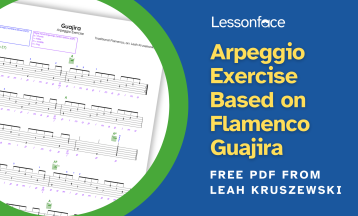
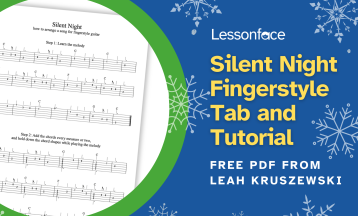
Downloadable materials include packs, guides, and exercises to help you learn.
8
Downloadables
5.0
Average Rating
Students have given their Lessonface
lessons over
36,100+ reviews.
Leah's patience is saintly! No matter how many times I play the same measure incorrectly, Leah leads me through it again, and again. I really don't know how she does it, but she patiently leads her students through difficult peices of music without getting frustrated. She is an amazing instructor! Take her lessons. You will not regret it, and you are almost guaranteed to improve as a musician!
Leah is an excellent teacher and I would highly recommend her. She is very patient and always quickly understands the issues I come across and presents me with a clear path to help me resolve them. I always find my lessons give me renewed enthusiasm and confidence as to how to progress.
Fosussing on technique, which is really what I need
An outstanding and responsive teacher. I am an older self taught student and she quickly adapted to my level of proficiency and interest. She identified and corrected issues that have been plaguing me for months in only a few short minutes of the first lesson. She has great insight into curriculum and tailors everything to her students. I strongly recommend her.












Latest from the Blog
Tips, stories, and interviews from the Classical Guitar community.



Lessonface Guarantee
Reach out to tell us within 48-hours of taking an unsatisfactory lesson, class, or course, and we will offer you a refund. Read more about the guarantee.

Designed for All Ages
Creating a joyful, safe, and convenient educational experience for our students is our goal. Learn more about our kid-friendly features here, or read our privacy policy and safety precautions here.
Have more questions? Check out our FAQ, or reach out.
About Lessonface
At Lessonface, we've held our mission of helping students achieve their goals while treating teachers equitably for over ten years. We're here to help you connect to your ideal teacher and make real progress. Please reach out with any questions or concerns.
 Claire Cunningham
- Founder & CEO
What is the best method for learning Classical Guitar ?
We're biased, of course, but at Lessonface we believe the best way to learn Classical Guitar is through one-on-one lessons. Personalized instruction means your teacher can tailor every lesson to your goals, learning style, and skill level. Online group classes can also be a great way to make learning fun and social. Learning Classical Guitar online makes it easy to stay consistent, which is essential to steady progress.
There are plenty of apps and YouTube videos out there to help with learning Classical Guitar, but most teachers agree that those resources work best as supplements to, not replacements for, one-on-one instruction. A skilled Classical Guitar teacher can identify bad habits before they become ingrained, help you focus on what matters most, and solve problems as soon as they arise, often saving you months of frustration and wasted practice time. The bottom line? A real teacher accelerates your progress and keeps you on the right path from day one.
How do online Classical Guitar lessons work?
Online lessons are effective, affordable, and accessible. Lessonface qualifies teachers in over 300 music, language, and arts subjects, including Classical Guitar. Students can browse teachers' profiles, send them messages, and book lessons securely through Lessonface. Lessons happen via Zoom links that are securely generated for each lesson, and can be easily recorded by the teacher. Recordings, notes, and attachments can all be accessed from within the Lessonface dashboard. Lessons can be booked one at a time, in packages, or by subscription to save a spot on the teacher's calendar. Lessonface hosts recitals, open mics, group classes, and self-paced courses too. Registering an account is free so it's easy to get started reaching out to find your ideal instructor. Contact us with any further questions!
How do I find the best teacher for me for Classical Guitar lessons?
With over 100 qualified Classical Guitar teachers who have together earned an average of 5 out of 5 stars over 1268 lesson reviews by verified students, you can be sure to find a great instructor at Lessonface.
Lessonface offers free tools to help you find the ideal tutor for you or your family:
- Use the open filtering system
- Use our matching service to describe your background, scheduling preferences, and any particular goals, and qualified Classical Guitar teachers will respond.
You can view teachers' bios, accolades, rates, send them a message and book lessons from their profiles.
Many teachers offer a free trial, and you can book lessons one at a time until you decide you prefer to book a bundle or subscribe, so don't hesitate to try. Teachers may also offer group classes, self-paced courses, and downloadable content, so there are more ways to get started while you're still getting acquainted with the community.
How much do Classical Guitar lessons cost?
Classical Guitar teachers on Lessonface set their own rates. Rates are displayed on the teachers' profile pages and in the checkout process prior to booking. Teachers may choose to change their rates for new bookings, and students will always be notified prior to making payment. The average paid for a Classical Guitar lesson on Lessonface in the past 12 months was $31.64.
The average paid for a Classical Guitar lesson 5 years ago was $23.90. Some Classical Guitar teachers offer a free trial lesson to new students, which are not factored into the average prices.
How does payment work for Classical Guitar lessons?
There is no fee until you book your first paid lesson. Many teachers offer free trial lessons. Students can opt to book one a time, or purchase lesson packages or subscriptions for scheduling convenience, and, depending on the teachers, a discount. Payment can be made by credit card or Paypal. Lessons booked with a subscription are pre-paid three days before the end of the month for lessons that are scheduled for the following month. Subscription payments can only be made by credit card (not Paypal). Teachers receive their payment after the lesson has been completed.
Is classical guitar hard to learn for a complete beginner?
Classical guitar has a reputation for being demanding, and it's not entirely undeserved. But "demanding" and "inaccessible" are very different things, and plenty of complete beginners take up classical guitar every year and find it deeply rewarding from early on.
The main challenges are physical at first. Classical guitar is played with the fingertips and nails of the right hand rather than a pick, and developing the coordination between both hands takes time. Left hand finger strength and the ability to press strings cleanly also takes some building up. These are normal parts of the process and not signs that you're doing anything wrong.
What makes classical guitar particularly satisfying is that both hands are doing interesting, independent things from relatively early in the learning process. Even simple beginner pieces can sound genuinely beautiful, which makes the effort feel worthwhile.
The classical guitar repertoire is also one of the richest of any instrument, spanning several centuries and an enormous range of styles and moods. Getting a feel for that world, even as a beginner, is part of what makes the instrument so compelling.
A good teacher makes an enormous difference in the early stages. Classical guitar technique is specific and somewhat unforgiving of bad habits, so having someone to guide your posture, hand position, and tone production from the start puts you on the right track and saves a lot of frustration down the road.
With consistent practice and good instruction, classical guitar is absolutely learnable. The rewards are well worth the effort.
Do classical guitarists need to learn to read music?
Reading music is strongly encouraged for classical guitar, and most teachers will introduce notation from the very first lesson. That said, tablature (tab) is available for a wide range of classical guitar pieces, and some beginners do start there while they build their reading skills alongside.
The limitation of tab is that it tells you where to put your fingers but leaves out a lot of important musical information — rhythm, phrasing, dynamics, and articulation among them. For classical guitar specifically, those details are a big part of what makes the music come alive. A score gives you the full picture in a way that tab simply can't.
The good news is that learning to read music is more approachable than it looks from the outside. Beginner method books introduce notation gradually, in step with the music you're learning to play. You won't be expected to sight-read complex scores right away — it's a skill that builds steadily over time, and most students find it becomes second nature faster than they expected.
Being able to read music also opens up the full depth of the classical guitar library. Centuries of beautiful repertoire become accessible to you, and you'll be able to work from the same scores that professional guitarists use. That connection to the broader tradition is one of the things that makes classical guitar so rewarding to pursue.
No prior reading experience is necessary to get started. Your teacher will guide you from the beginning.
What is the difference between classical guitar and fingerstyle guitar?
This is a question that trips up a lot of people, and understandably so. Classical guitar is played fingerstyle, so the two terms can seem interchangeable. But they're not quite the same thing.
Fingerstyle is a broad term that simply refers to playing guitar with the fingers rather than a pick. It encompasses an enormous range of styles — folk, blues, jazz, pop, and yes, classical. Any guitarist playing with their fingers rather than a pick is technically playing fingerstyle.
Classical guitar is a specific tradition within that broader category. It has its own repertoire, technique, notation, and performance practice developed over several centuries. Classical guitarists use a precise right hand technique with specific finger assignments, play from written scores, and follow conventions around posture, hand position, and tone production that are specific to the tradition.
What sometimes gets called "fingerstyle guitar" in a contemporary context often refers to a more modern approach — players like Tommy Emmanuel or Andy McKee who combine melody, bass lines, and percussion on a steel string guitar. This style draws on many influences including classical technique, but it's a distinct genre with its own vocabulary.
The practical difference for someone considering lessons is that classical guitar and contemporary fingerstyle call different instruments, different repertoire, and often different teachers. If you're drawn to the sound of a specific player or style, it's worth clarifying which tradition they come from before choosing a direction. Your teacher can help you figure out where your interests fit.
What kind of guitar and accessories do I need for classical guitar lessons?
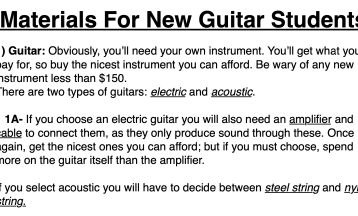
The ideal instrument for classical guitar is a nylon string guitar, and that's what your teacher will recommend for serious study. The feel, tone, and right hand technique are all built around the nylon string instrument, and a classical guitar will serve you best in the long run.
That said, if you already own a steel string acoustic guitar and want to test the waters before committing to a new instrument, it's a reasonable place to start. You'll be able to get a feel for the basics, and a good teacher can work with you on fundamentals while you decide whether classical guitar is the right fit. Just know that the transition to a nylon string guitar will feel quite different, and some techniques won't translate perfectly in the meantime.
For a beginner classical guitar, a decent student-level instrument can be found in the $200 to $400 range. It's worth buying from a reputable music store rather than a general retail site — very inexpensive instruments can be difficult to play and may discourage progress. Having your instrument set up by a luthier before your first lesson makes a real difference in playability.
In terms of accessories, a few things are worth having from the start. A footstool or guitar support keeps the instrument in the correct playing position and is an important part of classical technique. A tuner is essential — a clip-on tuner or a tuning app works fine. Some students also use a nail file to maintain their right hand nails, which play an important role in classical tone production.
Your teacher can advise you on anything specific to their approach or your goals.
Do I need to grow my nails to play classical guitar?
For most classical guitarists, yes — the nails of the right hand play an important role in tone production. Classical guitar technique uses the nail to make contact with the string alongside the fingertip, producing a clearer, more projecting tone than the fingertip alone. Most classical guitarists keep their right hand nails at a specific length and shape, and nail care becomes a regular part of their routine.
The nails of the left hand, however, are kept short. Long left hand nails make it difficult to press strings cleanly, so if you're used to keeping all your nails long, you'll need to adjust.
If you can't grow your right hand nails — due to a job that requires short nails, a nail condition, or personal preference — there are workable alternatives. Artificial nails or nail tips applied to the right hand fingers are widely used by classical guitarists and can produce excellent results. Some players use products specifically designed for guitarists. Others experiment with playing more from the fingertip, though this produces a softer, more muted tone that not all teachers or students prefer.
It's worth raising with your teacher early if nails are a concern. They'll have experience with the options and can help you find an approach that works for your hands and your situation. Nail management is one of those aspects of classical guitar that sounds fussier than it turns out to be in practice — most students adapt without too much difficulty.
What are some good starter pieces for beginner classical guitarists?
There's a wealth of beautiful music available to classical guitarists at every level, and reaching genuinely satisfying repertoire happens sooner than most people expect. That said, some of the pieces that draw people to classical guitar — Tarrega's Capricho Arabe, Albeniz's Asturias, or Recuerdos de la Alhambra — are advanced works that take years of dedicated study to reach. A good teacher will help you build toward your goals with stepping-stone pieces that are rewarding in their own right.
Some favorite and frequently taught pieces for beginner and early intermediate classical guitarists include:
- Andantino by Carulli -- a gentle, melodic piece that introduces basic finger coordination and is very achievable early on
- Romanza (Spanish Romance) -- one of the most recognizable pieces in the classical guitar repertoire, and accessible to motivated beginners
- Waltz in E Major by Carulli -- a charming and tuneful piece well suited to early beginners
- Prelude in D Minor by Sor -- a short, expressive piece that introduces some basic musical ideas without overwhelming technical demands
- Estudio in E Major by Carcassi -- a bright, satisfying study piece that builds right hand finger independence
- Simple pieces from the Suzuki Guitar School -- a widely used method that introduces students to recognizable melodies from the very beginning
The best starter pieces are the ones that match your current level while keeping you motivated. If you have a dream piece, tell your teacher. They'll map out a path to get you there.