





Find Flamenco Guitar Lessons with Excellent Teachers
Grow your skills with the guidance of a great Flamenco Guitar teacher. Explore live online Flamenco Guitar lessons, group classes, and self-paced courses — all led by qualified teachers and reviewed by your fellow students.
View Teachers Related Topics
Discover experienced, passionate Flamenco Guitar teachers to help you reach your next level.
40
Vetted Teachers
5.0
Average Rating
1,600+
Student Ratings
~$37
Avg. Lesson Price
View All Teachers

9 yrYears
Teaching on Lessonface
Itamar Erez
Nominated as Lessonface's 'Fingerstyle Teacher Of The Year 2020', Itamar has 30 years of teaching experience- both privately and in various music schools internationally. "Erez delivers a sparkling and glittering firework of guitars, which allows associations to the acoustic works of master guitarists such as Al di Meola or Paco de Lucia...
$45.00 / 30 min

2 yrYears
Teaching on Lessonface
Steven Middendorp
Steven is a musician and writer. He has been playing and performing as a guitarist for more than 20 years. He has been teaching guitar, ukulele, harmonica, and writing for nine years. Steven has a passion for music that he developed in high school when he formed a band with his friends to play at the "Battle of the Bands.
$24.00 / 30 min

5 yrYears
Teaching on Lessonface
Cristóbal Schulkin
-Fingerstyle Guitar teacher of the year 2022- Cristóbal is an eclectic guitarist with a classical background. Based in Buenos Aires, he has toured Latin America and Europe playing modern Argentine music and pieces of other living composers like Leo Brouwer, Carlo Domeniconi, Johannes Möller, Mathias Duplessy and many others.
$40.00 / 30 min

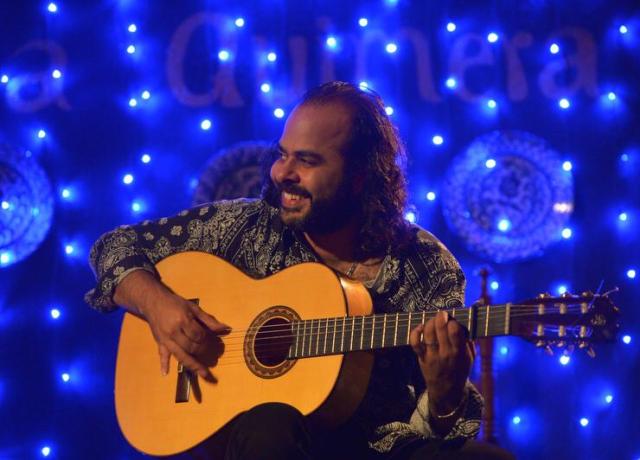
Photo: Reza el Persa
For me, Reza is an example of a top-notch teacher, a master of a soulful playing flamenco guitar. I feel he is involved and his attention is focused on the lesson and my needs. He has a clear method of teaching but he is flexible and attentive to me as his student. Looking forward to the sessions.
Want help finding your ideal flamenco guitar teacher?
Fill out the quick form and teachers who fit your needs will be in touch.
Photo: Jonathan Goldie


Great Flamenco Guitar Teachers
Through our longstanding commitment to treat teachers equitably, we work with phenomenal instructors — including members of the MET Orchestra, Juilliard and Berklee alumni, GRAMMY® winners and nominees, and many other professional educators.
View Teachers 
Photo: Calvin Hazen
About Flamenco Guitar Lessons at Lessonface
Find a great teacher, securely book a first lesson or trial, and meet via Zoom. Lessonface handles the lesson links and sends you reminders. Recordings, assignments, and notes are easy to access before, during, and after the lesson.
View Teachers Learn at your own pace with self-paced courses.
3
Self-Paced Courses
5.0
Average Rating
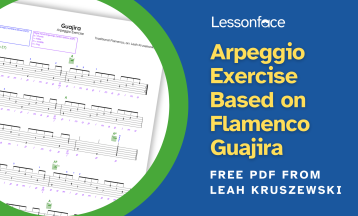
Downloadable materials include packs, guides, and exercises to help you learn.
3
Downloadables
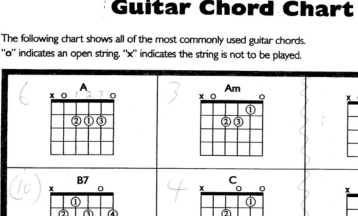
Students have given their Lessonface
lessons over
36,100+ reviews.
We are so grateful we found Leah. She has greatly improved our son's ear training, rhythm, and tempo. She is always patient and encouraging, and she has an organized plan that keeps him challenged but not overwhelmed. She makes a video recap of what he has learned each lesson which he relies on for the first day or two after the lesson before he can play the new material independently. We are amazed that from rural NC, he is able to learn and play flamenco guitar as a 7 year old! Highly recommend Leah to anyone young to old wishing to improve their guitar playing skills.
Learning from Leah has been a genuine pleasure. For many years I dreamed of learning to play the guitar, and after what felt like countless years of postponing it, I can finally say I’m playing music that actually sounds enjoyable. The experience has brought me a deep sense of personal satisfaction, achievement, and fulfillment. Under Leah's guidance, I now have three flamenco pieces under my belt—something I never imagined I’d be able to say. She is a thoughtful, patient, and inspiring teacher, and I’m truly delighted with my progress. I’m very happy studying with her and look forward to continuing to expand both my repertoire and my playing ability.
Reza is a wonderful teacher! Patient and open-minded. He carries the flamenco spirit with him and will help you with everything from how to sit with the guitar to how to get that growling flamenco sound. A bit of background information on me: I'm a classical guitarist who is in his second year studying for a bachelor's. Even though I already have a solid base, that doesn't mean Reza can't help me. He most definitely can. It's an entirely new world with this wonderful instrument—one that has elevated my classical playing, my composition skills, and my love for music! Even though I already have a solid base, I asked him to teach me like a beginner, so don't think that he is exclusively for experienced guitarists! So far, I have taken nine lessons with him, where we have worked on different falsetas (the flamenco equivalent of a guitar solo or a piece), the soleá, and compás, which are the basis for flamenco and very different if you are, like me, used to classical guitar. We start off every lesson looking at what we learned in the last lesson to solidify it before moving on to new material, whether that be something technical like alzapúa or trémolo, or something more abstract like musical phrasing. All of his homework is delivered through different videos he records, so you don't need to know how to read music. It's a different "language" for me, since in my world all music is learned with the use of sheet music.












Latest from the Blog
Tips, stories, and interviews from the Flamenco Guitar community.

What Is (And Isn't) Flamenco: Part One
Read more
Lessonface Guarantee
Reach out to tell us within 48-hours of taking an unsatisfactory lesson, class, or course, and we will offer you a refund. Read more about the guarantee.

Designed for All Ages
Creating a joyful, safe, and convenient educational experience for our students is our goal. Learn more about our kid-friendly features here, or read our privacy policy and safety precautions here.
Have more questions? Check out our FAQ, or reach out.
About Lessonface
At Lessonface, we've held our mission of helping students achieve their goals while treating teachers equitably for over ten years. We're here to help you connect to your ideal teacher and make real progress. Please reach out with any questions or concerns.
 Claire Cunningham
- Founder & CEO
What is the best method for learning Flamenco Guitar ?
We're biased, of course, but at Lessonface we believe the best way to learn Flamenco Guitar is through one-on-one lessons. Personalized instruction means your teacher can tailor every lesson to your goals, learning style, and skill level. Online group classes can also be a great way to make learning fun and social. Learning Flamenco Guitar online makes it easy to stay consistent, which is essential to steady progress.
There are plenty of apps and YouTube videos out there to help with learning Flamenco Guitar, but most teachers agree that those resources work best as supplements to, not replacements for, one-on-one instruction. A skilled Flamenco Guitar teacher can identify bad habits before they become ingrained, help you focus on what matters most, and solve problems as soon as they arise, often saving you months of frustration and wasted practice time. The bottom line? A real teacher accelerates your progress and keeps you on the right path from day one.
How do online Flamenco Guitar lessons work?
Online lessons are effective, affordable, and accessible. Lessonface qualifies teachers in over 300 music, language, and arts subjects, including Flamenco Guitar. Students can browse teachers' profiles, send them messages, and book lessons securely through Lessonface. Lessons happen via Zoom links that are securely generated for each lesson, and can be easily recorded by the teacher. Recordings, notes, and attachments can all be accessed from within the Lessonface dashboard. Lessons can be booked one at a time, in packages, or by subscription to save a spot on the teacher's calendar. Lessonface hosts recitals, open mics, group classes, and self-paced courses too. Registering an account is free so it's easy to get started reaching out to find your ideal instructor. Contact us with any further questions!
How do I find the best teacher for me for Flamenco Guitar lessons?
With over 100 qualified Flamenco Guitar teachers who have together earned an average of 5 out of 5 stars over 1632 lesson reviews by verified students, you can be sure to find a great instructor at Lessonface.
Lessonface offers free tools to help you find the ideal tutor for you or your family:
- Use the open filtering system
- Use our matching service to describe your background, scheduling preferences, and any particular goals, and qualified Flamenco Guitar teachers will respond.
You can view teachers' bios, accolades, rates, send them a message and book lessons from their profiles.
Many teachers offer a free trial, and you can book lessons one at a time until you decide you prefer to book a bundle or subscribe, so don't hesitate to try. Teachers may also offer group classes, self-paced courses, and downloadable content, so there are more ways to get started while you're still getting acquainted with the community.
How much do Flamenco Guitar lessons cost?
Flamenco Guitar teachers on Lessonface set their own rates. Rates are displayed on the teachers' profile pages and in the checkout process prior to booking. Teachers may choose to change their rates for new bookings, and students will always be notified prior to making payment. The average paid for a Flamenco Guitar lesson on Lessonface in the past 12 months was $33.60.
The average paid for a Flamenco Guitar lesson 5 years ago was $24.57. Some Flamenco Guitar teachers offer a free trial lesson to new students, which are not factored into the average prices.
How does payment work for Flamenco Guitar lessons?
There is no fee until you book your first paid lesson. Many teachers offer free trial lessons. Students can opt to book one a time, or purchase lesson packages or subscriptions for scheduling convenience, and, depending on the teachers, a discount. Payment can be made by credit card or Paypal. Lessons booked with a subscription are pre-paid three days before the end of the month for lessons that are scheduled for the following month. Subscription payments can only be made by credit card (not Paypal). Teachers receive their payment after the lesson has been completed.
Do I need to know how to play guitar before learning flamenco?
Short answer: no prior guitar experience is necessary to start learning flamenco guitar. Plenty of students come to flamenco guitar as their first instrument, and a good flamenco teacher will start you from the very beginning.
It's worth noting that flamenco guitar has a distinct technical vocabulary that sets it apart from other styles. Techniques like rasgueado (a percussive strumming technique using the back of the fingers), picado (single note runs), and golpe (tapping the guitar body for rhythmic effect) are foundational to flamenco and don't have direct equivalents in rock or pop guitar. These are learned from the ground up regardless of your background.
If you do have some guitar experience, particularly in classical guitar, it will give you a head start. Classical and flamenco guitar share some technical common ground, including right hand finger technique and an understanding of the instrument's construction and response. But classical training is by no means a prerequisite.
One thing all beginners benefit from is patience with compas, the rhythmic framework at the heart of flamenco. Flamenco rhythm can be complex and feels unfamiliar at first, but it becomes more intuitive with time and a good teacher to guide you.
If you're drawn to flamenco, that enthusiasm is the only real prerequisite. Start where you are.
What kind of guitar do I need to learn flamenco?
Flamenco is played on a nylon string guitar. Steel string acoustic guitars and electric guitars are not appropriate for flamenco — the technique, tone, and feel are built around the nylon string instrument, so this is one area where there's no real workaround.
Within the nylon string family, there are two main options: a classical guitar and a flamenco guitar. For someone just starting out or testing the waters, a classical guitar can be adequate. The two instruments are closely related, and a classical guitar will get you started without a significant disadvantage at the beginner level.
As you advance, the differences between the two become more meaningful. Flamenco guitars are typically built with cypress or sycamore back and sides rather than the rosewood used in classical guitars, which gives them a brighter, more percussive tone that suits the style. They also have a lower action (the height of the strings above the fretboard), which makes techniques like rasgueado and picado feel more natural and responsive. Many flamenco guitars also come with a golpeador, a tap plate on the soundboard that protects the wood during the percussive golpe technique.
If you're serious about flamenco from the start, a dedicated flamenco guitar is worth considering even as a beginner. Your teacher can advise you on what makes sense for your goals and budget.
What is the difference between flamenco guitar, classical guitar, and Spanish guitar?
This is a common point of confusion, and it's worth clearing up. The short answer is that "Spanish guitar" isn't really a distinct category — it's an informal term that people use to refer to nylon string guitars generally, and sometimes to classical or flamenco guitar specifically. If you see a guitar described as a Spanish guitar, it almost certainly means a nylon string instrument of some kind.
Classical guitar and flamenco guitar are distinct traditions, though they share the same instrument family and some technical common ground. Classical guitar is a concert tradition with a vast repertoire spanning several centuries, from Renaissance lute transcriptions to contemporary compositions. The style emphasizes a warm, sustained tone, precise fingerpicking technique, and formal music reading. Classical guitarists typically play with the guitar resting on the left leg, supported by a footstool or support device.
Flamenco guitar is rooted in the Andalusian culture of southern Spain and is deeply connected to flamenco singing and dance. The style emphasizes rhythm, percussive technique, and a brighter, more cutting tone. Flamenco guitarists traditionally rest the guitar on the right leg. The technical vocabulary of flamenco — rasgueado, picado, golpe, alzapua — is distinct from classical technique, though the two traditions have influenced each other over the centuries.
In short, classical and flamenco are related but separate art forms, each with its own repertoire, technique, and cultural context.
What are the most important flamenco guitar techniques, and which should a beginner learn first?
Flamenco guitar has a rich and distinctive technical vocabulary that sets it apart from other styles. The good news is that beginners don't need to tackle everything at once. A good teacher will introduce techniques gradually, in an order that builds on itself.
The core techniques every flamenco guitarist works toward include:
- Rasgueado -- a percussive strumming technique using the back of the fingers in rapid succession. It's one of the most iconic sounds in flamenco and one of the first things most students want to learn.
- Picado -- single note runs played with alternating index and middle fingers, similar to classical fingerpicking. This builds speed and clarity in melodic passages.
- Alzapua -- a thumb technique that combines single notes and strums in a distinctive flamenco pattern.
- Golpe -- tapping the soundboard of the guitar with the ring finger for percussive rhythmic effect.
- Arpeggio -- a rolling finger pattern across the strings, used to create a lyrical, sustained sound.
For most beginners, the first focus will be on basic right hand position, simple arpeggio patterns, and an introduction to rasgueado. Compas, the rhythmic foundation of flamenco, is woven into all of this from the very beginning — understanding the rhythm of the style is just as important as any single technique.
Progress takes patience, but each technique opens up new musical possibilities and makes the next one easier to grasp.
Do flamenco guitarists need to learn to read music?
Unlike classical guitar, flamenco has a strong oral and aural tradition. Historically, flamenco was passed down from teacher to student by ear and imitation rather than through written notation, and that tradition remains very much alive today. Many accomplished flamenco guitarists do not read music in the traditional sense.
That said, most flamenco students today learn through a combination of approaches. Tablature (commonly called tab) is widely used in flamenco instruction — it shows you where to place your fingers on the fretboard without requiring you to read standard notation. Video demonstration is also central to how flamenco is taught, both in person and online, because so much of the style is about feel, timing, and nuance that is difficult to capture on a page.
Understanding compas, the rhythmic framework of flamenco, is far more important than reading standard notation. Flamenco rhythm is complex and deeply specific to the style, and developing a strong internal sense of it is something every student works on from early on.
If you already read music, that knowledge won't hurt you and may help in some contexts. But if you don't, it's not a barrier to learning flamenco. Your teacher will guide you through the material using whatever combination of tab, demonstration, and listening works best for you.
Flamenco is ultimately a listening and feeling tradition. Your ears will take you further than your eyes.
What are palos, and how is learning a flamenco palo different from learning a song?
Palos are the different forms or styles that make up the flamenco tradition. Each palo has its own rhythmic structure, chord progressions, emotional character, and cultural history. Solea, Bulerias, and Alegrias are among the most well known, but there are dozens of palos in total, ranging from the deeply serious to the joyful and celebratory.
Understanding what a palo is helps explain why learning flamenco works differently from learning songs in other styles. In rock or pop, you learn a specific song with a fixed melody, chords, and structure. When you're learning a palo in flamenco, there is enormous room for improvisation, interpretation, and personal expression. The palo provides the framework; what happens within it is up to the guitarist.
This means that when a flamenco teacher introduces you to, say, solea, they're not just teaching you a piece of music. They're teaching you a rhythmic feel, a set of chord movements, a vocabulary of falsetas (melodic phrases) that can be arranged and varied, and an understanding of how the guitar interacts with singers and dancers in that form.
For beginners, this can feel quite different from what they're used to. Rather than learning a piece from beginning to end, you're building a toolkit within a tradition. It takes time to feel natural, but it's also what gives flamenco its depth and keeps it endlessly interesting to play.