





Find Banjo Lessons with Excellent Teachers
Grow your skills with the guidance of a great Banjo teacher. Explore live online Banjo lessons, group classes, and self-paced courses — all led by qualified teachers and reviewed by your fellow students.
View Teachers Related Topics
Discover experienced, passionate Banjo teachers to help you reach your next level.
45
Vetted Teachers
5.0
Average Rating
1,400+
Student Ratings
~$36
Avg. Lesson Price
View All Teachers

2 yrYears
Teaching on Lessonface
Michelle Younger
Banjo player and multi-instrumentalist Michelle Younger bridges the gap between Appalachian Old-Time and contemporary folk music. Her sound is founded on tradition, a technical approach, and a new sensibility.
$40.00 / 30 min

12 yrYears
Teaching on Lessonface
Mike Mitchell
LessonFace Teacher of the Year 2017, 2019, 2020, 2021, 2022, 2023 and 2024 with over 4,300 lessons taught since 2013! From a recent "first lesson" parent: Thank you for an awesome first lesson and for even spending extra time. That's how you can tell someone has passion for what they teach. I do the same when I'm teaching cardiology :).
$30.00 / 30 min

1 yrYear
Teaching on Lessonface
Henry Colt
Henry Colt is a bluegrass, oldtime, and jazz musician who is passionate about teaching. In Juneau, Alaska, he worked as a Teaching Artist for the nonprofit Juneau Alaska Music Matters, teaching folk music in the local elementary schools as well as giving private lessons.
$30.00 / 30 min

4 yrYears
Teaching on Lessonface
Willow Osborne
Willow Osborne picked up her first banjo at the age of four. She was taught by her friend & mentor, Gary "Biscuit" Davis, the only 5-time International Banjo Champion. She is endorsed by Deering banjos and plays their Calico model. Willow is also endorsed by Neat banjos, GHS Strings, Black Mountain Picks & BlueChip Picks.
$30.00 / 30 min
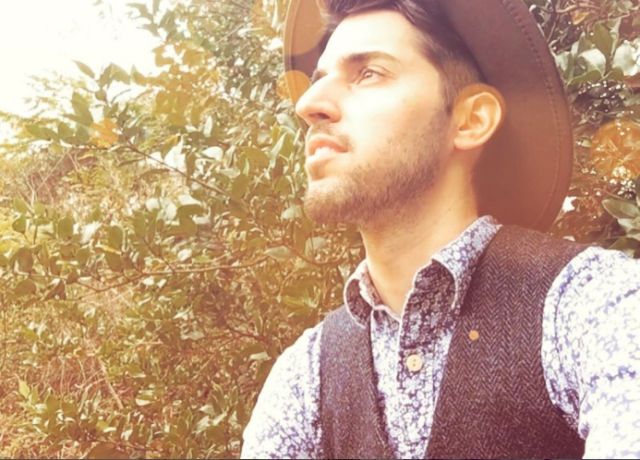
Photo: Adam Dias
I have never enjoyed music lessons as much as I do with Adam, a very kind and thoughtful teacher.

Want help finding your ideal banjo teacher?
Fill out the quick form and teachers who fit your needs will be in touch.
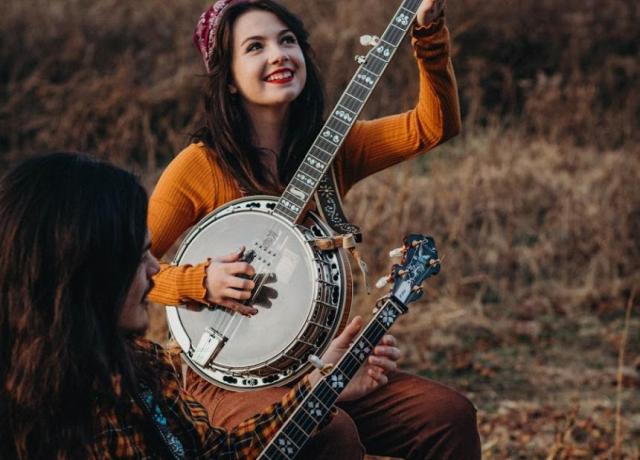
Photo: Willow Osborne



Great Banjo Teachers
Through our longstanding commitment to treat teachers equitably, we work with phenomenal instructors — including members of the MET Orchestra, Juilliard and Berklee alumni, GRAMMY® winners and nominees, and many other professional educators.
View Teachers 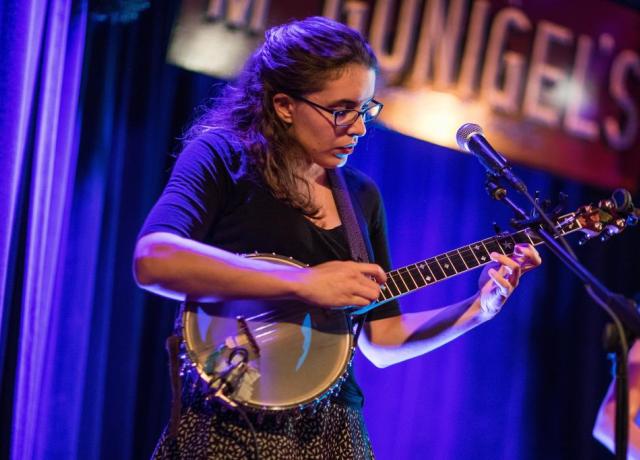
Photo: Michelle Younger
About Banjo Lessons at Lessonface
Find a great teacher, securely book a first lesson or trial, and meet via Zoom. Lessonface handles the lesson links and sends you reminders. Recordings, assignments, and notes are easy to access before, during, and after the lesson.
View Teachers 











Latest from the Blog
Tips, stories, and interviews from the Banjo community.

Lessonface Guarantee
Reach out to tell us within 48-hours of taking an unsatisfactory lesson, class, or course, and we will offer you a refund. Read more about the guarantee.
Designed for All Ages
Creating a joyful, safe, and convenient educational experience for our students is our goal. Learn more about our kid-friendly features here, or read our privacy policy and safety precautions here.
Have more questions? Check out our FAQ, or reach out.
About Lessonface
At Lessonface, we've held our mission of helping students achieve their goals while treating teachers equitably for over ten years. We're here to help you connect to your ideal teacher and make real progress. Please reach out with any questions or concerns.
 Claire Cunningham
- Founder & CEO
What is the best method for learning Banjo ?
We're biased, of course, but at Lessonface we believe the best way to learn Banjo is through one-on-one lessons. Personalized instruction means your teacher can tailor every lesson to your goals, learning style, and skill level. Online group classes can also be a great way to make learning fun and social. Learning Banjo online makes it easy to stay consistent, which is essential to steady progress.
There are plenty of apps and YouTube videos out there to help with learning Banjo, but most teachers agree that those resources work best as supplements to, not replacements for, one-on-one instruction. A skilled Banjo teacher can identify bad habits before they become ingrained, help you focus on what matters most, and solve problems as soon as they arise, often saving you months of frustration and wasted practice time. The bottom line? A real teacher accelerates your progress and keeps you on the right path from day one.
How do online Banjo lessons work?
Online lessons are effective, affordable, and accessible. Lessonface qualifies teachers in over 300 music, language, and arts subjects, including Banjo. Students can browse teachers' profiles, send them messages, and book lessons securely through Lessonface. Lessons happen via Zoom links that are securely generated for each lesson, and can be easily recorded by the teacher. Recordings, notes, and attachments can all be accessed from within the Lessonface dashboard. Lessons can be booked one at a time, in packages, or by subscription to save a spot on the teacher's calendar. Lessonface hosts recitals, open mics, group classes, and self-paced courses too. Registering an account is free so it's easy to get started reaching out to find your ideal instructor. Contact us with any further questions!
How do I find the best teacher for me for Banjo lessons?
With over 100 qualified Banjo teachers who have together earned an average of 4.99 out of 5 stars over 1478 lesson reviews by verified students, you can be sure to find a great instructor at Lessonface.
Lessonface offers free tools to help you find the ideal tutor for you or your family:
- Use the open filtering system
- Use our matching service to describe your background, scheduling preferences, and any particular goals, and qualified Banjo teachers will respond.
You can view teachers' bios, accolades, rates, send them a message and book lessons from their profiles.
Many teachers offer a free trial, and you can book lessons one at a time until you decide you prefer to book a bundle or subscribe, so don't hesitate to try. Teachers may also offer group classes, self-paced courses, and downloadable content, so there are more ways to get started while you're still getting acquainted with the community.
How much do Banjo lessons cost?
Banjo teachers on Lessonface set their own rates. Rates are displayed on the teachers' profile pages and in the checkout process prior to booking. Teachers may choose to change their rates for new bookings, and students will always be notified prior to making payment. The average paid for a Banjo lesson on Lessonface in the past 12 months was $37.04.
The average paid for a Banjo lesson 5 years ago was $25.42. Some Banjo teachers offer a free trial lesson to new students, which are not factored into the average prices.
How does payment work for Banjo lessons?
There is no fee until you book your first paid lesson. Many teachers offer free trial lessons. Students can opt to book one a time, or purchase lesson packages or subscriptions for scheduling convenience, and, depending on the teachers, a discount. Payment can be made by credit card or Paypal. Lessons booked with a subscription are pre-paid three days before the end of the month for lessons that are scheduled for the following month. Subscription payments can only be made by credit card (not Paypal). Teachers receive their payment after the lesson has been completed.
How hard is it to learn the banjo?
The banjo has a reputation for being challenging, but it's actually quite beginner-friendly in many ways. Here's what makes it approachable:
Immediate rewards: Unlike some instruments where you struggle through months of squeaky sounds, the banjo has a bright, pleasant tone from day one. Even basic rolls and patterns sound musical right away.
Forgiving tuning: Many banjo styles use open tunings, meaning the strings sound good together even when played open. This gives beginners instant success and makes chord shapes easier to learn.
Clear techniques: Whether you're learning clawhammer or three-finger bluegrass style, the techniques are well-defined and systematic. Once you get the basic hand patterns down, you can apply them to countless songs.
Visual learning: Banjo players typically learn from tablature (tab), which shows you exactly where to put your fingers on the fretboard. It's more straightforward than reading standard notation.
That said, the banjo does have unique challenges—coordinating the right-hand picking patterns takes practice, and the instrument's speed and rhythm demand precision. But these skills develop gradually, and most students find they're playing recognizable songs within their first few months.
What styles of music can I play on banjo?
The banjo is far more versatile than its bluegrass reputation suggests! Here are the main styles you can explore:
Bluegrass: The most well-known banjo style, featuring fast three-finger picking (Scruggs style) with driving rolls and melodic breaks. This is the sound you hear in classic bluegrass bands.
Old-time and clawhammer: A rhythmic, down-picking style that predates bluegrass. Clawhammer has a more percussive, droning sound and is used in traditional Appalachian and old-time music.
Folk and Americana: The banjo fits beautifully into modern folk and Americana, from Pete Seeger to Mumford & Sons. It adds texture and character to singer-songwriter material.
Irish and Celtic: The banjo has a strong tradition in Irish music, typically played with a tenor banjo (4 strings) using a picking or strumming technique.
Jazz and ragtime: In the early 20th century, the banjo was a staple of jazz bands. Plectrum and tenor banjos are still used for vintage jazz and ragtime styles.
Rock and indie: Contemporary bands across many genres incorporate banjo for its unique sound—from folk-rock to indie to even some metal bands.
Country and honky-tonk: Beyond bluegrass, the banjo appears in traditional country, honky-tonk, and Western swing.
Browse Lessonface's banjo teachers to find an instructor who specializes in your preferred genre and discuss your musical goals to find the right approach.
What kinds of banjos are there? What kind of banjo should a beginner buy?
There are several types of banjos, each designed for different styles of music:
5-string banjo: The most common type, with a short fifth string (the "drone string") that starts at the fifth fret. This is what you need for bluegrass and old-time/clawhammer styles. The fifth string gives the banjo its characteristic sound.
4-string tenor banjo: Tuned like a viola, with 19 or 23 frets. Used primarily for Irish music, jazz, and early 20th-century styles. No drone string, and it's typically played with a pick.
4-string plectrum banjo: Similar to tenor but with a longer neck (22 frets). Used for jazz, ragtime, and Dixieland music, usually played with a flat pick.
6-string banjo (banjitar): Tuned exactly like a guitar. Great if you already play guitar and want banjo tone without learning new chord shapes, but it's not traditional for bluegrass or old-time music.
For most beginners, a 5-string banjo is the best choice. Here's what to consider:
Bluegrass style: Uses three-finger picking (Scruggs style) with metal fingerpicks on a 5-string banjo. Fast rolls and melodic playing are the hallmarks.
Clawhammer/old-time style: Uses a down-picking motion with your fingers (no picks) on a 5-string banjo. More rhythmic and percussive than bluegrass.
Both styles use the same instrument—a 5-string banjo—so you can explore either direction or even learn both over time. The main difference is technique, not equipment. Your teacher can give you specific recommendations on brands and models based on your budget and goals.
Do I need picks or fingerpicks for banjo?
It depends on which style of banjo you're learning:
For bluegrass (three-finger style): Yes, you'll need metal fingerpicks. Bluegrass players wear picks on the thumb, index, and middle fingers. These picks give you the volume, speed, and crisp attack that defines the bluegrass sound. They take some getting used to, but they're essential for the style.
For clawhammer/old-time: No picks needed! Clawhammer players use their bare fingers and fingernails to strike the strings in a downward motion. Some players let their nails grow slightly for a brighter tone, but many play with short nails just fine.
For Irish tenor banjo: Usually a flat pick (like a guitar pick). Irish players typically use a single pick held between thumb and index finger.
For jazz and ragtime: Also a flat pick for plectrum and tenor banjos.
If you're just starting out on 5-string banjo and haven't decided between bluegrass and clawhammer yet, don't worry about buying picks right away. Your teacher can help you figure out which style appeals to you, and then you'll know exactly what you need. Fingerpicks are inexpensive (usually under $10 for a set), and your teacher can guide you on sizing and fit since they need to be snug but comfortable.
Do I need to learn tablature or standard notation for banjo?
Most banjo players learn tablature (tab), and you can have a full, rewarding banjo experience without ever reading standard notation. Here's why tab works so well for banjo:
Banjo-specific information: Tab shows you exactly which string and fret to play, plus the right-hand technique (thumb, index, middle finger). This is crucial for banjo since the patterns are so specific to the instrument.
Easy to read: Tab is much simpler to learn than standard notation. If you can count to five (for the five strings) and read numbers, you're basically set.
The standard in banjo instruction: The vast majority of banjo books, online resources, and teacher materials use tab. Learning it gives you access to a huge library of music.
Oral tradition: Many banjo styles, especially old-time and bluegrass, come from oral/aural traditions. Players often learn by ear alongside tab, making standard notation less essential.
That said, standard notation has its benefits—it's universal across instruments, shows rhythm more clearly, and is necessary if you want to play with classical musicians or read arrangements from other instruments. Some teachers incorporate both, giving you flexibility.
Your teacher can help you decide what's best for your goals. If you want to jam with other banjo players and learn traditional repertoire, tab is perfect. If you have broader musical ambitions, adding notation skills might be worthwhile.