








Find Drums Lessons with Excellent Teachers
Grow your skills with the guidance of a great Drums teacher. Explore live online Drums lessons, group classes, and self-paced courses — all led by qualified teachers and reviewed by your fellow students.
View Teachers Related Topics
Discover experienced, passionate Drums teachers to help you reach your next level.
100+
Vetted Teachers
5.0
Average Rating
570+
Student Ratings
~$37
Avg. Lesson Price
View All Teachers

6 yrYears
Teaching on Lessonface
Christian Bruni
I'm drummer and drums teacher from Italy specialized in Pop Rock Music. I graduated with a B.A. degree in Music Performance - Drums at the Music Academy of Bologna in the 2016/17 academic year. Here I studied a lot of things about the world of Modern Music so I've acquired a lot of knowledge and skills through the study of: Music Marketing, Music Business, Harmony, Ear Training
$35.00 / 30 min

2 yrYears
Teaching on Lessonface
Derrick Raiter
Hi, I’m Derrick Raiter, a professional percussionist with over 30 years of experience. I help drummers and percussionists of all levels build strong technique, confidence, groove, and musical expression through personalized, engaging lessons. My teaching is shaped by a national performance career and seven years of private study with renowned drummer Anika Nilles.
$38.00 / 30 min

6 yrYears
Teaching on Lessonface
Alison Ervin
Overall Teacher of the Year on Lessonface! Alison holds a Masters in Music Ed. Fun, experienced & patient teacher. Alison has taught over 20,000 lessons in various instruments and voice to over 550 students in private lessons and small groups, in person and online. Her students range from age 3 through adults. Alison is the co-owner of Strand Studios in NJ.
$30.00 / 30 min


Photo: Aaron Crouch
Aaron is a down-to-earth, patient, and encouraging teacher with excellent technique in explaining methods, rhythms, playing by ear and reading sheet music. Thank you for taking the time!

Want help finding your ideal drums teacher?
Fill out the quick form and teachers who fit your needs will be in touch.
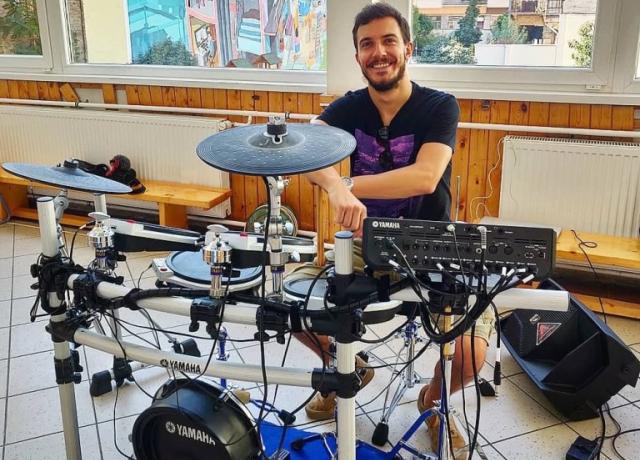
Photo: Christian Bruni

Great Drums Teachers
Through our longstanding commitment to treat teachers equitably, we work with phenomenal instructors — including members of the MET Orchestra, Juilliard and Berklee alumni, GRAMMY® winners and nominees, and many other professional educators.
View Teachers 
Photo: Lindsay Artkop
About Drums Lessons at Lessonface
Find a great teacher, securely book a first lesson or trial, and meet via Zoom. Lessonface handles the lesson links and sends you reminders. Recordings, assignments, and notes are easy to access before, during, and after the lesson.
View Teachers Learn at your own pace with self-paced courses.
4
Self-Paced Courses

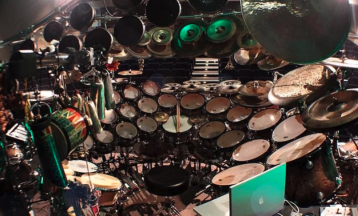
RHYTHM, King of the Omniverse: how to use it, speak it, arrange it and produce it
 Byron Fry
 12 chapters
$49.00

Downloadable materials include packs, guides, and exercises to help you learn.
5
Downloadables

Students have given their Lessonface
lessons over
36,100+ reviews.
I've been studying with Derrick for two months on drums and he's exactly what I need. As a beginner there are many coordination issues to pay attention to, getting the correct feel, position and sound response from the start is creating a foundation. It's often said that musicians spend more time replacing bad habits with correct one's. Getting the right principles now is moving the needle forward . My progress is steady. I couldn’t be happier with him & the platform.
Excellent instructor. My son tried a couple lessons with Alison and loved them. She's great with kids and is extremely knowledgeable about music training. It's hard to keep a 9 year old's attention, but she's absolutely wonderful with him. I've signed up for a subscription because of how well they went.
Superb lessons. I asked Giorgio to help with my tempo and I am provided really good exercises to correct my tempo, I have been trying for years to fix my tempo and it feels Giorgio is guiding me really well in this.
Aaron is a down-to-earth, patient, and encouraging teacher with excellent technique in explaining methods, rhythms, playing by ear and reading sheet music. Thank you for taking the time!












Latest from the Blog
Tips, stories, and interviews from the Drums community.



Lessonface Guarantee
Reach out to tell us within 48-hours of taking an unsatisfactory lesson, class, or course, and we will offer you a refund. Read more about the guarantee.

Designed for All Ages
Creating a joyful, safe, and convenient educational experience for our students is our goal. Learn more about our kid-friendly features here, or read our privacy policy and safety precautions here.
Have more questions? Check out our FAQ, or reach out.
About Lessonface
At Lessonface, we've held our mission of helping students achieve their goals while treating teachers equitably for over ten years. We're here to help you connect to your ideal teacher and make real progress. Please reach out with any questions or concerns.
 Claire Cunningham
- Founder & CEO
What is the best method for learning Drums ?
We're biased, of course, but at Lessonface we believe the best way to learn Drums is through one-on-one lessons. Personalized instruction means your teacher can tailor every lesson to your goals, learning style, and skill level. Online group classes can also be a great way to make learning fun and social. Learning Drums online makes it easy to stay consistent, which is essential to steady progress.
There are plenty of apps and YouTube videos out there to help with learning Drums, but most teachers agree that those resources work best as supplements to, not replacements for, one-on-one instruction. A skilled Drums teacher can identify bad habits before they become ingrained, help you focus on what matters most, and solve problems as soon as they arise, often saving you months of frustration and wasted practice time. The bottom line? A real teacher accelerates your progress and keeps you on the right path from day one.
How do online Drums lessons work?
Online lessons are effective, affordable, and accessible. Lessonface qualifies teachers in over 300 music, language, and arts subjects, including Drums. Students can browse teachers' profiles, send them messages, and book lessons securely through Lessonface. Lessons happen via Zoom links that are securely generated for each lesson, and can be easily recorded by the teacher. Recordings, notes, and attachments can all be accessed from within the Lessonface dashboard. Lessons can be booked one at a time, in packages, or by subscription to save a spot on the teacher's calendar. Lessonface hosts recitals, open mics, group classes, and self-paced courses too. Registering an account is free so it's easy to get started reaching out to find your ideal instructor. Contact us with any further questions!
How do I find the best teacher for me for Drums lessons?
With over 100 qualified Drums teachers who have together earned an average of 5 out of 5 stars over 579 lesson reviews by verified students, you can be sure to find a great instructor at Lessonface.
Lessonface offers free tools to help you find the ideal tutor for you or your family:
- Use the open filtering system
- Use our matching service to describe your background, scheduling preferences, and any particular goals, and qualified Drums teachers will respond.
You can view teachers' bios, accolades, rates, send them a message and book lessons from their profiles.
Many teachers offer a free trial, and you can book lessons one at a time until you decide you prefer to book a bundle or subscribe, so don't hesitate to try. Teachers may also offer group classes, self-paced courses, and downloadable content, so there are more ways to get started while you're still getting acquainted with the community.
How much do Drums lessons cost?
Drums teachers on Lessonface set their own rates. Rates are displayed on the teachers' profile pages and in the checkout process prior to booking. Teachers may choose to change their rates for new bookings, and students will always be notified prior to making payment. The average paid for a Drums lesson on Lessonface in the past 12 months was $28.07.
The average paid for a Drums lesson 5 years ago was $28.99. Some Drums teachers offer a free trial lesson to new students, which are not factored into the average prices.
How does payment work for Drums lessons?
There is no fee until you book your first paid lesson. Many teachers offer free trial lessons. Students can opt to book one a time, or purchase lesson packages or subscriptions for scheduling convenience, and, depending on the teachers, a discount. Payment can be made by credit card or Paypal. Lessons booked with a subscription are pre-paid three days before the end of the month for lessons that are scheduled for the following month. Subscription payments can only be made by credit card (not Paypal). Teachers receive their payment after the lesson has been completed.
Is it hard to learn drums?
Drums are surprisingly beginner-friendly, though they do have some unique challenges. Here's what to expect:
Easy to make music quickly: Unlike melodic instruments where you need to learn precise finger positions for notes, drums let you make satisfying rhythms almost immediately. Many beginners can play simple rock beats within their first few lessons.
Coordination takes practice: The real challenge with drums is independence—getting your hands and feet to do different things at the same time. Your right hand might keep steady time on the hi-hat while your left plays the snare and your right foot handles the bass drum. This feels awkward at first but becomes natural with consistent practice.
Physical demands: Drumming is a full-body workout. You'll use your arms, legs, core, and back, and playing for extended periods requires stamina. Beginners often feel tired after 20-30 minutes of practice, which is completely normal. Your endurance will build gradually.
Technique matters: Proper stick grip and body positioning prevent fatigue and injury. Good technique actually makes drumming easier and less tiring, which is why working with a teacher from the start is so valuable.
Reading rhythm: Drum notation is simpler than reading traditional music notation—it focuses on rhythm patterns rather than pitches. Most students pick it up fairly quickly.
The physical aspect of drumming is part of what makes it fun, but it also means you need to pace yourself as a beginner. Start with shorter practice sessions and focus on relaxed, efficient technique. Your teacher can help you build stamina safely and develop proper form from day one.
Do I need to learn to read music to play drums?
No, you don't need to read music to play drums and enjoy making music. Many successful drummers play entirely by ear. That said, reading drum notation does open up opportunities and make certain aspects of learning easier. Here's the breakdown:
You can absolutely play drums without reading music:
- Learn by ear and feel: Many drummers, especially in rock, punk, and some funk/R&B styles, learn by listening to songs and figuring out the beats by ear.
- Tablature and videos: Plenty of online resources use simplified notation or video demonstrations that show you what to play without traditional music reading.
- Jamming and improvisation: If you're playing in informal settings or improvising, reading isn't necessary—you just need good ears and a sense of rhythm.
Reading drum notation has real benefits:
- Faster learning: Notation lets you learn new rhythms and patterns more efficiently, especially complex ones that are hard to memorize by ear alone.
- Communication with other musicians: If you're playing in bands, taking gigs, or working with music directors, being able to read charts is incredibly valuable. Many professional situations expect it.
- Access to educational materials: Method books, exercises, and formal lessons often use notation. Reading opens up a huge library of learning resources.
- Understanding rhythm theory: Reading helps you grasp how rhythms are constructed, making you a more complete musician.
Drum notation is simpler than you think: Unlike reading pitches for melodic instruments, drum notation focuses on rhythm and which drum to hit. Most students pick up basic reading within a few months.
What's the difference between drum set and hand drums?
Drum set and hand drums are completely different instruments with distinct techniques, sounds, and musical traditions:
Drum set (drum kit):
- What it is: A collection of drums and cymbals played by one person using sticks and pedals. Typically includes bass drum, snare drum, tom-toms, hi-hat, and crash/ride cymbals.
- How you play it: With drumsticks (or brushes) in your hands and foot pedals for the bass drum and hi-hat. You sit on a throne and coordinate all four limbs independently.
- Musical context: Rock, jazz, funk, pop, metal, country—essentially any modern band music. The drum set provides the rhythmic foundation and drives the energy of a song.
- Physical setup: Takes up significant space and requires assembly. Can be loud (acoustic) or played quietly with headphones (electronic).
Hand drums:
- What they are: Drums played with your hands and fingers rather than sticks—examples include djembe, congas, bongos, cajón, tabla, and frame drums.
- How you play them: Using various hand techniques—slaps, tones, bass tones, fingertips, and palms. Each drum has specific hand positions that create different sounds.
- Musical context: West African drumming (djembe), Latin music (congas, bongos), Middle Eastern music (darbuka), Indian classical music (tabla), flamenco (cajón), and many other world music traditions.
- Physical setup: Portable and space-efficient. Volume varies but generally more manageable than drum set.
Different skills, different music: Learning drum set won't automatically make you good at hand drums, and vice versa. The techniques, musical vocabularies, and traditions are distinct. However, the rhythmic understanding you develop on one can certainly help with the other.
What kind of drum set should a beginner buy? How can I practice drums quietly?
You have several options for starting drums, depending on your space, budget, and noise concerns:
Practice pad: The most affordable and quiet option. A practice pad lets you develop stick technique, learn rudiments, and work on timing without any noise complaints. Many beginners start here, especially if they're not sure drumming is for them yet. You can practice anytime without disturbing neighbors or family.
Electronic drum set: The best compromise between realistic playing and noise control. Electronic drums feel similar to acoustic drums, include all the components of a full kit (bass drum, snare, toms, cymbals), and let you play with headphones so only you hear the sound. They're ideal for apartments, late-night practice, or shared living spaces.
Acoustic drum set: The traditional option with the most authentic feel and sound. Acoustic drums are loud—there's no getting around it. If you have a space where noise isn't an issue (basement, detached garage, understanding neighbors), an acoustic kit offers the best playing experience. You can buy mesh heads or muffling pads to reduce volume somewhat, but they'll still be audible.
Hybrid approach: Many students start with a practice pad to learn basics, then graduate to an electronic or acoustic kit once they're committed. Some use a combination—practice pad for late nights, full kit for dedicated practice sessions.
Your teacher can help you decide what makes sense for your situation and budget. They can also teach you plenty on just a practice pad in the beginning—stick control, reading rhythms, and building coordination.
Is drum set a good instrument for kids? Will learning drums help my child's coordination?
Yes on both counts! Drums are an excellent choice for kids, and the coordination benefits are real and significant. Here's why:
Physical and cognitive development:
- Coordination and motor skills: Drumming requires all four limbs to work independently—each doing different things simultaneously. This develops coordination, fine motor control, and gross motor skills in ways few other activities can match.
- Brain development: The coordination required builds new pathways in developing brains.
- Rhythm and timing: Kids develop a strong internal sense of timing and rhythm, which supports math skills, language development, and overall cognitive function.
Energy and focus:
- Physical outlet: Drumming is a fantastic way for high-energy kids to channel their energy productively. It's active, engaging, and fun.
- Focus and discipline: Learning to play drums requires concentration and repetition, helping kids develop patience and the ability to work toward goals.
- Immediate gratification: Unlike some instruments where progress feels slow, drums let kids make satisfying sounds and grooves right away, keeping them motivated.
Practical considerations for kids:
- Age appropriateness: Most kids can start around age 6-7, though some begin earlier with adapted setups or hand drums.
- Size and setup: Kids may need a smaller or adjusted drum set initially. Electronic drums with headphones are ideal for families concerned about noise.
- Building confidence: Playing drums is naturally fun and impressive—kids love the feeling of keeping a beat and making powerful sounds.
Your teacher can assess whether your child is ready and adapt lessons to their developmental stage. Filter by age group to find instructors who specialize in teaching children.