







Find Violin Lessons with Excellent Teachers
Grow your skills with the guidance of a great Violin teacher. Explore live online Violin lessons, group classes, and self-paced courses — all led by qualified teachers and reviewed by your fellow students.
View Teachers Related Topics
Discover experienced, passionate Violin teachers to help you reach your next level.
100+
Vetted Teachers
5.0
Average Rating
3,200+
Student Ratings
~$37
Avg. Lesson Price
View All Teachers

8 yrYears
Teaching on Lessonface
Michelle Teague
Packages: 3% off for subscribers! 4 × 30-min (1×/week) $160 Perfect for beginners or busy schedules. 4 × 60-min (1×/week) $240 More in-depth weekly study. 8 × 30-min (2×/week) $280 Best for younger students! Twice-weekly lessons reinforce skills, improve retention, and build confidence faster without overwhelming attention spans.
$40.00 / 30 min

3 yrYears
Teaching on Lessonface
Diany Lopez
Hi! I’m Diany López, and I’m originally from beautiful Costa Rica. My musical journey began when I was just a child, holding a violin that would eventually lead me to a lifelong passion. Today, I’m a certified Viola and Violin teacher through the University of Northwestern, with degrees in Violin Performance and Psychology.
$23.00 / 30 min

6 yrYears
Teaching on Lessonface
Cecilia García
I have a Master degree in violin performance from UND and I am finishing (ABD) a Doctoral’s program at the University of Minnesota. Also I taught violin to students of all ages, and performed as a soloist, a recitalist and a chamber musician. I had played in Japan, China, Brazil, Argentina, Italy and all over the United States.
$23.00 / 30 min

7 yrYears
Teaching on Lessonface
Ruthanne Neveu
"A musician of many talents who is passionate about playing all styles of music," is how I would describe myself. I have studied and practiced the viola under master musicians from San Jacinto College and the University of Texas at Brownsville, where I remained principal violist at both institutions throughout my academic studies and degrees earned.
$22.00 / 30 min
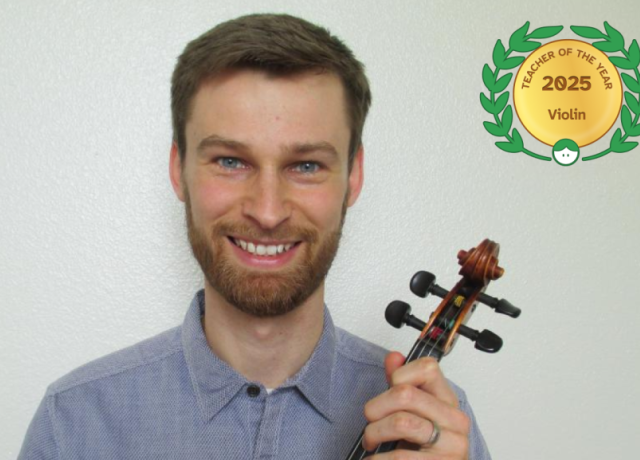
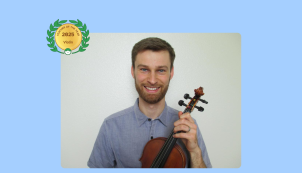
Photo: Benjamin Henson
Benjamin is a fantastic teacher! As an adult beginner, he's helped me feel comfortable with going "back to the basics" of learning a new instrument. I'm always excited each week to continue lessons! His teaching style is very approachable, easy to follow along, with a great sense of humor. He assigns enough "homework" for the week to keep me busy, with variability to keep practicing fun! During lessons I've had moments where I felt overwhelmed and stuck, and Benjamin has been super helpful and empathetic in how he reminds me to take a few steps back when that happens. It's reminded me that it's okay to be a beginner at music again. :)

Want help finding your ideal violin teacher?
Fill out the quick form and teachers who fit your needs will be in touch.
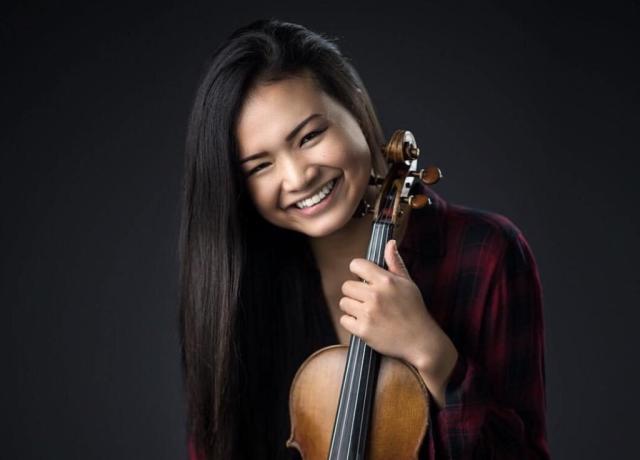
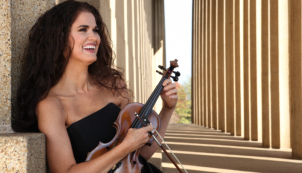
Photo: Kiarra Saito-Beckman


Great Violin Teachers
Through our longstanding commitment to treat teachers equitably, we work with phenomenal instructors — including members of the MET Orchestra, Juilliard and Berklee alumni, GRAMMY® winners and nominees, and many other professional educators.
View Teachers Photo: Benjamin Henson
About Violin Lessons at Lessonface
Find a great teacher, securely book a first lesson or trial, and meet via Zoom. Lessonface handles the lesson links and sends you reminders. Recordings, assignments, and notes are easy to access before, during, and after the lesson.
View Teachers Learn at your own pace with self-paced courses.
3
Self-Paced Courses
5.0
Average Rating


Students have given their Lessonface
lessons over
36,100+ reviews.
Michelle is great! She is joyful, patient, and encouraging to our daughter. I appreciate that she doesn’t put pressure on her to meet certain expectations, but is allowing her to go at her own pace in learning, which is building confidence and self-awareness. I’d recommend Michelle as an instructor!
I am writing to provide a recommendation for Jenna, who has been my daughter’s violin instructor for over two years. She has been wonderful to work with throughout this time. My daughter, Avrie, who is 9 years old, takes her private lessons via Zoom. Not only is Jenna a talented violinist herself, but she is also incredibly patient and kind. Jenna is always prepared with notes and new songs to work on, and she is consistently punctual. We plan to continue our lessons with her for as long as Avrie wants to play the violin. I highly recommend her services to anyone seeking a dedicated instructor.
—Jessica T.
Violin Student of Jenna Bauer
Garret is an amazing instructor, takes his time with my son and listens to him. He pushes my son to do well and practice. I’m Very happy with his lessons
Mina is the best!!! when I have struggles with the violin, She always knows how to fix the problem. She is a very postive and motivated teacher. Great encourager!!!! Thank you so much Mina Best Regards Jim Williams












Latest from the Blog
Tips, stories, and interviews from the Violin community.
Lessonface Guarantee
Reach out to tell us within 48-hours of taking an unsatisfactory lesson, class, or course, and we will offer you a refund. Read more about the guarantee.

Designed for All Ages
Creating a joyful, safe, and convenient educational experience for our students is our goal. Learn more about our kid-friendly features here, or read our privacy policy and safety precautions here.
Have more questions? Check out our FAQ, or reach out.
About Lessonface
At Lessonface, we've held our mission of helping students achieve their goals while treating teachers equitably for over ten years. We're here to help you connect to your ideal teacher and make real progress. Please reach out with any questions or concerns.
 Claire Cunningham
- Founder & CEO
What is the best method for learning Violin ?
We're biased, of course, but at Lessonface we believe the best way to learn Violin is through one-on-one lessons. Personalized instruction means your teacher can tailor every lesson to your goals, learning style, and skill level. Online group classes can also be a great way to make learning fun and social. Learning Violin online makes it easy to stay consistent, which is essential to steady progress.
There are plenty of apps and YouTube videos out there to help with learning Violin, but most teachers agree that those resources work best as supplements to, not replacements for, one-on-one instruction. A skilled Violin teacher can identify bad habits before they become ingrained, help you focus on what matters most, and solve problems as soon as they arise, often saving you months of frustration and wasted practice time. The bottom line? A real teacher accelerates your progress and keeps you on the right path from day one.
How do online Violin lessons work?
Online lessons are effective, affordable, and accessible. Lessonface qualifies teachers in over 300 music, language, and arts subjects, including Violin. Students can browse teachers' profiles, send them messages, and book lessons securely through Lessonface. Lessons happen via Zoom links that are securely generated for each lesson, and can be easily recorded by the teacher. Recordings, notes, and attachments can all be accessed from within the Lessonface dashboard. Lessons can be booked one at a time, in packages, or by subscription to save a spot on the teacher's calendar. Lessonface hosts recitals, open mics, group classes, and self-paced courses too. Registering an account is free so it's easy to get started reaching out to find your ideal instructor. Contact us with any further questions!
How do I find the best teacher for me for Violin lessons?
With over 100 qualified Violin teachers who have together earned an average of 4.98 out of 5 stars over 3207 lesson reviews by verified students, you can be sure to find a great instructor at Lessonface.
Lessonface offers free tools to help you find the ideal tutor for you or your family:
- Use the open filtering system
- Use our matching service to describe your background, scheduling preferences, and any particular goals, and qualified Violin teachers will respond.
You can view teachers' bios, accolades, rates, send them a message and book lessons from their profiles.
Many teachers offer a free trial, and you can book lessons one at a time until you decide you prefer to book a bundle or subscribe, so don't hesitate to try. Teachers may also offer group classes, self-paced courses, and downloadable content, so there are more ways to get started while you're still getting acquainted with the community.
How much do Violin lessons cost?
Violin teachers on Lessonface set their own rates. Rates are displayed on the teachers' profile pages and in the checkout process prior to booking. Teachers may choose to change their rates for new bookings, and students will always be notified prior to making payment. The average paid for a Violin lesson on Lessonface in the past 12 months was $32.25.
The average paid for a Violin lesson 5 years ago was $26.17. Some Violin teachers offer a free trial lesson to new students, which are not factored into the average prices.
How does payment work for Violin lessons?
There is no fee until you book your first paid lesson. Many teachers offer free trial lessons. Students can opt to book one a time, or purchase lesson packages or subscriptions for scheduling convenience, and, depending on the teachers, a discount. Payment can be made by credit card or Paypal. Lessons booked with a subscription are pre-paid three days before the end of the month for lessons that are scheduled for the following month. Subscription payments can only be made by credit card (not Paypal). Teachers receive their payment after the lesson has been completed.
Can I learn violin online as a complete beginner?
Yes, absolutely! Many people worry that violin is too technical or hands-on to learn online, but thousands of complete beginners have launched successful, long-term violin journeys with online lessons on Lessonface. The key is working with a teacher who knows how to teach remotely and can guide you through proper technique from day one.
Online violin lessons offer some unique advantages for beginners. Your teacher can use multiple camera angles to demonstrate bow hold and finger placement clearly, pause to have you practice a specific motion, and even record demonstrations for you to review between lessons. Many teachers also send supplemental materials like practice videos, fingering charts, and practice routines tailored to your needs.
That said, learning violin does require patience and consistency—whether you're learning online or in person. You'll need to develop left-hand position and bow control, train your ear, and practice regularly. But with a qualified teacher providing feedback and guidance every step of the way, online lessons can be just as effective as in-person instruction. Lessonface’s violin teachers have extensive experience teaching beginners online and know exactly how to help you build solid fundamentals from scratch.
Is violin harder to learn than other instruments?
Violin has a reputation for being challenging, and there's some truth to that—but it's not as intimidating as many people think. The main difficulty is that violin doesn't have frets or keys that show you exactly where notes are located. You have to train your fingers to find the right spots on the fingerboard by feel and by ear, which takes time and practice. You're also learning two complex skills simultaneously: controlling the bow with your right hand while your left hand finds the correct pitches.
That said, every instrument has its own challenges. Piano requires coordinating both hands playing different parts. Guitar requires building calluses and finger strength. Singing requires breath control and pitch accuracy without any physical instrument to guide you. What makes violin feel harder for some people is simply that the learning curve is steeper at the very beginning—it takes a few weeks to produce a decent sound, whereas on piano you can press a key and hear a clear note immediately.
The good news? With a patient teacher and regular practice, beginners typically start playing recognizable simple melodies within their first few months. Violin rewards persistence, and many students find that the initial challenges make their progress feel even more satisfying. If you're drawn to the sound of the violin and willing to commit to consistent practice, you absolutely can learn it.
Can adults learn violin, or is it too late to start?
It's absolutely not too late! The myth that you must start violin in childhood comes from the classical music world, where professional soloists typically do begin very young. But if your goal is to play for your own enjoyment, join a community orchestra, or explore fiddle music, you can absolutely start as an adult and make real progress.
Adults actually have some advantages over children when learning violin. You likely have better focus and discipline for practice sessions, you can understand complex concepts more quickly, and you know why you want to learn (whether that's playing Celtic fiddle tunes, exploring Baroque music, joining a community orchestra, or simply enjoying the challenge).
The biggest challenge for adult beginners isn't age—it's managing expectations. Violin requires developing very specific muscle coordination and aural skills that feel awkward at first. Adults can get frustrated when progress feels slow, especially if they're used to picking up other skills quickly. Remember that learning something worthwhile takes time, and that squeaky notes are a normal part of learning a string instrument.
Many adult violin students find the process surprisingly meditative. Unlike instruments where you can mindlessly noodle around, violin demands your full attention and presence. That focus can be exactly what busy adults need. A good teacher will meet you where you are and help you work toward the music that matters to you.
How long does it take to learn violin?
The answer depends on what you mean by "learn." If you're asking how long until you can play simple melodies, most beginners can do that within a few months of consistent practice and weekly lessons. If you're asking how long until you sound like a pro, that journey is better measured in years—typically 5-10 years of dedicated practice to reach an advanced level.
Here's a realistic timeline: in your first few weeks, you'll focus on bow hold, posture, and producing a clear tone on open strings. Within 2-3 months, you'll likely be playing simple songs with basic finger patterns. After 6-12 months of regular lessons and practice, you can expect to play beginner repertoire comfortably and start tackling more challenging pieces. As you continue beyond the first year, you'll develop vibrato, shift to higher positions, and expand your repertoire significantly.
The pace of your progress depends on several factors:
- How often you practice - daily practice makes a huge difference
- The quality of instruction you receive - weekly private lessons with one of Lessonface’s expert violin teachers would be ideal
- Previous musical experience - if you’ve developed your sense of pitch as a singer or on another instrument, you’ll have an easier time learning to play in tune.
Do I need to learn to read music to play violin?
It depends on what style of violin you want to play and what your goals are. If you're interested in classical violin, then yes—reading music is essential. Classical repertoire is written down, and you'll need to read sheet music to access the vast library of violin literature from Baroque sonatas to contemporary compositions.
However, if you're drawn to fiddle styles like Irish, bluegrass, or old-time music, many players learn primarily by ear. Fiddle traditions are often passed down through listening, imitation, and improvisation rather than written notation. Many fiddle players never learn to read music fluently and still become excellent musicians. That said, even fiddle players often benefit from learning at least basic music reading—it opens up more resources and makes it easier to communicate with other musicians.
Most violin teachers on Lessonface teach music reading as part of their curriculum, but the pace and emphasis can vary based on your goals. Some teachers integrate reading gradually while focusing heavily on ear training and technique. Others make note-reading a priority from day one. Be upfront with prospective teachers about your goals and feelings about music reading—they can tailor their approach to match what you want to achieve on the instrument.
What size violin does my child need?
Violins come in fractional sizes to fit children of different ages and arm lengths. The most common sizes are 1/16, 1/10, 1/8, 1/4, 1/2, 3/4, and full size (also called 4/4). The right size depends on your child's arm length, not their age—a tall seven-year-old might need a different size than a petite seven-year-old.
To find the right size, have your child hold their arm straight out to the side at shoulder height. Measure from the base of their neck to the middle of their palm or wrist. Here's a rough guide: under 14 inches typically needs 1/16 or 1/10 size, 14-15.5 inches fits 1/8 size, 15.5-17 inches fits 1/4 size, 17-18.5 inches fits 1/2 size, 18.5-20 inches fits 3/4 size, and over 20 inches means they're ready for a full-size violin. Keep in mind these are approximations—the best way to know for sure is to have your child actually hold different sized instruments.
Children typically need to size up every year or two as they grow, so many parents choose to rent rather than buy during these early years. Your child's Lessonface violin teacher can help you determine the correct size during your first lesson and will let you know when it's time to move up to the next size. Playing on a properly sized instrument is crucial for developing good technique and avoiding frustration or strain.