
Artist or Entertainer?
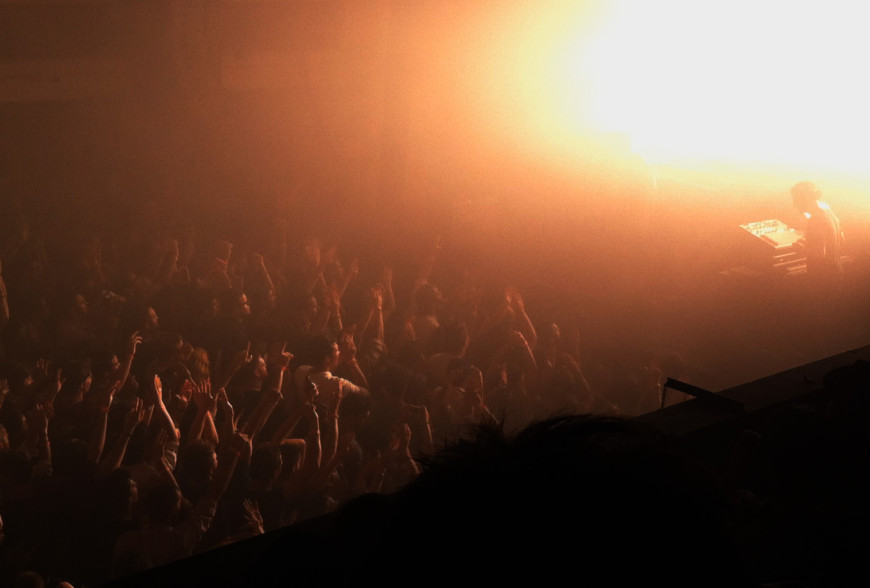

Sooner or later, if you’re involved in music long enough, you’ll have to question your motives for doing what you do. Money? Recognition? Approval? You may find yourself doing things you find repulsive, or you may find yourself avoiding things you find attractive—all in the name of advancing your career. But what kind of career is it? I’ve compiled some observations I’ve accumulated over the years, some more firmly held than others. Take a few minutes to read and reflect if you can.
Artist or Entertainer?
The artist doesn’t really care about the audience. In fact, the true artist doesn’t really care if there even IS an audience. They’re there to make a statement, and anything beyond that is irrelevant.
The entertainer cares a great deal about the audience. In fact, the entertainer wants the audience to like them, like what they’re doing, and enjoy themselves in the process. Getting an overwhelmingly positive response from the largest possible audience is what makes the entertainer tick.
The artist doesn’t care about reviews, as the success or failure of the piece isn’t contingent upon them. Only they, the true artist, can be sure if the objectives were met or not. Good reviews (from respected sources) can help secure future funds, academic positions, and even social standing but this has nothing to do with artistic intent.
The entertainer cares a good bit about reviews, as their income often directly depends upon them. Good reviews can drive sales, and the entertainer is a commodity whose value can fluctuate wildly. Occasionally massive sales occur despite negative reviews, in which case the entertainer seems to be providing a commodity whose value isn’t fully understood by the reviewers.
Artists often lead austere, reclusive lives where they go to great lengths to preserve their anonymity. The work speaks for itself and that is enough. Conspicuous consumption and self-aggrandizing behavior are frowned upon.
Entertainers often go to great lengths to promote themselves, spending large sums of money on publicity and being as visible as possible. Modesty and frugality are viewed with suspicion.
Artists will sometimes lecture and theorize about their art, its relation to society, and other subjects related to their field of expertise. They will occasionally write scholarly articles regardless of whether or not anyone actually reads them.
Entertainers will usually expound upon whatever is being asked of them, often at great length, and will continue to do so until they are no longer popular.
Artists often avoid glossy surfaces because they reflect the outside world, which is unnecessary.
Entertainers welcome sheen and gloss because it attracts onlookers.
Artists seek immortality and are willing to endure a lifetime of poverty and isolation in pursuit of it.
Entertainers seek wealth and popularity and understand that nothing lasts forever.
So where do we see ourselves? Is there a clearcut distinction? Must one view negate the other? I think like most people, I see myself as inhabiting a middle zone. I take pride in creating work that is original and interesting, but also realize that I enjoy recognition and take pride in generating income from the perceived value of a given work—whether in the form of a recording, a performance, or a written piece. I’ve also been around enough to know that artists are often consumed by the same emotions—jealousy and anger, for instance—as anyone else. Entertainers aren’t the only ones who read reviews, either!
Whether recording or performing, musicians are working in a non-verbal realm where a temporal succession of sonic events constantly unfold. Tones, textures, shapes, gestures and silence are suspended in space and compete for the listener’s attention. To deny the role of the audience would be naïve, but to cater strictly to the whims of popular taste is equally wrong. Providing amusement, diversion, or excitement through music is not necessarily a bad thing—nor is providing depth and substance. They need not be mutually exclusive—though that’s a tough job to pull off!
Ok, back to the practice shed.
Duane Denison Oct 2015