
Flute Jokes and Other Advice from Lisa Carlson
Flute: A sophisticated pea shooter with a range of up to 500 yards, blown transversely to confuse the enemy.
The fantastic flute teacher Lisa Carlson did us the honor of answering some questions for us this week about her advice for beginning players and how she got started. We are proud to present her as our Teacher of the Week this week! Find more info about Lisa, send her a message and/or book a lesson.
Lessonface: How were you first introduced to the flute?
Lisa: I started off in the school band program. The middle school kids came to play for us, we heard each instrument individually, and flute was the clear choice for me! I continued through high school and ended up at Oberlin College. I was fortunate, after some hard work and study without credit, to successfully audition for lessons with Katherine Borst Jones through the Oberlin Conservatory. I believe that this juxtaposition of coming to a truly great teacher in a world famous musical learning setting, with the old public school band habits in place, and step by step re-learning every fundamental aspect of flute playing as an enthusiastic young adult learner with a young adult perspective, leads me to a very keen understanding of the learner’s experience and how to help students build a strong foundation from the start – or rework a foundation of an intermediate to advanced player. After graduating from Oberlin College with quite a bit of coursework through the conservatory, a minimal amount of coursework at University of Vermont rounded out my music teacher’s certification. I’ve also completed quite a bit of Suzuki flute teacher training which has given me a broader as well as more detailed perspective on options as a teacher. Next year will mark 30 years of applying all of this information to flutists of all ages and levels.
Lessonface: What do you think is the best path to learners now? Do you recommend a book/ pedagogical method?
Lisa: My aim is to put the student first and fashion a program built around student inspiration, one that emphasizes high quality tone production and other fundamentals of flute playing, with a student’s expressive interests and goals in mind. I have taught Suzuki Method, which I absolutely love, and have also taught through SmartMusic, and also through traditional scales, etudes and repertoire in a more traditional approach. I’ve occasionally also taught students traditional concepts through primarily pop repertoire when they choose.
If your goal is to build a foundation to spring from, I will cover all the bases of scales, etudes, and standard repertoire. If your goal is to ace an audition, I will fill your practice time with the appropriate scale studies and in-depth repertoire study and sight reading practice and tips required. If your goal is to play pop tunes with your guitar-playing friend, I will make sure you develop optimal tone through that repertoire, while covering enough foundation work to help you achieve fluency in your playing. I have a breadth of tools at my fingertips, and my greatest joy is discovering new ways of using these tools to suit individual learners to bring out your passion for flute.
If you’re just starting out, we’ll start with basic tone production, and ensure that your sound is strong very early in your playing, so that anything you play will have a fundamentally strong and pleasing sound with a foundation to spring from when we begin serious repertoire study. There are a variety of options for beginner books – I often find that adult students enjoy Trevor Wye’s Beginner Practice Book 1, but there are also other options. From there, the direction depends on your interests and goals.
Lessonface: What kind of flute do you play today? (Brand, model, whatever you'd like to share) What model would you recommend for beginners? Any other favorite equipment?
Lisa: I play a Burkart Professional Flute, model 595, platinum enhanced silver, with a 595 Platinum Enhanced Headjoint, M2 style with Platinum riser. For beginners I most commonly recommend a Jupiter 511 - and for most hands I strongly recommend you take care to be sure it has an offset G - unless your third (ring) finger is particularly long, in which case there are probably some very good deals in lightly used flutes for you! (If you don't have a particularly long third finger, please take this as a cautionary hint!)
Lessonface: What advice would you give someone wanting to learn the flute?
Lisa: For beginners, be persistent and patient in the early stages of learning flute. It may take a couple of weeks to get a strong sound on the head joint, but if you take one step at a time and develop each step strongly and fully, you’ll find that the world of options opens up much more quickly and with lovely and consistently beautiful sound as a result of patience and persistence in the early stage. And that’s where it’s most important to have not only a teacher, but someone who’s experienced in communicating the details that YOU need to hear about improving your tone based on what the experienced teacher can hear that you need to change. It has been said that flute is among the most difficult instruments to teach because so little of what produces the sound is visible or obvious – and the internal differences vary greatly from person to person, requiring an experienced ear to pinpoint the specific change required.
Lessonface: What are your current musical projects? What new developments or events in your field are you most excited about?
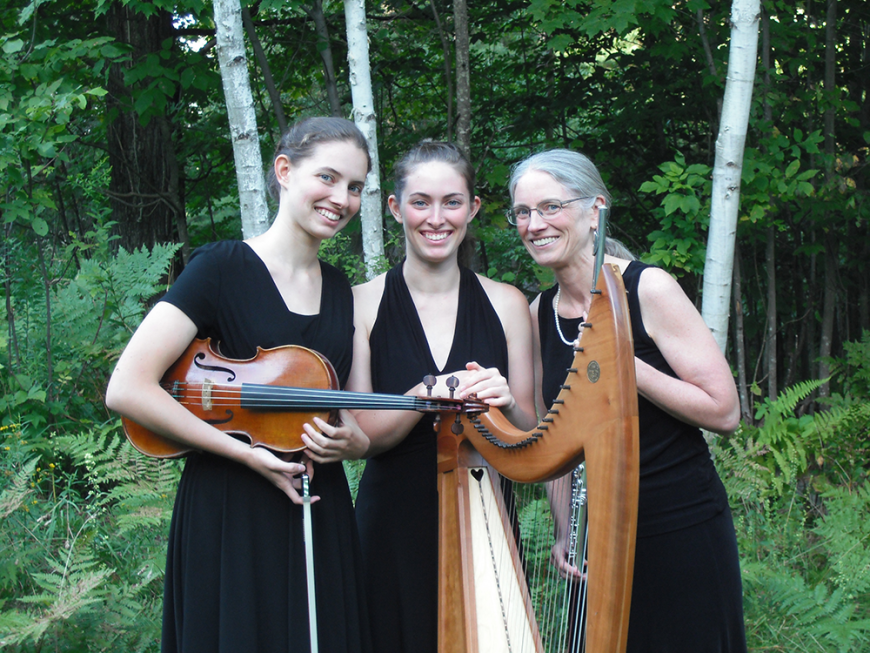
Lisa: I’m tremendously excited about an upcoming performance with my woodwind quintet – in March of 2015. We’ll be playing Smetacek’s “De la Vida de los Insectos” (About the Lives of the Insects) – a very fun piece featuring “Dance of the Bees,” “March of the Ants,” “The Enamored Beatle” and “Fugue of the Fleas.” A selection of other humorous works will round out the program – we have been bursting out laughing frequently in recent rehearsals! On the same program, Madeleine Dring’s Trio for Flute, Oboe and Piano – a gorgeous piece with an ethereal second movement. I’m looking forward to separate performances of Devienne’s Duo No. 1 for flute and viola, along and some other classical standards for flute and viola. Much as I love the standards, I am thrilled to have had the great opportunity to have recently performed world premieres by local and other 21st century composers, including some composed specifically for our ensembles – “Voices in the Wind” by Erik Nielsen, composed for our flute and viola duo, and a thoroughly fun spaghetti-western style piece titled “Tombstone” for flute, viola and cello – complete with desert heat, an outlaw hiding behind the rocks, cowboy shoot-out, and our hero riding off into the sunset – composed by Michael Close, our trio’s cellist. I also have a trio with my two college daughters,alternating between flute, violin and viola (primarily classical repertoire – we recently performed Beethoven’s Trio for Flute, Violin and Viola among other pieces) and flute, viola, and Celtic harp (primarily Celtic repertoire – my violinist daughter also plays Celtic harp). There truly is no greater joy than to play with my kids! I think any one of these pieces and ensembles, while I’m playing, is the center of my universe in a thoroughly satisfying way. But what great joy to have the opportunity to immerse myself one by one in music of such variety!
Lessonface: Do you have any favorite quotes about music, learning, or the flute?
Lisa: “Where words fail, music speaks.” Hans Christian Anderson
“Music produces a kind of pleasure which human nature cannot do without.” Confucius
“Two hundred years ago Issa heard the morning birds singing sutras to this suffering world. I heard them too, this morning, which must mean, since we will always have a suffering world, we must always also have a song.” David Budbill
"To make a resolution and act accordingly is to live with hope. There may be difficulties and hardships, but not disappointment or despair if you follow the path steadily.Do not hurry.This is a fundamental rule. If you hurry and collapse or tumble down, nothing is achieved. Do not rest in your efforts. This is another fundamental rule. Without stopping, without haste, carefully taking a step at a time will surely get you there." Shinichi Suzuki
Lessonface: Do you have any favorite jokes about music or the flute in particular?
Lisa: Your call is very important to us, so please enjoy this 40 minute flute solo.
I’m so sick of people just thinking they can just waltz right into my room when I’m obviously listening to music in 4/4 time!
Flute: A sophisticated pea shooter with a range of up to 500 yards, blown transversely to confuse the enemy.
A flutist died and went to Heaven. St. Peter stopped her at the gate asking, "Well, how many false notes did you play in your life?"
The flutist answers, "Three."
"Three times, fellows!" says Pete, and along comes an angel and sticks the soprano three times with a needle.
"Ow! What was that for?" asks the flutist.
Pete explains, "Before you go through the gate to heaven, we stick you once for each false note you've played down on Earth."
"Oh," says the flutist, and is just about to step through the gates when she suddenly hears a horrible screaming from behind a door. "Oh my goodness, what is that?" asks the flutist, horrified.
"Oh," says Pete, "that's a violist we got some time back. He's just about to start his third week in the sewing machine."
Many thanks to Lisa answering our questions. We hope her advice and bonus humor is helpful to the flutist (and aspiring flutist) readers out there. If you have questions for Lisa, or would like to book a lesson with her, you can do so from her booking page here. If you would like more information or help getting started with Lessonface, send us a chat at the bottom of the page, or read our "how it works" page.
Find more Flute Classes and Tutorials

Start Lessons
Search for your perfect music, language, or arts teacher and start working towards your learning goals.
Start with a Free Trial
Teachers on Lessonface set their own rates and discounts. Participating teachers offer free trials.
Great Teachers, Great Lessons, Guaranteed
Learn more about the greatest universe for online music and arts lessons.

Lessonface Recitals, Open Mics, Masterclasses, and Jams
Welcome students of all ages and skill levels!