
How the Didgeridoo Saved My Life
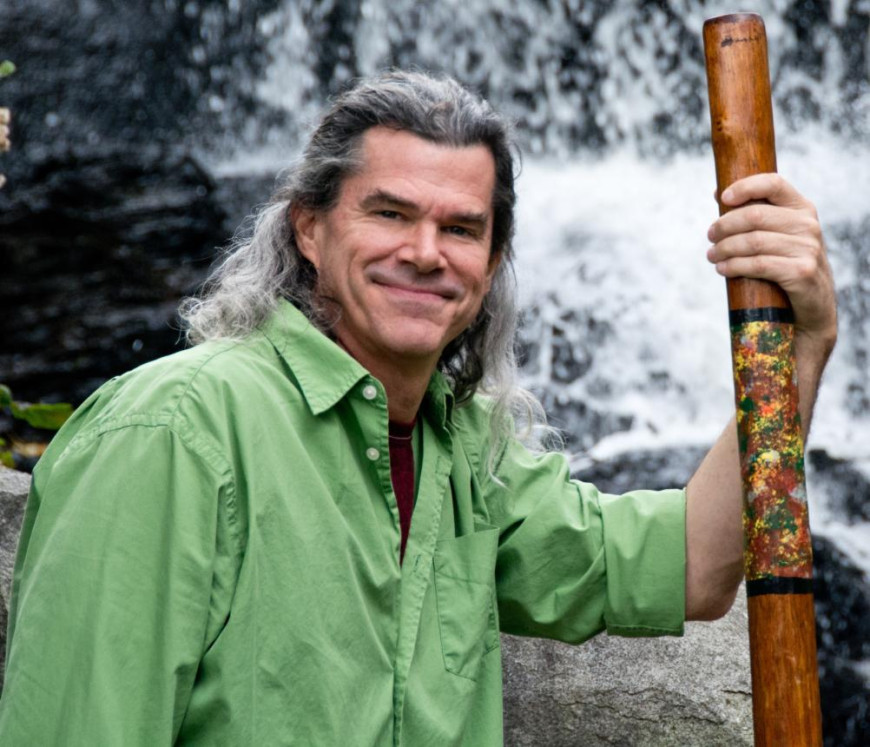
The ancient Aboriginal Australian musical instrument, the didgeridoo/yidaki, saved me and gave me consequential lifelong missions. It came to me at a critical time in my 20s when I was without direction, working in a series of meaningless, poorly paying hourly wage, dead-end jobs. Before the didgeridoo arrived, my 20s were a deeply depressing period. Luckily, I was awake enough to accept the didgeridoo’s invitation to a new, healthy way of life and a lifelong allegiance. I owe a lot to the hollowed-out tree branch from the indigenous people of Northern Australia. It gave me inspiring musical and heartfelt personal missions, which resulted in a rewarding personal life and a compelling career. Everything about the didgeridoo is positive, and I wanted more of this.
Intuition made Amy, my wife, buy a didgeridoo for me from a world music instrument catalog over thirty years ago. I immediately tried to play it, but the sound was more like a nasty shriek than a clean note. Gradually, I learned to produce a few haunting hints of the primal drone I craved. The bass growl of the didgeridoo travels right through the bloodstream. Listening to it means feeling it throughout your nervous system, bones, and skin. Playing it feels like sticking your soul into the electrical socket of the planet. I was addicted. I loved the physical vibrations and the wild sound pouring out the end of the ‘didge.’ I taught myself to make didges from bamboo, sunflower stalks, and softwood tree branches. I learned to do circular breathing, in which the player breathes while playing, allowing for continuous music.
I then wanted to share the didge with everybody, hoping it would help others the way it helped me. The didge has taken me worldwide, teaching, hand-crafting instruments, performing, and collaborating with musicians from several countries and backgrounds. The didge is an incredibly versatile musical instrument. I love featuring it in expansive and diverse musical styles, including my fun, infectious, original work.
Indigenous instruments possess enormous power to arouse spiritual connections to the ancient past. The didge dates back thousands of years; it's the backbone of Aboriginal Australian music and storytelling. When playing didge, I feel connected to the magic from long ago despite being born into a suburban American culture half a world away.
Schools (and various other venues) welcome me to lead didge presentations, performances, and workshops. Every time kids hear the didge for the first time, they laugh, clap, and immediately want to try one. In multi-day residencies I lead, the students decorate and play didges made of long cardboard mailing tubes. They have a blast (pun!), and so do I, every time.
Since the early 1990s, I've developed a fun, easy-to-learn, step-by-step curriculum for playing the didge, which includes circular breathing. I have successfully taught thousands of people of all ages from many walks of life to play the didge. I'm excited to continue passing on my knowledge of this remarkable instrument to a new global community of students via Lessonface.
For more information on Pitz and his teaching style, visit his Lessonface profile here.

Start Lessons
Search for your perfect music, language, or arts teacher and start working towards your learning goals.

Start with a Free Trial
Teachers on Lessonface set their own rates and discounts. Participating teachers offer free trials.
Great Teachers, Great Lessons, Guaranteed
Learn more about the greatest universe for online music and arts lessons.

Lessonface Recitals, Open Mics, Masterclasses, and Jams
Welcome students of all ages and skill levels!