
Meet 2025 Teacher of the Year for Singing & Musical Theatre Louise Gast
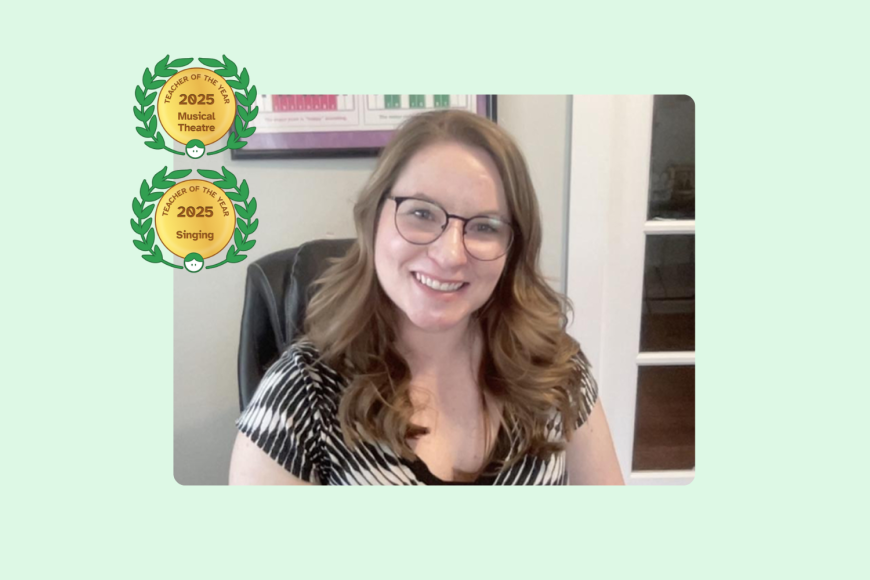

We asked 2025 Lessonface Teacher of the Year in Singing and Musical Theatre, Louise Gast, to share insights into her journey as a singer, performer, and educator. In this Q&A, she reflects on what first drew her to singing and musical theatre, how she creates a supportive and effective teaching environment, and the key skills and habits she emphasizes to foster student growth. She also discusses the tools and resources she relies on, offers guidance on goal-setting and practice, and shares thoughts on personal and student accomplishments. Finally, she looks ahead to new ideas, techniques, and projects she’s excited to explore in the coming year, offering insights from the perspective of a lifelong performer and teacher.
What drew you to learning about singing and musical theatre?
I was drawn to singing and musical theatre because they combine storytelling, emotional awareness, and vocal technique in a way that shapes how people communicate and connect. From an early age, I was fascinated by how the voice can express vulnerability, joy, and truth, and musical theatre showed me that singing is not only about producing sound, but about intention, presence, and empathy.
As an only child and a very shy kid, singing became a way to keep myself company and let my imagination run freely. Performing allowed me to explore confidence by stepping into other characters and perspectives, using mimicry and vocal play to better understand the world and myself.
This experience deeply informs my teaching. I focus on helping students understand both how the voice works and why it matters, creating a supportive space where they can build technique, confidence, and authentic self-expression at the same time.
Why do you think it is popular (or perhaps should be more popular)?
Singing and musical theatre continue to resonate with so many people because they nurture skills that extend far beyond performance. Through vocal training, students learn breath awareness, coordination, focus, and self-regulation, while storytelling and expressive work build confidence, clarity, and emotional literacy. I believe these disciplines deserve greater recognition for their impact on personal growth. The ability to communicate clearly, take creative risks, and trust one’s own voice are lifelong skills that support students not only onstage, but in academics, careers, and everyday life.
How would you describe your teaching studio?
What sets my studio apart is the balance between clear technical guidance and emotional safety. Students are challenged, but they’re also encouraged to explore their voices without fear of judgment. I aim to help each singer understand their instrument, trust their process, and build skills that serve them both onstage and in everyday communication.I review my students’ goals, remind myself where each singer is in their journey, and approach each lesson with curiosity and openness. Creating a grounded, welcoming space allows me to be fully present and responsive, which helps students feel safe taking risks and making real progress.
If you could gift your students one piece of automatic knowledge or ability about singing or musical theatre, what would it be?
If I could gift my students one automatic ability, it would be the ability to trust their own voice. That includes understanding how their instrument works, recognizing what healthy singing feels like, and having the confidence to make adjustments without fear. When singers trust their voices, they become more adaptable, resilient, and independent learners, rather than relying on imitation or external validation.
What’s one lasting takeaway you hope your students will carry with them from your teaching, even years from now?
I hope my students carry with them the knowledge that progress comes from patience, curiosity, and consistency. Singing and musical theatre teach us that growth is not linear, and that showing up with openness and self-compassion allows real transformation to happen. Long after specific exercises are forgotten, I want students to remember that their voice has value, that they are capable of learning new skills, and that expressive communication can be a powerful source of confidence throughout their lives.
What are some of your most indispensable pieces of gear?
I don’t put much emphasis on fancy audio equipment. In my experience, simple and reliable setups work best for vocal learning. The most indispensable tools for me are a well-functioning computer, reliable internet, good lighting, and a clear camera setup so students can be seen easily while singing. I also rely on a piano or pitch monitor for accurate reference, which supports both technical work and musical independence.
What are some gear items that you wish all your students had?
I wish every student had access to a stable device, a strong internet connection, and basic lighting that allows for clear visual communication. A phone or tablet stand is incredibly helpful for posture awareness and consistency. Having a pitch reference source, whether a piano or a pitch monitoring app, supports confident practice, and a mirror can be a simple but effective tool for developing self-awareness.
Are there apps / texts / other resources you often recommend?
I often recommend practical, accessible tools that encourage independent learning. Sheet Music Direct is a favorite resource, particularly the view-only subscription, because it gives students immediate access to a wide range of repertoire. I also frequently suggest using Voice Memos or simple recording apps so students can listen back to their own singing and reflect on their progress. These tools help students develop objective listening skills and greater ownership of their learning.
What’s a skill or idea you’re excited to explore in 2026?
In 2026, I’m excited to continue exploring how strong vocal technique supports clear, expressive communication across genres. Musical theatre provides a unique framework because it requires singers to coordinate speech, song, emotion, and storytelling, but the skills developed through this work translate seamlessly into classical, pop, jazz, and contemporary styles. I’m particularly interested in refining ways to help singers move fluidly between styles while maintaining vocal health, authenticity, and clarity of intention.
How about your students?
For my students, I’m most excited to help them build versatility and confidence as communicators. Whether a student is focused on musical theatre, classical repertoire, or contemporary music, I emphasize skills that allow them to make informed artistic choices and trust their voices in different contexts. I love seeing students who may not initially identify as musical theatre singers discover how character work, text clarity, and expressive intention strengthen their performance in any genre.
Anything you'd like to share about yours or their accomplishments from 2025?
In 2025, many of my students achieved meaningful growth both technically and artistically. I worked with singers preparing musical theatre auditions, expanding repertoire in multiple genres, and performing with greater consistency and confidence. Just as importantly, I saw students develop stronger self-awareness, adaptability, and resilience. These skills allow them to approach new styles and challenges with curiosity rather than hesitation, which I consider one of the most lasting accomplishments of the year.
Do you have guidance for goal-setting for singing or musical theatre students, or generally?
I encourage students to set goals that are grounded in transferable skills rather than narrowly defined outcomes. Musical theatre training naturally supports this approach because it emphasizes communication, adaptability, and storytelling. I guide students to set goals around consistency, expressive clarity, stylistic understanding, and healthy technique — goals that apply whether they are preparing a role, exploring a new genre, or singing simply for enjoyment. This kind of goal-setting fosters long-term growth and keeps students engaged and motivated across their musical lives.
Is there anything else you would like to share with potential students about singing or musical theatre?
Singing and musical theatre offer far more than performance skills. At their core, they help people build confidence, self awareness, and the ability to communicate with clarity and intention. My approach is grounded in healthy technique and thoughtful storytelling, but it is always adaptable to the individual, whether a student is pursuing musical theatre, exploring another genre, or simply wanting to sing with more ease and confidence.
If you have ever been curious about what your voice is capable of, or if you are looking for guidance that supports both skill and self trust, I encourage you to explore singing as a meaningful and lifelong practice. No matter your starting point, your voice has value, and with the right support, growth is always possible.
If you are interested in learning more about Louise or would like to book a lesson with her, please visit her Lessonface profile here.
Also, be sure to check out all of Lessonface’s 2025 Teachers of the Year here!

Start Lessons
Search for your perfect music, language, or arts teacher and start working towards your learning goals.

Start with a Free Trial
Teachers on Lessonface set their own rates and discounts. Participating teachers offer free trials.

Great Teachers, Great Lessons, Guaranteed
Learn more about the greatest universe for online music and arts lessons.

Lessonface Recitals, Open Mics, Masterclasses, and Jams
Welcome students of all ages and skill levels!