
Passing the Teacher Torch: A Q&A with Willem Moolenbeek + Sarah Anne Wolkowski
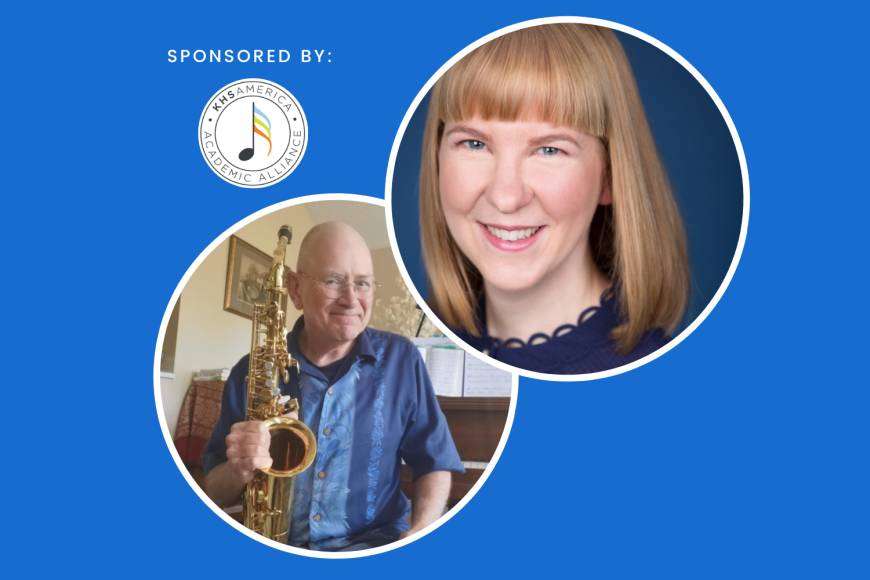
I was asked to comment on the importance of the role of teachers in the lives of their students. The following are responses to a series of interview-style questions answered by one of my former students, Sarah Anne Wolkowski, whom I taught from the age of 12 until she left for college. It was during that transition that our relationship evolved, as she became more of a mentee and I, her mentor. Sarah has crafted a career as an influential saxophonist, teacher and writer.
Willem Moolenbeek: Thanks for taking the time to reflect on our time together and the relationship between a student and mentor. When did we start working together?
Sarah Anne Wolkowski: I believe I started studying the saxophone with you when I was 12 years old.
WM: When did you begin to see me as a mentor?
SW: I left home for my first degree and moved to another province. During the first or second year of my studies, the university issued each of us an email address. It was a brand-new thing. You also had an email address, and we were able to write to each other over the internet. It was wonderfully comforting to share what I was learning with someone who understood the world of music.
WM: Email is an effective way to stay in touch.
SW: Yes. It’s a wonderful medium for tête à tête conversations. For a mentorship to be effective, there must be intimacy and trust. When this is in place, disappointments and frustrations can be freely shared. And it’s interesting for the mentor to learn about what challenges younger students are encountering. I’ve been on both sides of the fence now, and it’s definitely a mutually beneficial arrangement.
WM: Even though both parties benefit, it seems like mentorship is a privilege few students and young professionals receive. Why?
SW: It’s important to reach out. Although at the time I didn’t understand what I was looking for, I was eager to stay in touch. The truth is we learn from our teachers long after we stop formal studies, and mentorship is a way of naturally extending this process.
Graciously, you replied to my messages. There was no formal arrangement. Mentors have to be willing to give their time without financial compensation. However, being recognized as someone with expertise and insight and the respect that brings more than makes up for the extra effort. Mentorship is worth it.
It’s also important for potential mentors to take the initiative and extend a helping hand to those students who may be reluctant to engage. No musician achieves great success without a team of supporters. The field as a whole benefits when we help each other navigate through the ups and downs.
It is worth noting that mentorship is most effective when both parties know each other relatively well. It’s not a casual or superficial process. Both sides need to engage with respect for one another. Mentors need to offer dignified and thoughtful advice that demonstrates genuine caring and understanding.
WM: Can the mentor and mentee change roles?
SW: Absolutely! During my university years I was initially surprised when my professors appeared curious about my ideas. I thought: Why should they care or be bothered about what I think? Quite sincerely, I thought I had nothing to offer. I was wrong. Culture changes quickly, and it’s easy for middle-aged and mature adults to lose touch with what’s happening. Learning about how young people are approaching a wide range of topics helps the teacher address issues more effectively and sympathetically.
It’s also wonderful to see a young person gain confidence as they make their way in the world. At some point, through conversation or print, you realize that your former student has superior insight on a number of topics. There is a warm afterglow and you can’t help but feel that a tiny bit of their success is also part of yours. You think to yourself—they’ve made it. Individuals rarely succeed on their own. Teams deliver better results.
WM: How would you describe mentorship in action?
SW: Here are some of the roles which exemplify what a wonderful mentor you have been to me:
As advisor: where to study, and with whom.
As facilitator: providing introductions to other professionals in the field.
As well-wisher: while visiting Montréal you stopped by my university to meet with my professor and say hello, and many years later you dropped by my house to see my studio.
As benefactor: you gifted me piles of valuable saxophone scores, which I now use with my own students.
As role model: sharing the details of your career, allowing me to consider, compare and put my own career in context, year after year, decade after decade.
---
WM: What are your most memorable goals and accomplishments?
SW: The things I remember have very little to do with me personally. It was a different time. It simply wasn’t necessary to outline goals or be overly focused on milestones. I didn’t have an agenda. Each week I looked forward to my lesson and enjoyed working on music and asking questions. The process felt open and organic. The lesson was less about me and more about the instructor; I was so busy learning from you that I didn’t have much mental space left over to consider whether or not I was achieving anything. By the end of our time together I did score First Class Honours with Distinction on my Royal Conservatory of Music Level 10 Saxophone Examination. Even then, I thought very little of this “achievement” and all my memories revolve around how much I enjoyed working with you. I cared about learning, not outcomes.
WM: Were there any specific performances or moments that you can recall as standing out in your
memory of our time together?
SW: No. What counts is the aggregate of concepts and strategies that formed the basis of my understanding. I spent five or six years studying with you, and it’s the entirety of the experience that stays with me today.
WM: Do you typically record your lessons?
SW: No. I occasionally record a student playing an exercise or an étude so that we can listen back and analyze the results, but this is deleted immediately after. Music is an ephemeral process.
WM: Do you have any rules or expectations about phones during lessons?
SW: No phones.
WM: Have you started using any AI tools in your lessons?
SW: No.
WM: What are some challenges you've faced in teaching, and how have you overcome them?
SW: If you are of pure heart and intent, teaching is much like good parenting. It’s instinctive and dynamic and you make the required changes on the go. Most of the challenges or problems in the private lesson sphere stem from the difficulties of running a business and busy schedules.
WM: What advice do you offer students who want to pursue a career in teaching?
SW: It’s vital to enjoy working with kids at every stage and level, otherwise, the job will drag you down. You have to be energetic, positive and enthusiastic every day. It’s about them, not you, so it’s wise to set aside some time to work on your own projects. Without some personal development it’s easy to burn out or become artistically stale.
WM: What do you think teachers today could learn from past generations of educators, and vice
versa?
SW: “Everything old is new again.” “Nothing is new under the sun.”
WM: What do you wish you had known as a student that you now know as a teacher?
SW: That natural talent is a myth, and anything is achievable if you put in the work.
…………………………………………………………………………………………………………………………………………
WM: Having read Sarah’s thoughtful responses, I feel compelled to offer some thoughts and memories of my own experience as a mentored student. I studied principally with Canadian saxophonist Paul Brodie with whom I had a similar relationship.
In 1979 I purchased the first issue of Canadian Musician magazine and read a column by Paul about the history of the saxophone. He wrote three more in the subsequent issues. His phone number was in the back and, although I was not familiar with his work, I felt confident that, given the fact that he was published, he could teach me something. I remember the call to book my first lesson, and him saying, “You won’t regret it”. It was quite a commitment as I did not have a vehicle then and it involved a 50 mile bus ride.
I was at that time poorly self-taught and after I had played a few notes he produced a copy of the Rubank Elementary Saxophone, and we started on lesson one. I still have that book with his handwritten printing in capital letters explaining how he wanted me to count.
The four year process was part of preparing me to sit in his chair as his teaching assistant during his tours. We attended conferences, toured the Selmer US plant, he invited me to watch him do school programs and clinics (he had done thousands), told me how to organize and promote my first recital including getting media attention via newspapers then (over 1900 to his credit), insisted that I record my first album (he recorded over 60) and invited me to attend a national radio interview. He was a tireless networker in the predigital age, using mail and telephone. When he and Eugene Rousseau hosted the first World Saxophone Congress in Chicago in 1969, over 500 saxophonists jammed the hall. Over the years, he introduced me to several of his peers and encouraged me to have lessons with a few of them. I studied with Paul for seven years until, after challenging him on a point of technique, he got out his check book and refunded the rest of the term saying it was time to stop. We remained great friends and would meet several times annually to have, as he called it,” a good lunch”.
To learn more about Willem, visit his Lessonface profile.
Also, we would like to thank KHS America for sponsoring our Passing the Teacher Torch series.

Start Lessons
Search for your perfect music, language, or arts teacher and start working towards your learning goals.
Start with a Free Trial
Teachers on Lessonface set their own rates and discounts. Participating teachers offer free trials.
Great Teachers, Great Lessons, Guaranteed
Learn more about the greatest universe for online music and arts lessons.

Lessonface Recitals, Open Mics, Masterclasses, and Jams
Welcome students of all ages and skill levels!