
Meet 2025 Teacher of the Year for Songwriting Sean Shea
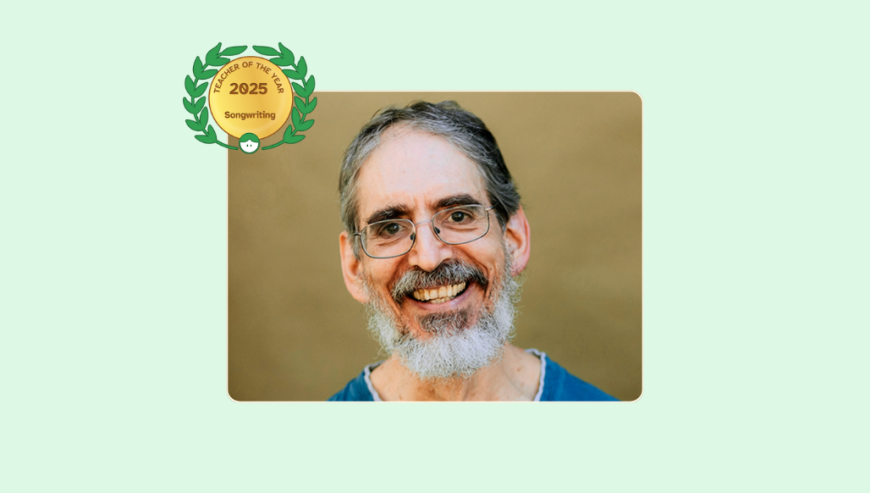

We asked 2025 Lessonface Teacher of the Year in Songwriting, Sean Shea, to share insights into his connection to music and his approach to teaching. In this Q&A, Sean reflects on the profound impact that songs had on him during moments of personal reflection and how that inspired his own songwriting journey. He emphasizes creating an encouraging, hands-on studio environment where curiosity, playfulness, and process take priority over rigid outcomes. From nurturing discernment and creative flow to celebrating students’ growth and helping them trust their own inner voice, Sean highlights the value of patience, experimentation, and living in relationship with the music as the keys to long-term success in songwriting.
What drew you to learning about songwriting?
I was drawn to songwriting through being deeply moved by it first. During a period of darkness and inner searching, several songs from Bob Dylan’s Slow Train Coming resonated with me in a powerful way. It felt like the music was holding up a mirror — I could see myself in it, and that sense of recognition showed me how deeply a song can touch someone’s heart at exactly the right moment.
A few years later, I began trying my hand at songwriting myself. One of the first songs I wrote came out of a place of deep angst and spiritual longing. The song was called Trust in God, and it became a kind of personal anthem of faith. I actually performed it again just recently — nearly forty years later — and it still reaches a deep place for people.
As I continued writing, I became increasingly curious about what helps people access that level of honesty and meaning in their own songs — how they learn to pour real emotion, questions, and yearnings into music. That curiosity is what eventually pulled me toward teaching. Writing my own songs has always mattered to me, but helping others discover that same capacity in themselves feels like an even deeper calling. There’s a ripple effect there — empowering songwriters who then touch other people’s lives through their music — and that’s what continues to inspire me.
How would you describe your teaching studio?
My teaching studio is very hands-on and practice-centered. I’ve found that the best way to learn songwriting is by actually doing it — working with real ideas, real songs, and whatever a student is genuinely engaged with right now. The creative material people bring into a session is the most fertile ground for learning, because it’s alive and personal, not abstract.
If a student has a work in progress they’re feeling stuck on, unsure about, or especially excited by, that’s often the perfect place to begin. If they don’t have something ready, we can also brainstorm or improvise together in the moment, and those sessions often lead to the birth of something completely new. Either way, the learning grows right out of the work itself, and it usually becomes very clear where someone’s next growing edge is.
How do you ensure you are a good mind frame for teaching in terms of your teaching space?
My role in that process is less about directing and more about listening carefully and reflecting things back — helping students notice what’s already working, where something wants to go next, or where a small shift in perspective might open things up. The goal is to create a space where people feel safe to be curious, experiment, and share what’s closest to their heart, so they can see their own work more clearly and trust their creative instincts as they move forward.
For me, this is mostly about inner space — arriving present, attentive, and ready to listen. Before teaching, I take a few moments to slow down and set aside other concerns so I can be fully with the student and the music. That sense of presence creates the conditions for trust, curiosity, and creative risk-taking.
My physical space supports that inner focus as well. I keep a few images nearby that remind me of important mentors in my life, and of my ongoing relationship with my own creative muse. Those reminders help me stay connected to the student–teacher relationship as something meaningful and alive — not hierarchical, but rooted in respect, listening, and encouragement.
They ground me in the intention that guides my work: to help students strengthen their own connection to their creative inner guidance, so they can carry that relationship forward long after our time together.
If you could gift your students one piece of automatic knowledge or ability about songwriting, what would it be?
If I could gift my students one automatic ability, it would be discernment — the ability to sense when a creative choice opens up possibilities and when it quietly shuts them down. That kind of inner “compass” helps with everything: starting songs, revising them, and especially working through songwriter’s block.
One phrase I come back to is “write drunk, edit sober” — not literally, but as a reminder that different phases of songwriting call for different states of mind. If you can recognize when you need freedom and playfulness, and when you need focus and craft, you can protect your creative flow without losing the ability to shape your work into something strong.
What’s one lasting takeaway you hope your students will carry with them from your teaching, even years from now?
More than any specific technique, I hope students come away with a living relationship with their own inner creative voice. Songwriting isn’t just about solving problems or pushing through blocks — it’s about learning how to listen, how to stay in conversation with that inner source of ideas, images, and meaning.
Inspiration isn’t something you have to wait for or hope will descend by chance. There are practical ways to nurture that connection — to create conditions where it’s more likely to show up, and to recognize it when it does. When students begin to experience songwriting as an ongoing relationship rather than a one-off event, they have something they can carry with them for the rest of their creative lives.
What are some of your most indispensable pieces of gear?
Beyond basic recording tools, the most important musical “gear” is whatever helps you express ideas fluently, without too much friction. I usually encourage people to start with their voice, since it’s the most direct line to your musical imagination and bypasses a lot of overthinking. That’s one reason a simple voice recorder is so useful — it supports stream-of-consciousness exploration.
It also helps to have an instrument that lets you sketch musical ideas easily. Something you can play chords on to explore harmony, and something that lets you try out melodic shapes without struggle. For many people that’s a guitar or keyboard — the key is ease and immediacy, not virtuosity or polish.
Rhythm matters too. Whether it’s beatboxing, a simple beat track, a drum machine, or even a metronome, having a rhythmic framework can help ideas take shape. For me personally, my guitar is central, and a capo is indispensable — it lets me quickly adjust range or find chord shapes that make a song feel more natural.
What are some gear items that you wish all your students had?
More than any particular piece of gear, I wish students had a sense of ease and perspective around the tools they use. It’s easy to assume that a new app, instrument, or piece of software will be the thing that finally makes everything click, when often what helps most is familiarity and flow.
Are there apps / texts / other resources you often recommend?
I’ve learned this the hard way myself. There was a stretch where I poured a lot of time and energy into learning new technology, and while I’m glad to have those skills now, I sometimes wish I could get a refund on some of the hours that might have gone into actual songwriting. That experience taught me how valuable creative momentum really is.
Staying simple and staying in motion often matters more than upgrading your setup. The goal isn’t to avoid new tools, but to make sure they’re serving the music — not quietly siphoning off your attention.
Anything that helps you catch inspiration in the moment is invaluable. That might be a voice recorder, a notes app, or even a simple daily practice where you talk through ideas out loud and reflect on them later. Some people find journaling or short stream-of-consciousness recordings to be powerful ways of keeping an inner conversation alive.
Julia Cameron’s The Artist’s Way, especially the Morning Pages practice, is a resource I often recommend for nurturing that reflective habit. Steven Pressfield’s The War of Art is another short, encouraging read that helps put common creative struggles into perspective.
On the practical side, tools like rhyming dictionaries, web-based resources such as RhymeZone, or even an old-fashioned thesaurus can be very helpful. Sometimes what gets us stuck isn’t a lack of ideas, but needing to approach the same thought from a slightly different angle. Any tool that helps you shift gears and try a new tack can help keep the writing moving.
I’m also open to the thoughtful use of newer tools, including AI, as brainstorming or reflection aids — as long as they’re used to support your own thinking rather than replace it. The heart of songwriting is still your listening, your choices, and your voice.
One area I’m paying attention to is how emerging tools, including AI, can affect the creative process — for better or worse. I’ve noticed that these tools can sometimes dull originality or invite passivity if they’re leaned on too heavily, leading to work that feels generic or disconnected from a songwriter’s own voice.
At the same time, they can also open up new directions if used with awareness. The key questions, in my view, aren’t about the tools themselves, but about how they influence your imagination and your sense of authorship. Are they helping you explore new possibilities, or quietly doing the creative work for you?
I’d encourage anyone who’s curious to stay observant and honest about that effect — and if you have no interest in using AI at all, that’s perfectly fine. Many of the most enduring songwriting tools are ancient ones, and they’ll remain just as relevant regardless of where technology goes.
What’s a skill or idea you’re excited to explore in 2026?
One thing I hear students ask for again and again is a clearer sense of a roadmap for their creative process — not a rigid formula, but a way to get their bearings in their own process. I’m excited to support that more intentionally in the coming year, and it’s a major focus of my upcoming course series, Spark to Song: A Hands-on Songwriting Lab.
What excites me most about this work is that it’s not about handing people a formula. It’s about helping each person develop a flexible workflow — one that builds on their natural strengths, gives them support right where they usually get hung up, and stays responsive to the unique personality of each song and each season of their creative life. The aim isn’t to lock people into a system, but to help them navigate their own process with more confidence and ease.
I’m also continuing to develop my songwriter’s block self-check tool — a reflective questionnaire designed to help people see where they’re getting stuck and what might be underneath those blockages. As I refine this tool, I hope it becomes increasingly useful both for students seeking clarity and for me as a teacher, by deepening my understanding of the patterns people tend to encounter in their creative work.
Alongside this, I’m excited about giving more real shape to a supportive songwriting community — a space where people can learn from one another, share works in progress, and benefit from group coaching sessions. I’ve seen how powerful it can be when individual creative journeys are held within a larger, encouraging container, where each person’s perspective adds something meaningful.
How about your students?
For students, my hope is that 2026 brings not just new songs, but a stronger sense of trust in their own process — an ability to move fluidly between moments of inspired burst and longer arcs of patient development, without losing heart in either phase.
Being named Teacher of the Year for songwriting has been a meaningful moment for me, and I experience it as a reflection of the work my students and I have been doing together. More than anything, it affirms the value students are finding in the process — their willingness to stay curious, take risks, and keep showing up for their creative work.
Anything you'd like to share about yours or their accomplishments from 2025?
One of the most rewarding things I’ve seen this year is students I’ve worked with over longer periods beginning to recognize and appreciate their own growth — learning to value both the bursts of creative inspiration that bring new ideas to life and the slower, steadier arc of staying with a project until it matures. Seeing students name that balance for themselves and take ownership of their creative journey has been incredibly gratifying.
In that sense, the recognition feels shared. It reflects not just my mentoring, but the commitment and openness of the people I work with, and it’s a real joy to stand on that ground together.
Do you have guidance for goal-setting for songwriting students, or generally?
I encourage students to think of goals as invitations rather than pressure, and to stay oriented toward process rather than outcomes. Writing regularly can be helpful, not as a way of tracking progress, but as a way of keeping the creative channel open and familiar.
I’ve also come to hold the idea of “finishing” much more lightly. I’ve revisited songs I once considered complete and discovered there was still more they wanted to say, or a different way they wanted to land. Treating songs as living works — more like wet clay than sealed containers — keeps the process flexible and alive. Each return to the work becomes another chance to listen, respond, and let the song continue to reveal itself.
Where things tend to go off track is when creativity gets pulled into frameworks that emphasize measurement, comparison, or constant evaluation. Those approaches can be useful in some contexts, but they often miss the mark in songwriting, where curiosity, responsiveness, and imaginative openness are what actually keep the work alive. For me, the most useful “goals” are the ones that open things up rather than trying to contain or measure them. When goals are approached in that spirit, they’re more likely to nurture progress than trigger frustration or a sense of failure.
Is there anything else you would like to share with potential songwriting students?
One thing I often notice is how much hesitation people feel around even calling themselves a “songwriter.” It can sound heavy, serious, or loaded with expectations — as if you have to earn the title or prove something before you’re allowed to use it.
For me, songwriting has always been much more informal and intuitive than that word suggests. I don’t usually “write” songs in the traditional sense. I sing them, play them, mumble them into a voice memo, beatbox a rhythm, or follow a fragment of melody until it shows me where it wants to go. Sometimes lyrics get written down, sometimes chords get named, but often the song arrives first through play rather than analysis.
I think songwriting works best when it’s treated less like a solemn task and more like a living, playful process. You can invite it, nurture it, and show up for it — but you don’t have to overthink it or force it into a particular shape. When people relax their grip and let curiosity lead, songs tend to find their way in much more naturally.
If there’s one thing I’d want potential students to know, it’s that you don’t need permission, credentials, or a perfectly defined process to begin. If you’re listening, exploring, and letting yourself play, you’re already doing the work.
If you are interested in learning more about Sean or would like to book a lesson with him, please visit his Lessonface profile here.
Also, be sure to check out all of Lessonface’s 2025 Teachers of the Year here!

Start Lessons
Search for your perfect music, language, or arts teacher and start working towards your learning goals.
Start with a Free Trial
Teachers on Lessonface set their own rates and discounts. Participating teachers offer free trials.
Great Teachers, Great Lessons, Guaranteed
Learn more about the greatest universe for online music and arts lessons.

Lessonface Recitals, Open Mics, Masterclasses, and Jams
Welcome students of all ages and skill levels!