
Meet 2025 Teacher of the Year for Classical Voice & Opera Denise Bayraktar
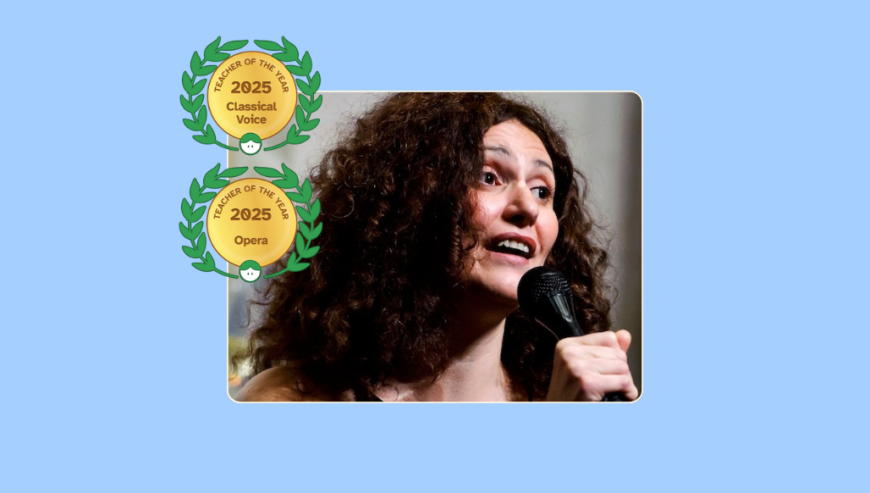

We asked 2025 Lessonface Teacher of the Year in Classical Voice & Opera, Denise Bayraktar, to share what draws her to this art form and how she supports singers at every stage of their journey. In this Q&A, Denise discusses the expressive power of the human voice, her highly individualized and goal-oriented teaching approach, and the importance of body awareness as the foundation of healthy, expressive singing. She emphasizes confidence, curiosity, and consistent practice, helping students connect their personal experiences to their music and achieve meaningful, lasting growth both on and off the stage.
What drew you to learning Opera and Classical Voice?
I was drawn to Opera and Classical Voice because of the beauty and expressiveness of the human voice in this style. I love how it combines technique, artistry, and emotion, developing musicality and beyond — opening doors to languages, literature, history, and a broader understanding of culture.
Why do you think it is popular (or perhaps should be more popular)?
I think it’s popular because it’s powerful and moving, and it could be even more accessible. The skills learned in classical training support all types of singing while also enriching students’ appreciation of the wider artistic and cultural context.
How do you ensure you are a good mind frame for teaching in terms of your teaching space?
I ensure a good mindset for teaching by maintaining a professional and reliable online setup — my devices, camera, and audio are always up to date, allowing me to focus fully on the student. My lessons are goal-oriented and highly individualized, tailored not just to the student’s voice but also to their personality and learning approach.
I provide clear, straightforward feedback on areas to improve while celebrating every bit of progress, creating a supportive environment that encourages growth and confidence. Having this structured, focused space helps me stay present and engaged for each student.
If you could gift your students one piece of automatic knowledge or ability about Opera or Classical Singing, what would it be?
If I could gift my students one timeless ability, it would be to be deeply in tune with their own body, because their body is their instrument. Knowing how breath, posture, and movement work together lets them sing freely, expressively, and safely — and maybe even have a little fun while doing it!
What’s one lasting takeaway you hope your students will carry with them from your teaching, even years from now?
The lasting takeaway I hope students carry with them is that every note they sing is filtered through who they are — their life experiences, emotions, and perspective. Let every song come from within, because that is the only way it can truly make its magic.
What are some of your most indispensable pieces of gear?
Indispensable pieces of gear (for me):
High-quality microphone and audio interface — for clear sound during online lessons.
Camera with good resolution and stable positioning — so students can see posture and technique clearly.
Keyboard or digital piano — for demonstrating pitch, exercises, and accompaniment.
Breathing tools / visual aids — like mirrors, diagrams, or small props to help students visualize airflow and posture.
What are some gear items that you wish all your students had?
A good microphone — to ensure their voice comes through clearly in online lessons.
Reliable internet connection — to avoid interruptions and keep lessons smooth.
Apps / resources I recommend:
Appcompanist — very useful for accompaniment and practice, though pricing depends on the plan.
Most learning is muscle memory, so I don’t rely heavily on other apps for technique.
AI tools can be helpful as a research tool for repertoire, auditions, or gathering information, but they complement, rather than replace, actual practice.
What’s a skill or idea you’re excited to explore in 2026?
In 2026, I’m excited to explore applying my musicality in tango dance, bringing the same sensitivity to phrasing, rhythm, and expression that I teach in singing to movement and performance.
How about your students?
I hope my students continue to develop awareness of their own instrument — their body and voice — and grow in confidence in expressing themselves through music. In 2025, I was thrilled to see students achieving incredible milestones: one was invited to participate in The Voice France, others were selected to sing main characters in plays, some began performing regularly in venues, and several felt healthier and stronger as they overcame obstacles through singing. It’s inspiring to see how music can transform both skill and well-being.
Do you have guidance for goal-setting for opera and classical voice, or generally?
Goals depend on each student’s ambitions. For those pursuing singing as a potential career, I encourage challenging, performance-oriented goals where pressure and competition help build skill and resilience. For students singing primarily for personal growth or enjoyment, smaller milestones — like awards for participation or mastering a piece — can be just as meaningful. In all cases, the focus is on consistent practice, musical development, and personal fulfillment, tailored to the individual.
Is there anything else you would like to share with potential students about opera or classical voice?
I hope students know that singing is a way to connect with themselves and the music. Every voice has its own story, and I aim to help each student bring that story to life.
If you are interested in learning more about Denise or would like to book a lesson with her, please visit her Lessonface profile here.
Also, be sure to check out all of Lessonface’s 2025 Teachers of the Year here!

Start Lessons
Search for your perfect music, language, or arts teacher and start working towards your learning goals.

Start with a Free Trial
Teachers on Lessonface set their own rates and discounts. Participating teachers offer free trials.
Great Teachers, Great Lessons, Guaranteed
Learn more about the greatest universe for online music and arts lessons.

Lessonface Recitals, Open Mics, Masterclasses, and Jams
Welcome students of all ages and skill levels!